The grandiose claim that “Britannia rules the waves” inspired the wry quip that, in fact, Britannia waives the rules.
While the pun was meant as a putdown, waiving rules can be a prudent decision.
That is certainly the case for the European Central Bank today, as it weighs its options for helping France, Europe’s second-largest economy, cope with its $4 trillion debt.
France’s public finances are firmly planted on an unsustainable path. Over the last 15 years, persistent budget deficits have caused public debt to surge from 80% of GDP to almost 120%.
Reducing those deficits and constraining debt growth would require major cuts to public spending, which has reached a staggering 57% of GDP. But such cuts have proved politically untenable.
President Emmanuel Macron’s efforts to rein in spending have achieved little more than cutting short the tenures of successive prime ministers.
With a presidential election looming, and youth-led protests having spread across the country, there is little chance of rapid fiscal consolidation any time soon. Nor is there reason to think either of the presidential frontrunners will commit to fiscal restraint once in office.
Fiscal recklessness
Marine Le Pen of the far-right National Rally is promising to lower the legal retirement age and cut the value-added tax on food and energy products, both of which would compound France’s debt woes.
Her leftist opponent, Jean-Luc Mélenchon, would probably sign on to everything Le Pen promises, and has even proposed canceling the 18% of France’s debt that he says is held by the Bank of France. Such promises strike fear into the hearts of French bondholders.
If current policies persist, the budget deficit will rise from 5.4% of GDP today to around 7% by 2030
A study commissioned by France’s finance ministry estimates that, if current policies persist, the budget deficit will rise from 5.4% of GDP today to around 7% by 2030.
Fiscal recklessness from France’s next administration would make matters far worse.
So would an economic recession—an increasingly likely scenario at a time of proliferating shocks to France’s already sclerotic economy.
Energy prices have spiked, owing to America’s war in Iran and Russia’s war in Ukraine, and France (like the rest of Europe) is being flooded by Chinese imports.
Meanwhile, domestic unrest is undermining investor confidence, and borrowing costs are rising.
Selloff of French government bonds
Against this backdrop, the current selloff of French government bonds should surprise no one.
Since the start of the year, the ten-year bond yield has risen from 3.2% to over 5%. The interest-rate spread with German bunds now stands at 165 basis points, a level that was not reached even during the 2010 sovereign-debt crisis.
If France is to avoid default, the ECB will need to buy large amounts of its government’s bonds—and soon
If France is to avoid default, the ECB will need to buy large amounts of its government’s bonds—and soon.
The good news is that the ECB is better equipped to bail France out today than it was in 2010.
In principle, it can use its Transmission Protection Instrument to buy unlimited amounts of French government bonds in the secondary market.
The bad news is that the use of that instrument is subject to four criteria that France currently does not meet: the beneficiary country should not be subject to the European Union’s excess deficit procedure; it should be free of severe macroeconomic imbalances; its fiscal position should be sustainable; and its macroeconomic policies should be sound.
The ECB faces a difficult choice
The ECB now faces a difficult choice. It can stick to the rules and refuse to bail out France until the French commit to a credible economic-adjustment program that would restore public-debt sustainability.
This might enhance the ECB’s credibility, but it would risk a full-blown bond-market crisis and raise the specter of a French default in the run-up to the presidential election.
Such a crisis could cause the euro to unravel, with major adverse spillover effects on the rest of the world economy.
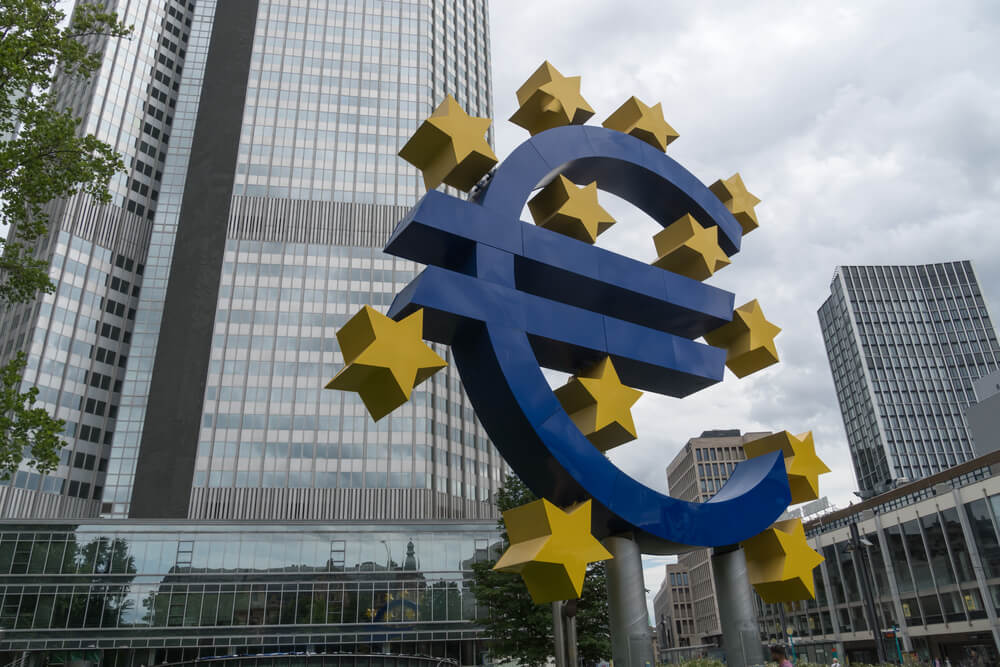 Time is running out. For the sake of the European and global economies, an ECB bailout must come first
Alternatively, the ECB could waive its rules and, echoing then-ECB President Mario Draghi’s 2012 pledge, make clear that it will do “whatever it takes” to prevent French government-bond yields from blowing out.
This would dent the ECB’s credibility and complicate the task of meeting its inflation target.
But it would spare Europe and the world economy from another, more painful European sovereign-debt crisis and, potentially, a eurozone breakup.
If the ECB does decide to take this path, one hopes that the next French president will have a mandate to put France’s fiscal house in order.
But time is running out. For the sake of the European and global economies, an ECB bailout must come first.
Desmond Lachman, a senior fellow at the American Enterprise Institute, is a former deputy director of the International Monetary Fund’s Policy Development and Review Department and a former chief emerging-market economic strategist at Salomon Smith Barney.
