More than four years into the atrocious war that Russia launched on it, Ukraine is facing a new accumulation of threats and, by extension, so is the European Union.
Much of the threat, as we saw with the throttling of Starshield satellite access in Ukraine, comes from a presumed ally, the United States.
The midterm results will, in all probability, not significantly change the current administration’s increasingly hostile trajectory, despite a decisive Democratic win.
Donald Trump is unlikely to be restrained on the global stage. If anything, he’ll double down on the chaos he can cause in his last two years in office and maximise the damage to Kyiv.
With the battlefield situation currently mostly frozen, Ukraine’s immediate concern is its society surviving the winter in the face of mounting Russian attacks on its energy and civilian infrastructure.
It does so with the US administration actively trying to keep it from retaliating inside Russia and floating unrealistic sanction-busting ideas, such as resuming the Russian gas supply to Europe via Ukraine.
This follows the damage done to the sanctions regime by Trump allowing the import of diesel from Russia.
At the same time, the US is trying to push Ukraine into disadvantageous peace talks with Russia, at a time when there is no indication that Vladimir Putin intends to end the war.
The EU feels the squeeze
Apart from all the above posing an immediate danger to Ukraine and presenting it with impossible dilemmas, the EU is also feeling the squeeze.
The EU and Ukraine have been driven into each other’s arms by first the Russian invasion and then America’s near-abandonment of the fight.
At the moment, the EU is overwhelmingly funding Kyiv’s defence efforts and plugging its regular budget shortfalls that are ballooning due to the war.
The EU is facing political headwinds in freeing up enough money for Ukraine
The US is now mainly shipping weapons to Ukraine that others, mostly the EU, pay for. This means that rather than helping the country with huge sums of money, as happened under the Biden administration, under Trump, Americans are profiting from the war.
The US is also selling more gas, especially LNG, to Europe at prices that have been hugely inflated by the wars in Ukraine and in the Gulf.
Meanwhile, the EU, on top of being hard hit by the spike in energy prices caused by Russia’s attack on Ukraine and the US-Israeli attack on Iran, is facing political headwinds in freeing up enough money for Ukraine.
On the hook for a long time to come
The European Commission this week advanced the release of another €45 billion tranche of aid for Ukraine for next year, part of a €90 billion total loan package agreed earlier this year.
With European countries pumping trillions of euros into the energy crisis, defence spending, and, ever more, debt repayments, talks over the bloc’s next seven-year budget are advancing slowly.
The chance that funding for Ukraine can be fitted into the EU’s regular budget, at least enough of it, is therefore vanishingly small.
Until now, the EU has been able to keep most of its funding for Ukraine outside its regular spending, by using its financial headroom to increase borrowing.
But this is a temporary mechanism and, unless there is political agreement, it could become difficult to sustain.
Ukraine and the EU should not expect solace from the US, even if the White House changes hands in two years’ time
Add to that the chances of a far-right presidential victory in France next year, where Marine Le Pen has specifically pledged to end funding for Ukraine and cut back contributions to the EU, and the picture is looking bleak.
Ukraine and the EU should not expect solace from the US, even if the White House changes hands in two years’ time. It is hard to see even a future Democratic president restore the levels of funding that Ukraine received before Trump and that it needs to keep going indefinitely, should the situation not improve.
Funding for Ukraine from other parts of the world is unlikely to increase either, in fact, it’s showing signs of drying up.
Even a halt to active hostilities and a freezing of the conflict will only bring partial relief to both the EU and Ukraine in the near term, as defence spending will need to stay high and Ukraine’s economy will remain under pressure.
Whatever scenario unfolds, bar an entirely unrealistic sweeping Ukrainian victory, or, conversely, a complete Russian takeover of the country, the EU will remain on the hook for Ukraine for a long time to come.
The structural dilemma
There is some realisation of this, at least on the defence side, where cooperation on weapons production with, and in, Ukraine is taking off.
Helping Ukraine to arm itself in some crucial areas and even make money off its expertise through exports will have some impact but is not enough on its own.
If the country is to rebuild and develop its economy, it will not just need access to EU markets but also sustained and predictable financial and economic support.
The Commission urges Ukraine to step up its efforts to improve the rule of law, but also sees limited progress on other issues next year
The surest way to achieve this is through full EU membership but this week, the European Commission issued its 2026 enlargement package with a downgraded timeline and no firm date for Ukrainian accession.
The Commission urges Ukraine to step up its efforts to improve the rule of law, but also sees limited progress on other issues next year.
Apart from the symbolic blow to Ukrainian morale that such a detached stance could deliver, it also ignores the structural dilemma of the need to keep supporting Ukraine while keeping it for now outside the bloc.
Brutal new geopolitical realities
It’s indicative of the EU’s current inability to marshal its creative, political and bureaucratic powers that it focuses on patches for Ukraine that are just good enough, temporary and a bit of a fudge.
An EU that could face up to hard choices would recognise the emergency, realise that its vital interests were at stake, set out a realistic course of action and defend that politically, even to a potentially sceptical populace.
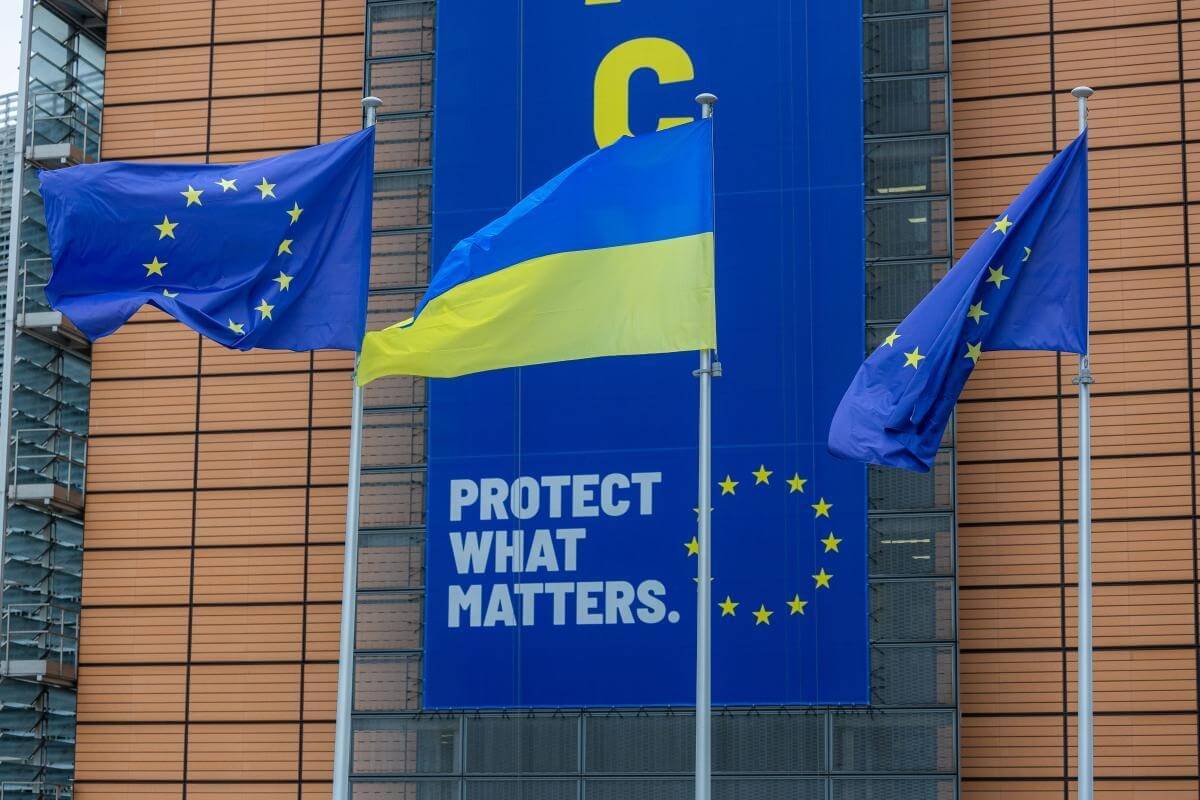 The costs of a Ukrainian collapse or defeat, besides the human toll, will almost certainly far outweigh the current expenditure
While accession considerations are complex and sensitive, the EU should move much faster to make clear that Ukraine is a permanent partner, and eventual member, of the bloc.
This would also send a firm, but non-violent, message to Russia that its dreams of re-incorporating Ukraine are permanently off the table.
Instead, the EU is choosing a classic fudge, muddling through and letting the crisis supposedly create new frameworks that then become part of the institution.
That approach no longer works in the brutal new geopolitical realities, where Russia, the US and also China are converging to take the bloc down a peg or two.
In raw money terms, aid to Ukraine is far from the largest European expenditure. As mentioned before, spending on other crises, such as the energy price spike and the looming debt repayment issue, is several times greater.
The costs of a Ukrainian collapse or defeat, besides the human toll, will almost certainly far outweigh the current expenditure.
Everybody knows that what’s needed is a realistic, firm, long-term commitment to keep money flowing to Ukraine, albeit with strings attached to ensure reforms.
The political hesitancy to admit this could well cost the bloc, both in financial and geopolitical terms.
