France offers a crucial lesson for every advanced economy tempted to confuse the size of the state with economic strength.
A generous welfare system, high taxation and extensive regulation can coexist with prosperity only when they are supported by a strong private sector, productivity growth, credible fiscal discipline and a business environment that rewards investment.
When those foundations weaken, the model becomes progressively harder to sustain.
France is a very rich country, with enormous human, entrepreneurial and financial capital. It also has a predatory state that hinders economic growth, job creation and productivity.
France is now confronting a harsh reality. It remains a wealthy, diversified and institutionally strong economy.
But its fiscal trajectory, weak growth outlook and policy paralysis should be a warning to governments that believe permanent deficits can be treated as a harmless feature of modern economic management.
The figures are shocking
The figures are shocking. France’s public spending reached 57.5% of GDP in 2025, the highest ratio in the euro area. Yet higher spending has not produced dynamic growth.
The IMF forecasts French real GDP growth of only 0.7% in 2026, following 0.9% in 2025, while the European Commission expects growth of just 0.8% in 2026.
This is not a recession, but a prolonged period of stagnation for an economy facing rising social demands, an ageing population and higher geopolitical and energy costs.
The central error in the French debate is the assumption that the state can permanently spend more than the economy produces without damaging either growth or financial credibility.
In 2025, France’s fiscal deficit still stood at 5.1% of GDP, well above the European Union’s 3% reference threshold.
France has not reached a funding crisis because the ECB supports it. It retains important strengths
The European Commission expects the deficit to remain at 5.1% in 2026 and to rise to 5.7% in 2027 under unchanged policies.
Public debt, already 115.6% of GDP in 2025, is projected to climb to 118.1% in 2026 and to exceed 120% in 2027.
The state is consuming resources that must be financed through continually rising taxation, monetary accommodation, spending cuts or a combination of all three.
When debt increases faster than nominal income, the state becomes more vulnerable to any increase in borrowing costs, weaker-than-expected growth or a sudden loss of investor confidence.
France has not reached a funding crisis because the ECB supports it. It retains important strengths.
A large and diversified economy, substantial private savings, a sophisticated financial system and membership of the euro area.
But those strengths should not be used to minimise the problem. They are a cushion, not a substitute for reform.
The rating agencies have already delivered their verdict. The latest downgrade of rating highlighted political fragmentation, the lack of clarity around medium-term consolidation and the economic consequences of uncertainty for investment and consumption.
The fiscal trap of the large state
France’s problem also demonstrates the limits of a tax-led response to structural deficits.
The country already has one of the highest revenue-to-GDP ratios in the euro area.
The IMF explicitly warns that the high tax burden constrains the scope for further revenue-based consolidation and that continued reliance on tax increases risks damaging business confidence, competitiveness and growth.
This is the fiscal trap of the large state. When expenditure becomes structurally embedded, policymakers face an apparently simple choice: cut spending or raise taxes.
However, the second option does not resolve the underlying imbalance as public expenditure continues to offset the economy’s productive capacity.
The problem is not insufficient taxation. It is an expenditure structure that has grown beyond what weak economic growth can support
Higher taxes may generate temporary revenue, but these are cyclical and they also alter incentives.
They reduce returns on investment, discourage entrepreneurship, push capital towards more favourable jurisdictions and make it harder for businesses to expand employment and productive capacity. The impact may not be immediate, but it is inevitable.
France’s 2026 fiscal plan relies partly on higher taxes, including an extension of the exceptional contribution from large companies, a top-up tax on high incomes and higher social contributions on financial income.
However, even if these measures deliver the overly optimistic revenues that the government forecasts, the Commission still expects the deficit to remain above 5% of GDP.
That is the clearest indication that the problem is not insufficient taxation. It is an expenditure structure that has grown beyond what weak economic growth can support.
The problem of an asphyxiating public sector
Economic underperformance has political consequences. France’s social tensions cannot be explained by fiscal policy alone, but stagnant real incomes, structural unemployment, uncertainty, a high cost of living and declining confidence in the capacity of institutions to reform all contribute to a more fractious national debate.
Taxpayers in France are fed up, and recipients of subsidies are relegated to a dependent subclass.
The European Commission expects unemployment to rise from 7.7% in 2025 to 8.3% in 2026 and 8.7% in 2027.
Payroll employment is expected to decline, while consumer spending remains constrained by higher energy, food and housing costs.
Big government creates weaker growth, which worsens fiscal outcomes, while fiscal uncertainty further undermines growth
Big government creates weaker growth, which worsens fiscal outcomes, while fiscal uncertainty further undermines growth.
The IMF asks for a credible multi-year strategy to reprioritise spending, improve efficiency and reduce regulatory bottlenecks.
However, its recommendations are too timid and fail to address the problem of an asphyxiating public sector.
It recommends reforms that encourage investment, improve labour supply, make unemployment support more employment-friendly, strengthen pension sustainability and reduce administrative barriers to entrepreneurship.
All these recommendations are too vague, when France needs a drastic liberalisation agenda, spending cuts and lower taxes.
The recipe for disaster
The social safety net is not dismantled by lower taxes and de-regulation. It is being dismantled by massive spending, making it unviable.
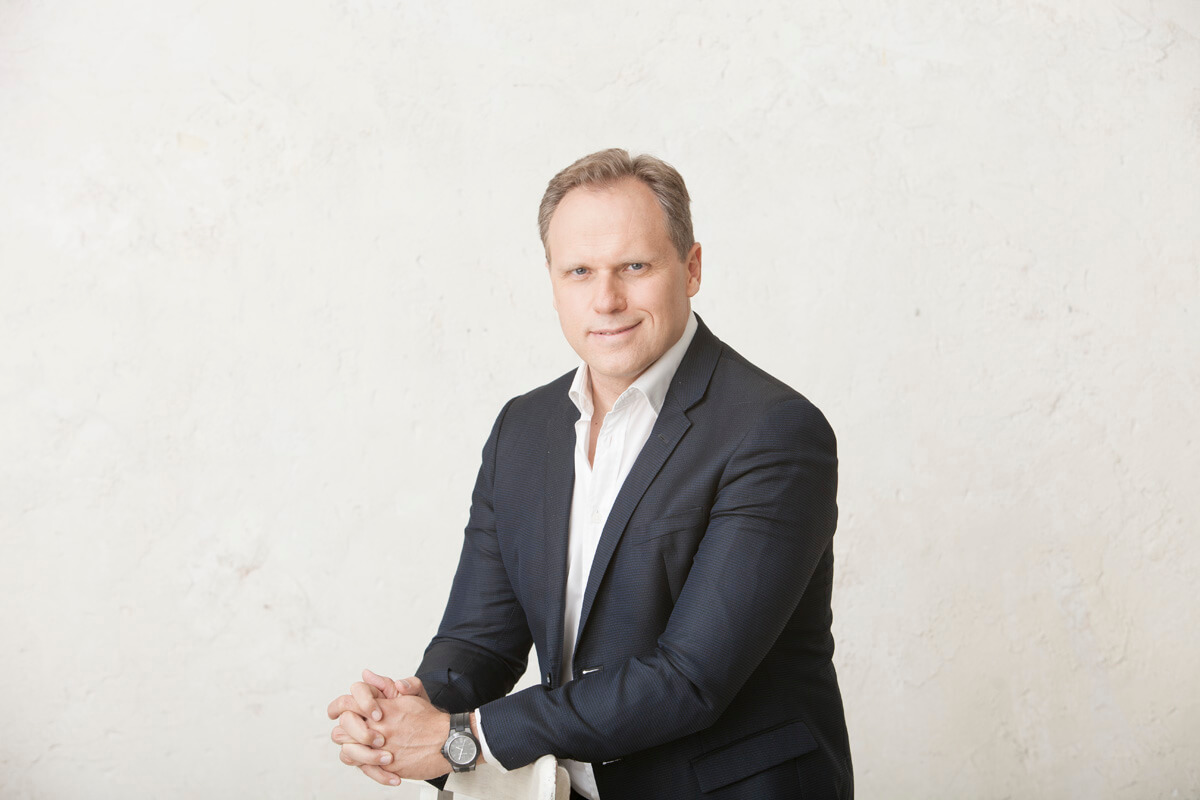 A welfare state that cannot be financed sustainably will fail the very citizens it is designed to protect - Daniel Lacalle
A welfare state that cannot be financed sustainably will fail the very citizens it is designed to protect.
The lesson for the United States and other developed economies is simple: when emergency spending becomes permanent policy, when governments only increase it, and treat rising debt as costless because markets have remained accommodating in the past, the recipe for disaster is already in place.
France’s economic strengths remain considerable. However, the country’s fiscal deterioration should end the illusion that ever-increasing spending, taxes and regulation automatically create security or prosperity.
France has shown that big government, massive immigration and high taxes generate stagnation, social frustration and a debt burden that eventually forces more painful choices.
