Collective Security Treaty Organisation (CSTO) Secretary-General Taalatbek Masadykov said on 23 October that leaders of the military alliance could consider Armenia’s membership at a meeting in Moscow on 11 November.
A day earlier, Armenian Prime Minister Nikol Pashinyan spoke to journalists about pressure from the Eurasian Economic Union (EAEU), another organisation led by Russia, and questioned why Armenia was not simply expelled from the CSTO instead.
Two days earlier, the other four EAEU members presented an estimate of how much Armenia would lose by leaving the union. Pashinyan secured a new parliamentary majority in June.
In August, he said he would be happy for Armenia to be expelled from the CSTO and that the country would not return to active participation for at least five years.
With his October statement, he was responding to Russia’s warning that Armenia’s closer ties with the European Union would cost the country dearly.
Moscow is relying on dependence on gas and the market
The report submitted on 20 October by representatives of Russia, Belarus, Kazakhstan and Kyrgyzstan to the Eurasian Intergovernmental Council proposes temporarily suspending the application of the EAEU Treaty to Armenia, pending a referendum on choosing between that organisation and the EU.
Their scenario predicts a 69 per cent increase in the import price of gas, from $177.5 to $300 per thousand cubic metres, a 55.6 per cent fall in mutual trade and a 15.6 per cent drop in Armenia’s gross domestic product.
The authors of the report acknowledge that the EAEU Treaty does not provide for such a unilateral suspension, so they cite the 1969 Vienna Convention on the Law of Treaties.
Armenia has not yet applied for EU membership, and the government maintains that it has no intention of leaving the EAEU.
Pashinyan regards a referendum on choosing between the two unions meaningless until such an application is submitted.
Russia’s demand for a referendum requires Yerevan to abandon its European path before it becomes a real option.
The suspension was not adopted and the new gas price was not set. Pashinyan disputes the right of other members to expell Armenia from the economic union.
Economy Minister Gevorg Papoyan claims that the damage estimates are exaggerated and calls for an analysis by a government working group including the central bank and the ministries of economy and finance.
The electoral majority gives Pashinyan the scope to continue rapprochement with the West, but exporters and consumers still depend on decisions made in Moscow
Russia had already raised questions about energy supplies in May. Energy Minister Sergey Tsivilyov then warned of the possibility of suspending or terminating the 2013 agreement on the supply of gas, petroleum products and rough diamonds, under which these goods for Armenian consumption enter duty-free.
He said that a transition from the Eurasian Union to the European Union would also mean the loss of current favourable prices.
Russian gas is supplied to Armenian households and businesses by Gazprom’s Armenian subsidiary. In 2025, Russia provided more than four-fifths of Armenia’s gas imports.
Around 476 million cubic metres came from Iran under an arrangement, extended until 2030, which Armenia pays for with electricity.
The Iranian gas pipeline gives Yerevan some room for manoeuvre, but increasing supplies at the expense of Russian gas would require a new agreement with Tehran on quantity and price.
Before the June elections, Russia restricted imports of Armenian flowers, food and drink. This has already affected manufacturers who depend on Russian customers.
Suspension of the economic union agreement would intensify pressure across the entire economy, and sooner or later higher gas import prices would show up in household bills.
Moscow is trying to transfer the costs of Pashinyan’s foreign policy to the citizens who renewed his mandate. For the Armenian government, this is a more serious problem than losing its place in the military alliance.
The electoral majority gives Pashinyan the scope to continue rapprochement with the West, but exporters and consumers still depend on decisions made in Moscow.
Moscow is preparing to take away the right to vote
Russian officials have been discussing restricting Armenia’s rights in the CSTO since June. Foreign Minister Sergei Lavrov said on 10 June that members had agreed to consider the charter’s provision on unpaid obligations, and his deputy, Mikhail Galuzin, announced on 11 August that the suspension of voting rights could be decided at the November summit.
Masadykov states that Armenia has not paid its membership fee for three years and has not filled the positions allocated to it within the organisation’s structures.
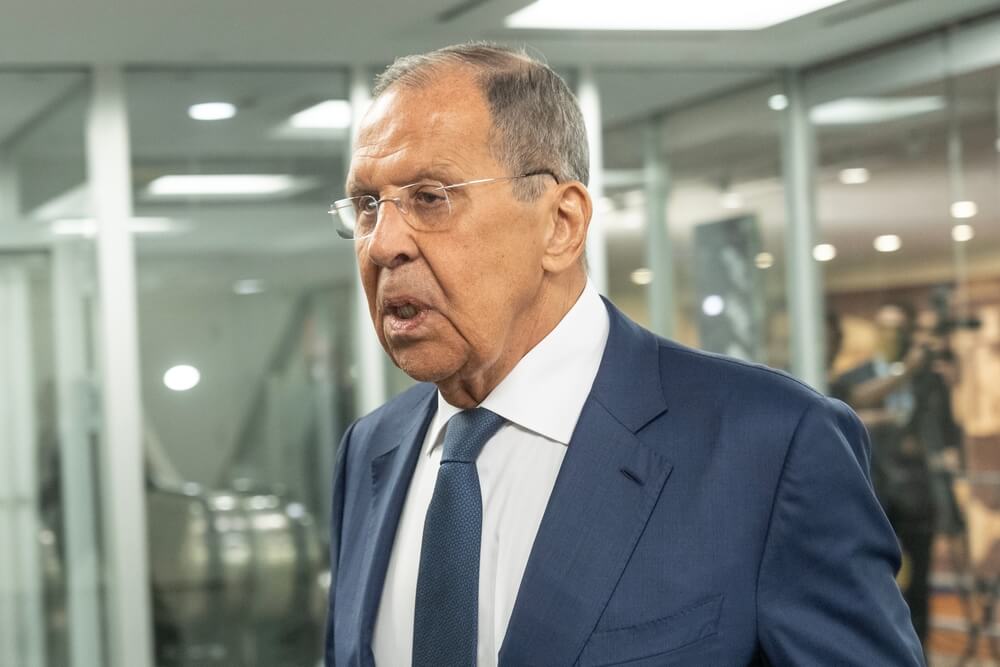 The suspension would allow Moscow formally to punish Yerevan while keeping open a path for its return - Sergey Lavrov
Article 25 of the charter authorises the Collective Security Council, the alliance’s highest body, to deprive any member that has not paid its obligations for two years of the right to vote and to nominate citizens to certain positions, without expelling it from the organisation.
Exclusion for breach of obligations is governed by Article 20, while voluntary withdrawal requires at least six months’ prior notice and the settlement of obligations.
Armenia suspended its participation in the alliance’s activities in February 2024, but did not submit a notice of withdrawal.
The suspension would allow Moscow formally to punish Yerevan while keeping open a path for its return. Its practical effect would be limited, because the Armenian government already refuses to take part in the alliance’s work.
Expelling Armenia would formalise the loss of a member and would probably not change Armenian policy.
Russian protection has lost credibility
Armenia’s confidence in the alliance was seriously damaged in 2022. In January, the CSTO deployed forces to guard key facilities in Kazakhstan during protests and violence that threatened the government.
Armenian soldiers were part of the contingent, and Pashinyan was chairman of the Collective Security Council at the time.
In September, when Armenia asked for help because of fighting with Azerbaijan along the state border, the organisation held an emergency session, but there was no military intervention.
For the other members, sending troops would have meant a conflict with Azerbaijan, far riskier than guarding facilities in Kazakhstan. It was protection from such a conflict that Armenia expected from its membership of the alliance.
The decision not to send forces showed that the other members were not prepared to take that risk.
Russia maintains the 102nd military base in Gyumri, near the border with Turkey, under a bilateral agreement concluded in 1995
Azerbaijan’s takeover of Nagorno-Karabakh in September 2023 further undermined confidence in Moscow. The area is internationally recognised as part of Azerbaijan, so it was not included in collective defence arrangements, which apply only to the territory of the Republic of Armenia.
Russian peacekeeping forces, deployed there since 2020, did not oppose the Azerbaijani offensive. More than 100,000 Armenians left Karabakh within a week.
The Russian military presence in Armenia rests on a separate legal basis. Russia maintains the 102nd military base in Gyumri, Armenia’s second-largest city, near the border with Turkey, under a bilateral agreement concluded in 1995.
The base is estimated to house several thousand Russian soldiers. In 2010, the agreement was extended until 2044, so leaving the CSTO would not affect it. On 17 September, Pashinyan said that the base does not contribute to the country’s security and that Yerevan will not oppose its closure if Moscow decides to shut it down.
Peace with Baku opens space for the United States
Pashinyan is seeking to reduce Armenia’s dependence on Russian protection by reaching an agreement with a country that poses an immediate military threat. In August 2025, Armenia and Azerbaijan initialled the text of a peace agreement in Washington, which has not yet been signed.
Baku’s signature requires an amendment to the Armenian constitution, whose preamble refers to the 1990 Declaration of Independence and, in that declaration, to the decision on the unification of Armenia and Nagorno-Karabakh.
Yerevan rejects the interpretation that this amounts to a territorial claim and presents the constitutional changes as its own political decision.
On 22 October, Pashinyan said that he expects the agreement to be signed in 2027 or 2028. He did not rule out early elections if the new constitution cannot be adopted by any other means. The June victory gave him a majority in parliament, but not a guaranteed path to adopting a new constitution.
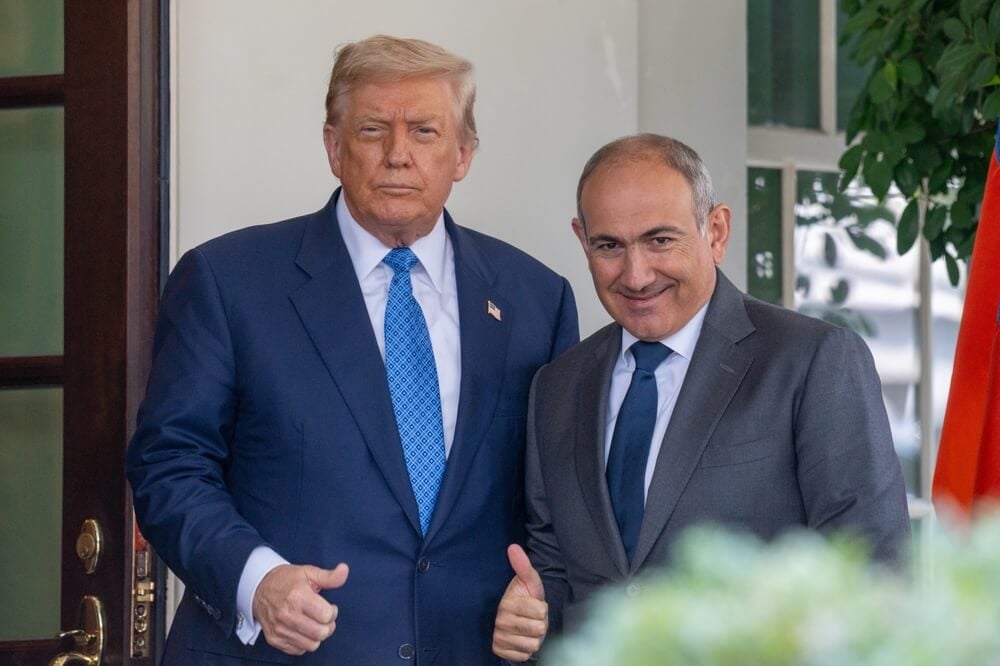 The most tangible expression of the American role is TRIPP, a project titled Trump’s Route for International Peace and Prosperity - Donald Trump with Nikol Pashinyan
The most tangible expression of the American role is TRIPP, a project titled “Trump’s Route for International Peace and Prosperity”.
The proposed road, rail and power lines through the southern Armenian province of Syunik would connect Azerbaijan with Nakhchivan, its territory cut off from the rest of the country, and open new routes for Armenian trade.
The agreement between Armenia and the United States, initialled in May and signed in early June, provides for a joint venture in which the American share would be 74 per cent and the Armenian share 26 per cent.
The US share would be held by the US International Development Finance Corporation (DFC), a US government agency.
The company would receive initial land-use and project development rights for 49 years, with the possibility of extension.
Armenia retains sovereignty, as well as border and customs jurisdiction. Parliament is due to discuss ratification at the end of October. Ratification itself does not provide funding, however.
Under the framework agreement, the United States intends to help secure financing in line with available funds, and projects can be financed on commercial terms by private investors.
Only construction would turn US mediation into a permanent US business interest on Armenian territory.
The wider opening of Armenian trade also depends on Turkey, which has kept its border with Armenia closed since 1993. Pashinyan says that Yerevan is discussing reopening it with both Ankara and Baku, which still has certain reservations.
The European Union has two civilian missions in Armenia. The unarmed observers of the EUMA mission monitor the Armenian side of the border with Azerbaijan under a mandate that runs until February 2027.
The new EUPM civilian mission advises Armenian institutions on protection against cyberattacks, information manipulation and illicit financial flows. Neither the European mandates nor the agreement with the United States includes an obligation to deploy armed forces to defend Armenia.
Moscow has faster levers
The most likely decision on 11 November is to suspend Armenia’s voting rights due to its debt. It is also possible that the decision will be postponed, because Masadykov has not confirmed the final agenda. Neither outcome will resolve the dispute that has pushed Armenia away from the alliance.
Russia will continue to link gas negotiations and access to its market to Armenia’s relationship with the EU
Russia will continue to link gas negotiations and access to its market to Armenia’s relationship with the EU. Pashinyan will try to withstand this pressure until the American project, peace with Baku and the opening of the Turkish border bring tangible benefits.
In the coming months, Moscow will exert pressure through gas price negotiations and targeted bans on imports of Armenian goods, as there is no clear legal basis for suspending Armenia’s membership of the economic union.
Yerevan will not leave the EAEU before applying for EU membership, thereby giving Russia no formal reason to sever relations.
A decisive test of Russian influence will be a referendum on the new constitution, without which Baku will not agree to sign a peace agreement.
If, by the time of that vote, the price of gas has risen and the Russian market remains closed to part of Armenia’s products, while the American project and the opening of the Turkish border still do not generate income, Moscow will be able to turn the vote on the constitution into a vote on the cost of Pashinyan’s turn to the West. Gas and access to its market give Russia that leverage.
Depriving it of a vote in an alliance that Pashinyan would gladly leave does not give it any real leverage over Yerevan.
