The parliamentary elections in Armenia on 7 June are the most significant political event in the South Caucasus since the fall of Nagorno-Karabakh in 2023.
At first glance, voters are deciding on the composition of parliament and the future of Nikol Pashinyan's government.
In reality, something much more important is at stake: whether Armenia will continue to distance itself from Russia and move closer to the European Union, or whether it will enter a period of political deadlock that could halt the most significant shift in its foreign policy since independence.
Three years after the defeat in Karabakh, Armenia's fundamental strategic dilemma remains unchanged.
The security model based on reliance on Russia has failed, but a new model has yet to be fully established.
The elections are therefore taking place as the country seeks to redefine its foreign policy direction, security priorities, and relations with its neighbours.
The result will have ramifications not only for Armenia's domestic politics but will also directly influence negotiations with Azerbaijan, relations with the European Union, Russia's position in the South Caucasus, and the region's stability in the coming years.
Karabakh changed the political calculus
Armenian policy has long rested on a simple assumption: regardless of its shortcomings, Russia is the ultimate guarantor of the country's security.
This assumption has shaped foreign policy decisions since the collapse of the Soviet Union.
The 2020 war seriously undermined that model, but did not overturn it. Many in Armenia believed Moscow remained a key factor in stability and would intervene at a critical moment to protect its ally's interests. September 2023 changed that assessment.
The system on which Armenia had built its security for more than three decades proved ineffective at the moment it was most needed
Azerbaijan established full control over Nagorno-Karabakh in a single day. More than one hundred thousand ethnic Armenians left the territory. Russian peacekeepers remained on the sidelines. The Collective Security Treaty Organization (CSTO) did not respond.
The system on which Armenia had built its security for more than three decades proved ineffective at the moment it was most needed.
From that point, the political debate in Armenia was no longer about whether to adjust the existing strategy; it became a question of what to replace it with.
Pashinyan is not campaigning for Europe
A common mistake in interpreting Armenian politics is to portray Nikol Pashinyan as the leader of an ideological pro-European project.
His policy is not based on an ideological conflict between East and West, but on the assessment that the security system in place until 2023 no longer functions.
Over the past three years, Pashinyan has gradually shifted the country's foreign policy priorities.
Pashinyan is not seeking support to change course; that course is already set
Practical participation in the CSTO has been suspended, and relations with the European Union have been strengthened.
New security arrangements have been established with France and other European partners, and the European observation mission has been given a more significant role along the border with Azerbaijan.
At the same time, the government has continued negotiations with Baku despite strong opposition from some members of the public.
This is where the essence of the choice lies. Pashinyan is not seeking support to change course; that course is already set. He is seeking a political mandate to complete it institutionally.
Russia no longer has a monopoly on the Caucasus
The war in Ukraine has changed not only European security but also the balance of power in the South Caucasus.
Before February 2022, no significant political or security decision in the region could be made without taking Moscow's position into account.
Russia was the central security actor in the region. Today, the situation is different
Russia was the central security actor in the region. Today, the situation is different.
Azerbaijan was the first to recognise the change. The 2023 operation was based on the assessment that Russia would not intervene, which proved correct.
Turkey quickly adapted its strategy to the new circumstances. The European Union has increased its political and economic presence. Even the countries of Central Asia are closely following the shift in the balance of power, as it affects the transport and energy corridors to Europe.
Today, Armenia is at the centre of this process. That is why the elections have greater significance than the national context.
They are a test of whether a state that has been part of Russia’s security architecture for decades can build a viable alternative.
Brussels invests for strategic reasons
The European Union has significantly intensified its cooperation with Armenia in recent months. The visit of Ursula von der Leyen and António Costa to Yerevan in May 2026 was not merely symbolic.
Brussels is not investing political capital in Armenia out of idealism; the motivation is much more practical.
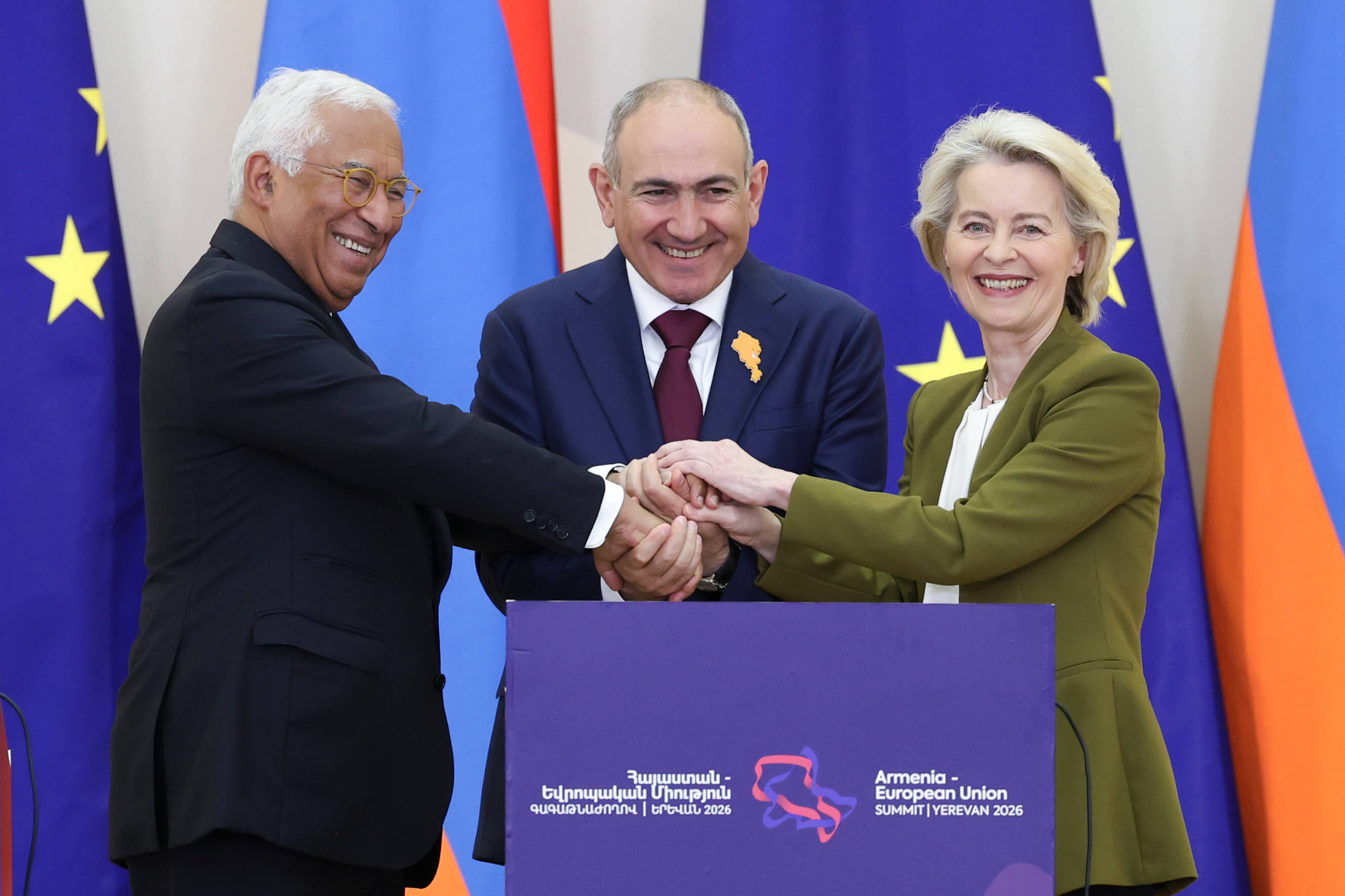 Brussels is not investing political capital in Armenia out of idealism; the motivation is much more practical
The European Union aims to reduce its dependence on Russian energy and transport routes. In this context, the South Caucasus is becoming increasingly important.
Energy infrastructure, transport corridors, and digital connections linking Europe to the Caspian region are now part of a broader strategy for economic and political diversification.
From this perspective, Armenia is no longer merely a small post-Soviet state. It is becoming an important point on routes connecting Europe with regions east of the Black Sea.
This is why European support follows a long-term logic. The goal is not only to stabilise Armenia, but also to reduce the scope for Russian influence in the region.
The peace agreement remains a central issue
One paradox of Armenian politics is that rapprochement with Europe depends almost as much on relations with Azerbaijan as on relations with Russia.
Armenia does not have the capacity to engage in conflict with both Moscow and Baku at the same time.
This is why Pashinyan insists on completing negotiations with Azerbaijan, including final demarcation, normalisation of relations, and an agreement under which both countries would recognise each other's territorial integrity.
The government is seeking to build stability through an agreement with Baku and by strengthening international ties with the European Union
For some voters, such a policy represents an unacceptable concession. However, the alternative is not a return to the situation before 2020; that option no longer exists.
Karabakh is lost. The military balance of power has shifted in favour of Azerbaijan. Russia no longer has the capacity or interest to impose a solution that would suit Armenia.
In these circumstances, the government is seeking to build stability through an agreement with Baku and by strengthening international ties with the European Union.
It is a politically risky approach, but for now it is the only one with a realistic strategic basis.
The opposition criticises but offers no alternative
The greatest weakness of the opposition is not a lack of political experience. Many of its leaders come from the structures that dominated Armenian politics before the 2018 Velvet Revolution.
The problem is that the opposition has not provided a convincing answer to the central question of the election.
Criticism of Pashinyan mainly concerns Karabakh, territorial concessions, and relations with Azerbaijan
Criticism of Pashinyan mainly concerns Karabakh, territorial concessions, and relations with Azerbaijan. These are legitimate political topics. However, the alternatives to the current strategy remain unclear.
A return to reliance on Russia is difficult to justify after the events of 2023. Suspending negotiations with Azerbaijan increases security risks. Isolation from the European Union would further weaken the country's economic prospects.
This is why the opposition successfully mobilises discontent but finds it much more difficult to articulate a viable alternative strategy.
Moscow still has instruments of pressure
The weakening of Russian influence does not mean its disappearance. Russia still possesses significant political, economic, and informational instruments in Armenia.
Energy dependence remains an important factor. Trade ties with the Russian market continue to play a significant role in part of the economy. The media space remains exposed to Russian influence.
Disinformation campaigns and the use of new technologies for political manipulation have attracted increased attention
In recent months, disinformation campaigns and the use of new technologies for political manipulation have attracted increased attention. Their goal is not necessarily to change the outcome of the election.
More often, the aim is to create distrust of institutions, political processes, and the very possibility of stable political development.
Russia has used such methods for years in various parts of the post-Soviet region.
How much political space can Pashinyan actually secure?
Polls indicate that Civil Contract remains the strongest political force in the country and that Pashinyan enters the elections as the favourite.
However, the key question is not whether he will win, but how much political power he will secure.
If he wins a stable parliamentary majority, he will have the scope to complete negotiations with Azerbaijan, including demarcation, transport corridors, and constitutional changes that Baku considers necessary for a final agreement.
At the same time, he will be able to continue implementing agreements reached with the European Union and pursue the policy of gradually moving away from the Russian security framework.
A much more complicated situation would arise if the result required complex coalition arrangements or ongoing political compromises
A much more complicated situation would arise if the result required complex coalition arrangements or ongoing political compromises.
In that case, the very issues at the core of his policy – the peace agreement with Azerbaijan, constitutional changes, and European initiatives – could become subject to internal blockades and prolonged political negotiations.
Such an outcome would not automatically change the country’s foreign policy direction.
However, it would significantly slow the process Armenia initiated after the loss of Karabakh and create further opportunities for external pressure and internal political polarisation.
What the election will really decide
The 7 June election will not determine whether Armenia joins the European Union. It will not resolve the dispute with Azerbaijan. It will not eliminate the security risks facing the country.
It will answer a simpler but more important question: does Armenia have the political capacity to complete the geopolitical shift it began after losing Karabakh?
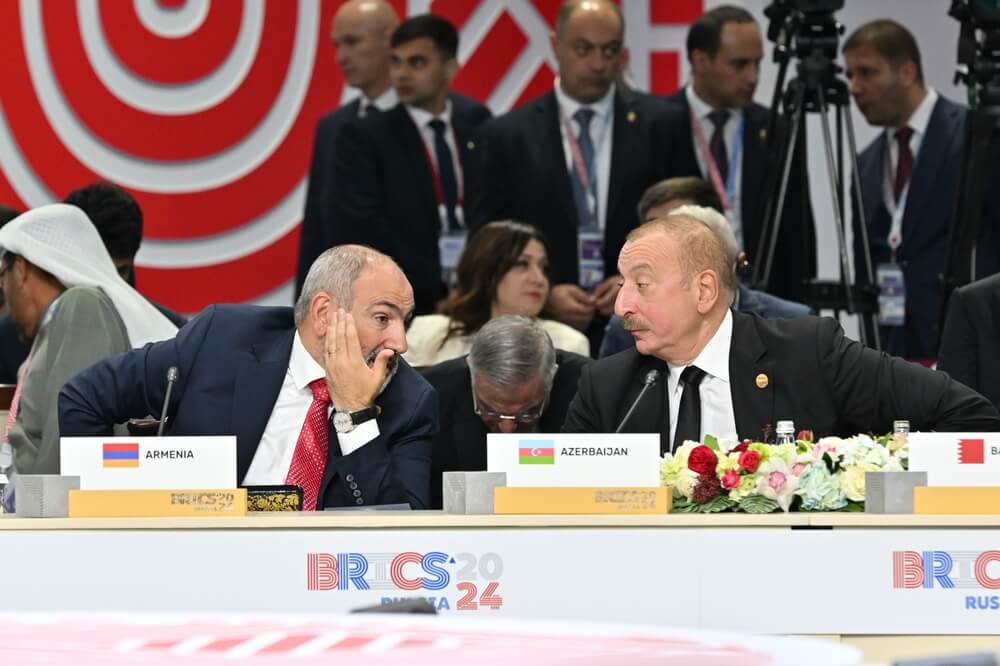 If Pashinyan secures a sufficiently strong mandate, it will increase the likelihood that Armenia will conclude a comprehensive agreement with Azerbaijan for the first time since independence
After the loss of Nagorno-Karabakh, the main dilemma in Armenian politics is no longer the relationship with Russia, but whether the country can function without the security guarantees on which it relied for more than three decades.
That is precisely why the elections on 7 June are neither a referendum on the European Union nor a vote for or against Nikol Pashinyan.
They are an assessment of whether the majority of citizens support the continuation of the policy developed in response to the strategic failure of 2023.
If Pashinyan secures a sufficiently strong mandate, it will increase the likelihood that Armenia will conclude a comprehensive agreement with Azerbaijan for the first time since independence, formally closing the issue that has defined its security policy for more than three decades.
For Moscow, the result will indicate how sustainable its influence in the South Caucasus remains.
For Brussels, the outcome will show whether there is a political majority in Yerevan ready to support a longer-term association with Europe.
For Armenia, it will be a decision on how to attempt to secure its own security after the greatest strategic defeat in its recent history.
