Sergey Karaganov, a political scientist and a personal adviser to Vladimir Putin, called for nuclear strikes against Europe in a recently published article.
The article was published in the journal Russia in Global Affairs, whose editorial board includes Russian Foreign Minister Sergey Lavrov, as well as Russian presidential aide Yuri Ushakov, who directly oversees the peace negotiation process on Russia’s side.
According to Karaganov, Russia is “winning,” but has allegedly not yet responded adequately to aggressive actions. These include the seizure of vessels, threats to close maritime straits, the economic blockade of Russia, and attacks on Russian oil terminals.
He calls the bombing of Ukraine only a temporary measure: “This is not a solution to the problem.” Karaganov claims that “inevitable provocations and violations of any possible agreements will have to be resolved by military means.”
He believes that the only way to “stop the process” is to demonstrate readiness to strike – first, with non-nuclear strikes against command centres, critical infrastructure, and military bases.
All this would apply to European countries that play a key role in preparing and conducting military actions against Russia. Priority targets should also include locations where elites are concentrated, including those in nuclear-armed states.
If Europe does not retreat, Karaganov calls for readiness, in military-technical and political-psychological terms, for limited but massive strikes, primarily with operational-strategic nuclear retaliatory weapons.
These should be preceded by several salvos of operational-tactical missiles in a “non-nuclear configuration.”
Not a private opinion
This is not the first time Karaganov has called for the use of nuclear weapons. In June 2023, he proposed a pre-emptive nuclear strike on Europe.
The Kremlin used Karaganov in 2024 as the host of the plenary session of the St. Petersburg International Economic Forum, attended by Vladimir Putin.
Karaganov was intended to remind the West once again of Russia’s nuclear weapons. On that occasion, he asked Putin four times about the possible use of nuclear weapons.
Sergey Karaganov’s publication is not a private opinion of a Kremlin expert. It is a signal sanctioned by part of the Russian foreign-policy elite.
Karaganov’s reaction indicates that Moscow is highly sensitive to measures intended to restrict Russian maritime logistics and energy exports
It is not an impulsive statement but a carefully thought-out campaign of psychological pressure by the Kremlin on EU countries and the United States.
Nuclear rhetoric is used as an element of Moscow’s strategy. All this is happening ahead of negotiations between Russia, Ukraine, and the United States in Switzerland on ending hostilities and the terms of a peace agreement.
Karaganov’s reaction indicates that Moscow is highly sensitive to measures intended to restrict Russian maritime logistics and energy exports.
The seizure of ships, threats to close maritime straits, attacks on oil terminals, and efforts to disrupt tanker transport directly impact Russia’s budget revenues.
These actions also affect the Kremlin’s capacity to finance the war and complicate military logistics and technical support for the army. Additionally, they harm Russia’s reputation as a “great power.”
Nuclear blackmail
By attempting to dictate the rules of the game, the Kremlin increases pressure on the West through threats of escalation and nuclear blackmail.
Russia exploits the deeply rooted fear of war in European societies, particularly the fear of nuclear conflict.
The strategy is to force the United States and the EU to seek a compromise with Russia at any cost.
At the same time, Moscow seeks to limit military and political support for Kyiv. Ukraine is presented as a trigger for a global catastrophe.
Karaganov legitimises a scenario of pre-emptive escalation against Europe, stating that any “provocations” should be resolved by military means.
For Europe and the United States, this is a signal: the Kremlin considers coercive force an instrument of pressure on European capitals
He proposes starting with non-nuclear strikes on command centres, critical infrastructure, and military bases of European states.
Such logic implies a direct threat to EU and NATO territory even without crossing the nuclear threshold.
For Europe and the United States, this is a signal: the Kremlin considers coercive force an instrument of pressure on European capitals.
Such statements about possible pre-emptive non-nuclear and nuclear strikes on European territory only strengthen the EU’s conviction that Russia considers a force-based scenario against Europe an acceptable policy tool.
Even if the immediate risk of an attack remains limited, the normalisation of rhetoric about strikes on capitals and military infrastructure shapes the perception of Russia as a potential aggressor.
As a result, this stimulates the accelerated strengthening of EU defence policy and preparations for a possible direct confrontation.
Negotiating pressure
Nuclear threats are also directed at Kyiv as a form of negotiating pressure.
Moscow is trying to change Ukraine’s position on territorial demands and to force Kyiv to sign a peace agreement on Russian terms.
Nuclear rhetoric is intended to create the impression of inevitable escalation if concessions are refused. Thus, the Kremlin combines military blackmail with diplomatic coercion.
The problem for the Kremlin is that excessive use of nuclear threats has diminished their impact.
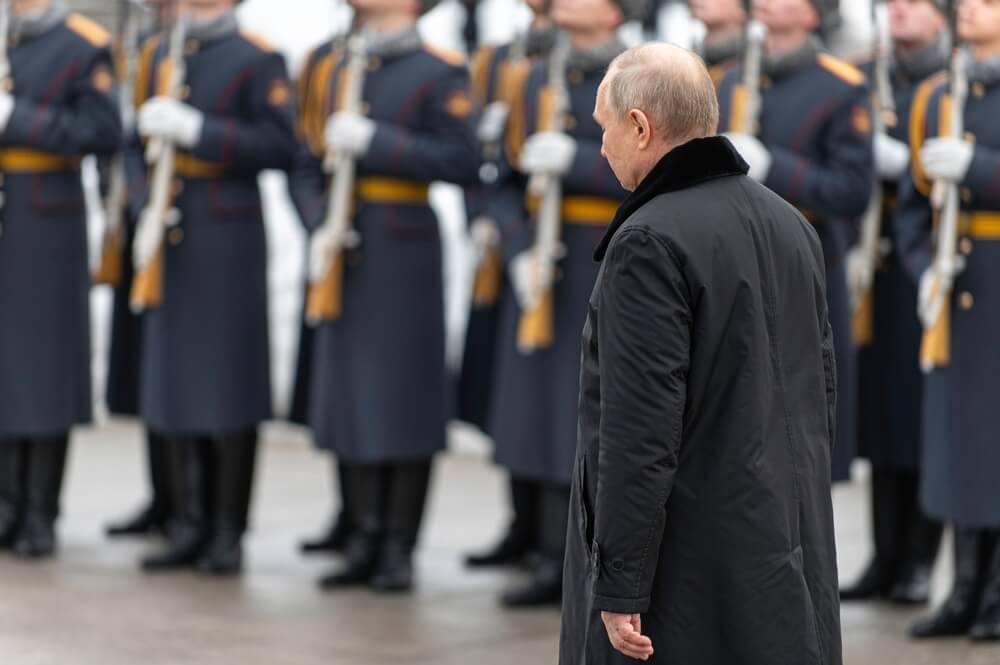 Russia positions itself not as a responsible nuclear state, but as a country prepared to use weapons of mass destruction as a tool of political pressure - Vladimir Putin
Since 2022, Moscow has repeatedly resorted to such rhetoric, but no actual use has occurred. As a result, the shock potential of such statements has largely been exhausted.
The governments of the United States, the United Kingdom, and EU countries have gradually adapted to this style of Kremlin communication and begun acting more decisively.
By threatening to use nuclear weapons, Russia positions itself not as a responsible nuclear state, but as a country prepared to use weapons of mass destruction as a tool of political pressure.
Such rhetoric contradicts the spirit of the global non-proliferation regime and undermines international norms of strategic stability. By using such rhetoric even through experts, Russia demonstrates that it is an unpredictable nuclear state.
The risk of a nuclear attack remains low
Despite the absence of moral restraints on Putin, the probability of using nuclear weapons against NATO countries remains low.
The factor of collective defence is in effect, which means the inevitability of a massive response.
At the same time, the risk regarding Ukraine is somewhat higher, as Kyiv has neither Article 5 guarantees nor its own nuclear deterrent.
That is why providing Ukraine with serious security guarantees within a future peace agreement with Russia is critically important for Kyiv.
In the medium and long term, escalation scenarios cannot be entirely ruled out.
Russia is increasingly moving the nuclear topic from the realm of political deterrence into military-practical discourse.
Theoretically, the use of tactical nuclear weapons on Ukrainian territory is possible as an attempt to break the course of the Russian-Ukrainian war. However, such a step would mean a radical change in the global security order.
Moscow also risks ending up in complete economic isolation, and in such a situation the EU could decide to confiscate Russian assets
The most effective way to minimise the risk of nuclear blackmail is to strengthen Ukraine’s air and missile defences.
Experience has shown that Patriot systems are capable of intercepting Iskander ballistic missiles and hypersonic Kinzhal missiles.
This creates a real barrier to Russian missile threats and reduces the scope for nuclear blackmail. The ability to shoot down missiles makes Kremlin ultimatums less convincing.
The key deterrent factor remains the prospect of a tough response from the United States, the United Kingdom, France, and NATO.
This includes both the possibility of nuclear retaliation and large-scale strikes with high-precision conventional weapons on Russian military facilities.
Moscow also risks ending up in complete economic isolation, and in such a situation the EU could decide to confiscate Russian assets.
Russia must also take into account the position of its partners who maintain a cautiously neutral stance on the war, particularly Beijing and New Delhi.
For China and India, the use of nuclear weapons would set an unacceptable precedent undermining global stability.
They are not interested in the destruction of the non-proliferation regime or global markets. The potential loss of their support is a serious deterrent for Moscow.
Nuclear umbrella
Meanwhile, some NATO member states understand that their security depends on being under a nuclear umbrella.
Recently, Estonian Foreign Minister Margus Tsahkna stated that, if necessary, his country could host allied nuclear weapons on its territory.
A group of European states, whose confidence in Washington’s reliability as an ally has wavered for the first time since the Cold War, has begun discussing their own nuclear deterrence options that would not depend on the United States, given the presence of hostile Russia with the world’s largest nuclear arsenal of about 5,500 warheads.
Today, only France (290 nuclear warheads) and the United Kingdom (225) have their own nuclear weapons among European states.
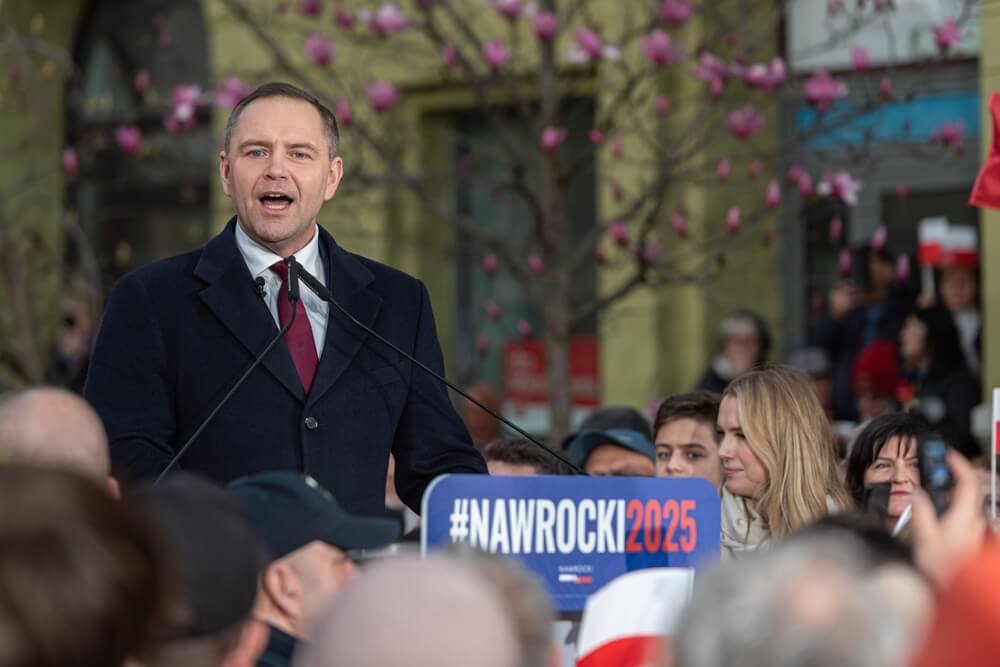 Estonia’s and Poland’s willingness not to rule out hosting nuclear weapons is explained by their geographical position and historical experience - Karol Nawrocki
Polish President Karol Nawrocki recently stated that he supports the country’s participation in a “nuclear project,” referring to the development of its own nuclear weapons, arguing that Poland borders aggressive Russia.
The emergence of discussions about nuclear weapons in Europe is a reaction to the collapse of previous security guarantees.
This marks a transformation of Europe’s security architecture in the context of Russia’s war against Ukraine.
Kyiv voluntarily gave up the world’s third-largest nuclear arsenal in exchange for guarantees under the Budapest Memorandum, which Russia, as one of the guarantors of Ukraine’s territorial integrity, violated.
For many in Europe and around the world, this served as a lesson: paper guarantees without real deterrence mechanisms may be insufficient.
That is why the issue of the physical presence of allied nuclear forces is no longer taboo.
Estonia’s and Poland’s willingness not to rule out hosting nuclear weapons is explained by their geographical position and historical experience.
Both countries directly border Russia and view nuclear presence as a deterrent, not a provocation. For them, it is a way to increase the cost of potential Russian aggression.
This position is a defensive reaction to the Kremlin’s constant aggressive actions. If Russia wants to reduce nuclear risks, it must start by ending the war against Ukraine and abandoning nuclear blackmail.
Oleksandr Levchenko, a former Ukrainian diplomat, is a professor at the State University (Kyiv) and a member of the Academy of Geopolitics and Geostrategy (Kyiv).
