The European Union is widely viewed as the world leader in climate action, a position it has held for the last few decades.
Of course, most member states are too small to make a dent in global greenhouse-gas (GHG) emissions on their own.
But as a bloc, they have managed to generate positive policy spillovers, creating a virtuous circle whereby their climate ambitions encourage others to follow suit.
Imagine this as a policy flywheel. At first, it takes substantial effort – in the EU’s case, political and diplomatic capital – to get it moving.
But once it has begun to spin, each rotation makes the next one easier. Three recent developments underscore the need for Europe to maintain its leadership on climate policy – in other words, to keep the flywheel spinning.
The EU’s most forceful push yet is the Carbon Border Adjustment Mechanism, which became fully operational on January 1.
The CBAM puts a price on embedded carbon emissions generated in the production of certain industrial imports, with credits for carbon prices paid at the location of manufacturing.
This has shifted the global political calculus in a much greener direction. To maintain competitiveness, exporting firms and non-EU governments are increasingly amenable to domestic carbon-pricing schemes.
The United Kingdom is developing a similar policy slated to begin in 2027. And leading up to CBAM’s enforcement, several major emitting countries including China, India, and Brazil have either expanded or introduced carbon pricing.
Billions of dollars in revenue
Carbon pricing is one of the most efficient tools for reducing emissions because it incentivizes firms to abate when it is cheaper to do so and shifts consumption away from carbon-intensive goods when it is not.
A report that I co-authored with colleagues from the Global Climate Policy Project at Harvard and MIT shows that a coalition of countries pricing carbon in heavy industries could generate billions of dollars in revenue, while also meaningfully reducing global emissions.
An important development on this front, which received little attention in Europe and the United States amid worsening geopolitical conditions, came in mid-February.
The political benefits of carbon pricing will soon outweigh the costs, and more governments will get on board
Australia released its final carbon leakage review, recommending its own version of the CBAM for emissions-intensive sectors – another turn of the flywheel.
Carbon border adjustments are under consideration in several other countries as well, including Turkey.
The growing adoption of carbon prices on imports places enormous pressure on the countries that do not have such a scheme, as their exports are increasingly subject to border adjustments.
The political benefits of carbon pricing will soon outweigh the costs, and more governments will get on board.
Ideally, this will result in a CBAM that never needs to be enforced because every country compels heavy industry to pay for the emissions linked to their production processes.
Future US climate policy
One country that famously does not have a carbon-pricing program is the United States, where the second important development took place.
Around the same time that Australia published its review, US President Donald Trump’s administration rescinded the Environmental Protection Agency’s “endangerment finding,” the legal foundation of all GHG regulation in the US.
If the administration is able to defend this reckless decision from legal challenges, future US climate policy will require congressional action.
Specifically, a law that reinstates the EPA’s authority to regulate GHG emissions would likely need 60 votes to pass the 100-member Senate.
By contrast, carbon pricing could be enacted through budget reconciliation with a simple majority.
This procedural advantage implies that carbon pricing is still a viable option, even if it seems improbable now.
Regardless of federal policy, US multinationals will increasingly operate in carbon-constrained foreign markets
Regardless of federal policy, US multinationals will increasingly operate in carbon-constrained foreign markets.
Moreover, in a world where carbon is priced properly, demand for cleaner steel and aluminum increases.
The US currently holds a comparative advantage in these sectors, which would be reinforced by a domestic carbon-pricing scheme.
To be sure, US policymakers are not accustomed to following other countries’ lead. But under the right political and economic conditions, the US government might be induced to pass carbon-pricing legislation.
With the repeal of the endangerment finding, fighting climate change in the US will be harder.
But that strengthens the case for Europe to continue leading the charge, particularly with carbon pricing, if that becomes one of the few ways the US can move forward on climate action in the future.
Pushback against the EU’s green regulations
This brings us to the last major development of late. On February 11, at a gathering with industrial leaders, German Chancellor Friedrich Merz said that the EU Emission Trading Scheme (ETS), the bloc’s carbon-pricing mechanism, may need to be revised if it undermines industrial competitiveness. Europe’s benchmark carbon prices fell sharply the next day.
Given the CBAM’s spillovers, any perceived weakening of the EU’s climate ambition could reverberate around the world.
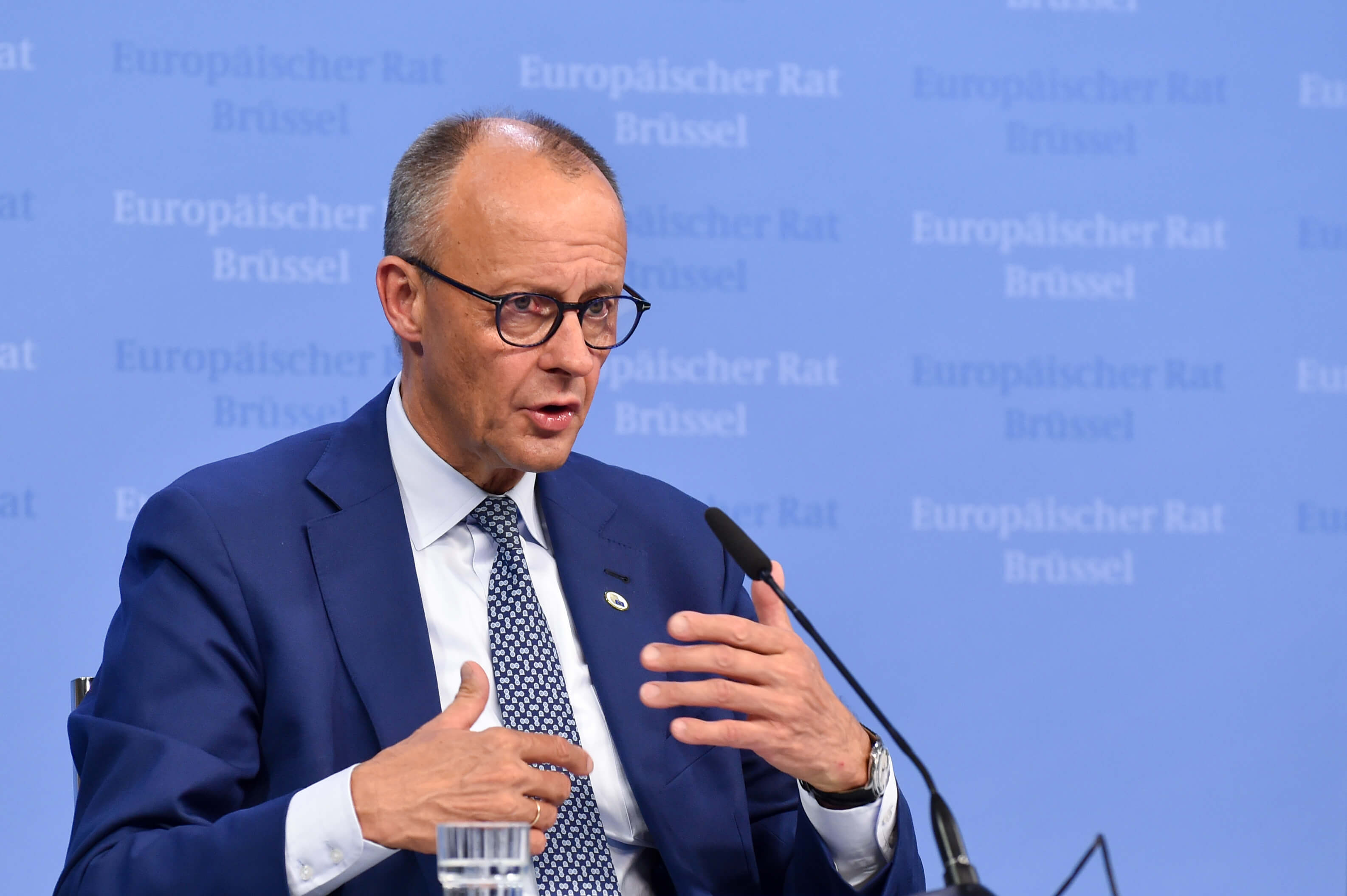 Any perceived weakening of the EU’s climate ambition could reverberate around the world - Friedrich Merz
Thus, despite all the handwringing over Trump’s rollback of the endangerment finding, Merz’s statement is potentially even more disruptive to global progress on climate change.
When facing pushback against the EU’s green regulations, Merz and other European leaders should recognize that the CBAM is creating a more level playing field for European industry by incentivizing other countries to adopt carbon pricing.
And as the first and only jurisdiction with such a mechanism, the EU is uniquely positioned to sustain this positive feedback loop.
That means any reforms to the ETS should be approached with caution, lest they undermine the ambition that has propelled Europe forward and is finally compelling others to act.
Catherine Wolfram, a former US deputy assistant secretary at the Treasury, is Professor of Energy Economics at the MIT Sloan School of Management.
