In the fifth year of aggression against Ukraine, Moscow is seeking to expand the geography of the conflict by involving Belarus in the war.
The Kremlin is exerting constant and intense pressure on the Belarusian regime, forcing it towards direct participation in combat operations against Ukraine.
Vladimir Putin needs to expand the front line to compel the Armed Forces of Ukraine to redeploy part of their forces from the southern and eastern fronts, thereby making them more vulnerable.
Despite Alexander Lukashenko’s long-standing efforts to avoid such a scenario, Moscow continues to systematically pressure Minsk towards a decision that would be suicidal for the Belarusian state: entering an open war against Ukraine.
Recent actions by the Belarusian authorities indicate a significant increase in the level of threat.
Lukashenko’s announcement of a “targeted mobilisation” of certain military units to bring them to combat readiness is a serious indication of preparations for aggression.
Furthermore, the deployment of Russian intermediate-range ballistic missile systems such as the Oreshnik in Belarus, along with joint exercises involving the combat use of tactical nuclear weapons, presents an unprecedented security challenge for all of Europe.
Russia views Belarus as a staging ground for strikes against western and northern Ukraine.
The primary objective of potential attacks by Russian forces from the northern direction would be to cut key logistical routes running from European countries through Poland into Ukraine, thereby disrupting the delivery of military, economic, and humanitarian assistance from Kyiv’s Western partners.
Alleged threat of attack
Lukashenko’s rhetoric relies on blatant manipulation regarding an alleged “threat of attack” from Ukraine and NATO countries.
By promoting the myth of aggression against Belarus and threatening to “use the entire military arsenal” in alliance with Russia, he seeks to justify the militarisation of the country and preparations for war to his domestic audience.
The Ukrainian side has already identified the first 500 strategic targets in Belarus
Ukraine will not passively observe threats from Belarus and will act strictly within the framework of international law, including Article 51 of the UN Charter, which recognises the inherent right of individual or collective self-defence in the event of an armed attack, as well as the implementation of any necessary preventive or defensive measures.
The Ukrainian leadership and the command of the Armed Forces of Ukraine have made it clear that, in the event of an illegal border crossing or the launch of large-scale strikes from the territory of Belarus, the response will be immediate and devastating.
The Ukrainian side has already identified the first 500 strategic targets in Belarus, including military facilities, warehouses, and defence-industrial enterprises, which would be struck within the first hours of a direct conflict.
Defensive fortifications
Official Minsk has been openly warned about this. Exercising its right to self-defence, Ukraine has significantly strengthened the protection of its northern border.
The construction of deeply layered defensive fortifications, the mining of border areas, and the concentration of combat units of the Armed Forces of Ukraine are forced but necessary measures.
Kyiv is compelled to allocate resources to protecting its northern border
These actions are intended to demonstrate that any attempt to invade Ukraine would end in disaster for the Belarusian military.
The fortifications, minefields, and engineering barriers along the border are purely defensive.
Kyiv is compelled to allocate resources to protecting its northern border because Minsk has become an unpredictable and dangerous neighbour.
Threat to the European Union
The constant threats of escalation from Vladimir Putin and Alexander Lukashenko pose a real danger to the citizens of the European Union.
There is a high risk of either an accidental or deliberate mistake that could trigger a conflict and transform it into a pan-European war, making urgent measures to de-escalate the military threat essential.
A firm position by the European Union aimed at increasing sanctions pressure on Belarus could become an effective means of influencing Lukashenko.
In particular, restricting railway and road transit of goods through Belarusian territory could serve as a powerful instrument for shaping Minsk’s behaviour.
Strength is the only language that the leaders of Russia and Belarus truly understand
Ultimately, the fastest way to halt escalation by Russia and Belarus is to demonstrate that any attack is guaranteed to fail.
In this regard, the West should lift all restrictions on arms deliveries to Ukraine and provide large quantities of long-range missile systems and drones.
If Moscow and Minsk clearly understand that Ukraine has the means to destroy a significant portion of their military infrastructure, their desire to attack and threaten others will diminish.
In these circumstances, strength is the only language that the leaders of Russia and Belarus truly understand.
Minsk is engaging in manipulation
The Belarusian leader has stated that he will not attack anyone and would act only in the event of aggression against Belarusian territory.
However, none of Belarus’s neighbours – Latvia, Lithuania, Poland, or Ukraine – has ever intended to attack Belarus, and Lukashenko knows this very well.
Nevertheless, it appears that he may act in a manner similar to Stalin’s Soviet Union in 1939, when Moscow claimed that tiny Finland had attacked the Soviet Union, prompting the Red Army to begin what it described as defensive operations.
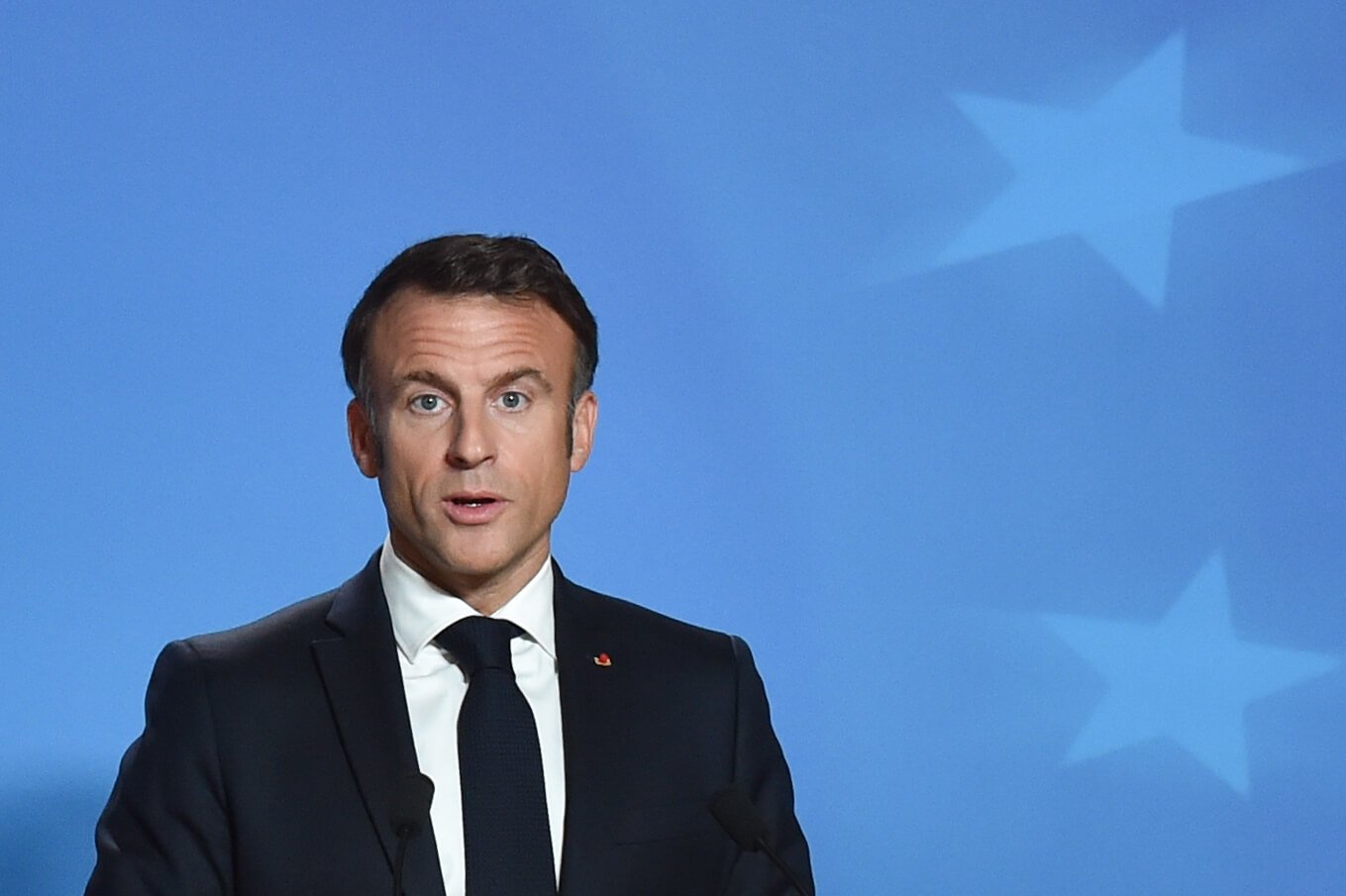 Emmanuel Macron, for the first time since 2022 held a telephone conversation with Lukashenko and warned him against Belarus’s involvement in Russia’s aggression
Recently, a senior representative from Minsk, speaking at a meeting of the secretaries of the security councils of the Collective Security Treaty Organization (CSTO) – whose members include Russia, Belarus, Kazakhstan, Kyrgyzstan, and Tajikistan – claimed that Ukrainian drones were constantly attacking Belarusian border infrastructure.
At the same time, he failed to mention that Minsk had given Kyiv numerous assurances at the beginning of 2022 that Belarusian territory would never be used by Russian forces to attack Ukraine. Those assurances turned out to be outright falsehoods.
It is clear that Minsk is engaging in manipulation once again. Ukraine has absolutely no need or interest in escalating the situation. However, tensions are being deliberately intensified by the Belarusian side.
French President Emmanuel Macron, for the first time since 2022 – the year Russia launched its full-scale invasion of Ukraine – held a telephone conversation with Alexander Lukashenko and warned him against Belarus’s involvement in Russia’s aggression, emphasising the negative consequences that would await Minsk.
Kyiv has issued similar warnings. The decision now rests with Minsk. Lukashenko will not succeed in deceiving Ukraine a second time.
Oleksandr Levchenko, a former Ukrainian diplomat, is a professor at the State University (Kyiv) and a member of the Academy of Geopolitics and Geostrategy (Kyiv).
