With every new idea and announcement come questions and moments of doubt. Europe has long sought to compete with the United States and China in technology and innovation.
One challenge that keeps coming up is fragmentation. Different legal systems, different compliance rules, and different ways of doing business across borders.
The introduction of EU Inc., a single set of corporate rules that could apply across the European Union if it goes through, could be one of the most important structural changes for startups and innovation in Europe over the next decade. We are expecting a final decision by the end of the year.
We still have many conversations about digital transformation, quantum computing, and artificial intelligence. But without the proper basis, none of that is feasible.
Regulation, organisation, and market access still determine the pace of innovation. EU Inc. is an effort to address it.
Will it, however, fulfil its promise? Will it become a reality? Or will the gatekeepers of policy prevent it from taking off?
What is EU Inc.?
EU Inc. serves to create a unified corporate framework across all EU member states. Instead of navigating multiple national legal systems, companies would be able to operate under one consistent set of rules.
For startups, this changes everything.
Today, a founder who wants to expand across Europe often faces a maze of legal requirements. Setting up entities in different countries can take time, money, and legal expertise that early-stage companies do not always have.
EU Inc. aims to simplify that process by introducing a standard corporate structure that works across borders.
The timeline is still developing, with implementation expected to follow regulatory alignment and member-state coordination
The European Commission presented this initiative as part of a broader effort to strengthen the single market and make Europe more competitive globally.
The timeline is still developing, with implementation expected to follow regulatory alignment and member-state coordination.
"Europe has the talent, the ideas, and the ambition to become the best place for innovators. Yet today, European entrepreneurs who want to scale up face 27 legal systems and more than 60 national company forms. With EU Inc., we are making it drastically easier to start and grow a business all across Europe. Any entrepreneur will be able to create a company within 48 hours, from anywhere in the European Union, and fully online. This crucial step is just the beginning. Our goal is clear: one Europe – one market – by 2028," said Ursula von der Leyen, President of the European Commission.
For years, Europe has produced world-class talent, strong research institutions, and innovative startups. Yet scaling those startups into global companies has been more difficult compared to other regions. EU Inc. is trying to address that gap.
This initiative could change the game for startups
EU Inc. could unlock significant advantages for founders and investors.
The first is simplicity. A unified rulebook reduces legal complexity by allowing founders to focus on building products and scaling businesses rather than navigating regulatory differences across multiple countries.
The second is speed. Startups move fast, markets evolve quickly, and a streamlined corporate structure enables companies to expand across the EU without delays from administrative barriers.
The third is access. A company built under EU Inc. could operate more easily across all member states, reaching a market of more than 400 million people.
EU Inc. could make Europe more attractive for both founders and investors
That level of access is crucial for scaling digital platforms, SaaS businesses, and emerging technologies.
The fourth is investment. Investors look for clarity and predictability. A unified corporate structure would make it easier for venture capital firms to deploy capital across borders without having to deal with fragmented legal systems.
In essence, EU Inc. could make Europe more attractive for both founders and investors.
That is exactly what the region needs if it wants to compete globally.
We have seen how ecosystems like Silicon Valley benefit from a unified regulatory and financial environment. Europe has not had that advantage. EU Inc. could start to close that gap.
The challenges no one should ignore
At the same time, this initiative is not a simple transition. Creating a single corporate framework across multiple countries with different legal traditions, tax systems, and regulatory priorities is complex.
Member states will need to align on key issues, including corporate governance, taxation, labour laws, and compliance standards.
That process will take time.
And how about adoption? Will startups choose EU Inc. over existing national structures? Will large corporations transition to this model, or will they continue operating under familiar frameworks?
EU Inc. should strike a balance between simplifying business operations and maintaining the standards that define the European market
Another challenge is execution. The success of EU Inc. will depend on how clearly regulators define the rules and how consistently member states apply them.
Fragmentation in implementation could weaken the initiative as a whole.
There is also a broader concern around regulation. Europe has built a reputation for strong regulatory frameworks, particularly in data protection and digital governance. That approach creates trust. It also adds complexity.
EU Inc. should strike a balance between simplifying business operations and maintaining the standards that define the European market.
Leadership and vision
Artificial intelligence is reshaping industries, quantum computing is moving closer to practical applications, autonomous systems are becoming part of everyday operations, and digital platforms continue to redefine how businesses scale.
The pace of change today is not comparable to what we saw ten years ago. That is why leadership matters more than ever. Policies like EU Inc. require long-term thinking.
They require leaders who understand both the technical and economic implications of innovation. Europe has the talent, the research capabilities, and the entrepreneurial spirit.
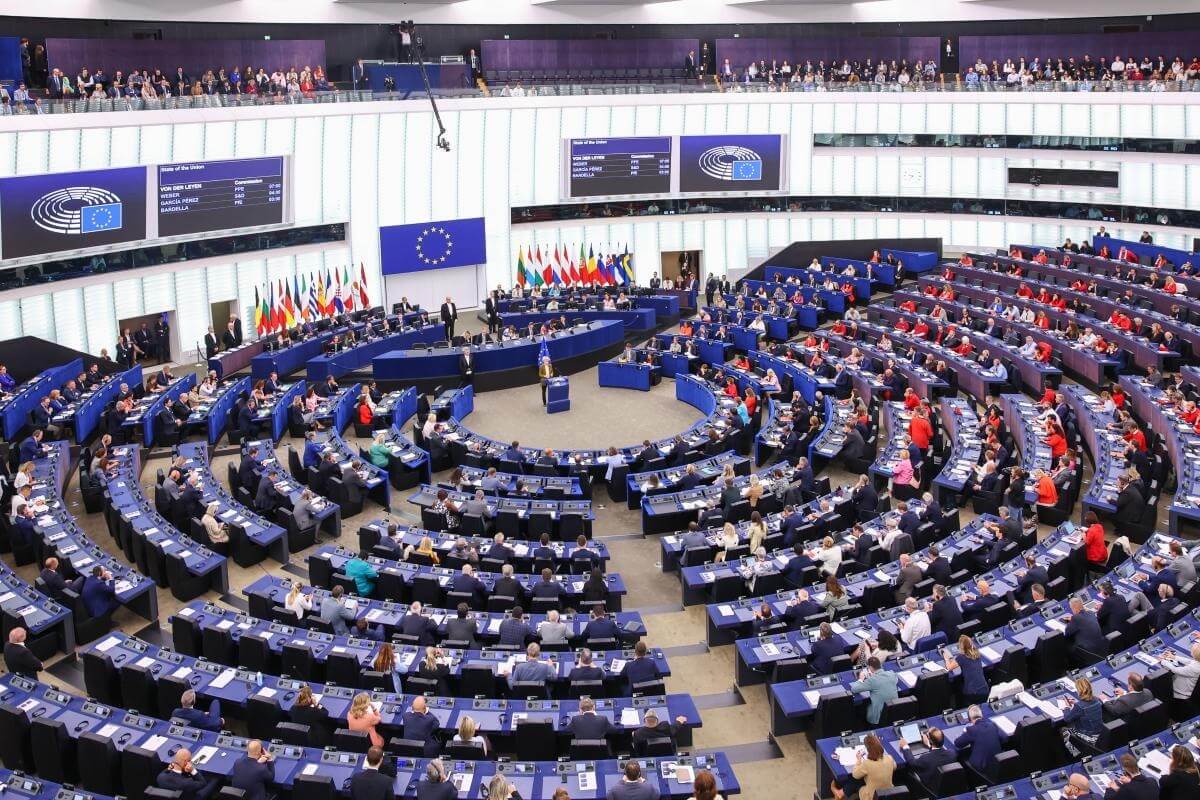 EU Inc. is a test. A test of whether Europe can move beyond fragmentation and build a truly unified innovation ecosystem - European Parliament
But what it needs most is alignment. EU Inc. represents an attempt to create that alignment. It sends a message that Europe is serious about building an environment where startups can grow, scale, and compete on a global stage.
From my perspective, this is the type of structural change that can unlock the next wave of European innovation. But vision alone is not enough. Execution will define the outcome.
EU Inc. is a test. A test of whether Europe can move beyond fragmentation and build a truly unified innovation ecosystem.
A test of whether policymakers can keep pace with the speed of technological change.
And a test of whether the region can create the conditions needed for its startups to scale into global leaders. We are advancing faster than ever.
Technology is pushing boundaries in ways we could not have imagined a decade ago.
EU Inc. has the potential to remove barriers and unlock opportunities at scale. Will Europe move fast enough to turn this vision into reality?
