Consistent R&D investment leads to technological leadership. One thing that consistently sets leaders apart from followers is how they handle change across artificial intelligence, semiconductors, cloud computing, and connectivity.
Research and development is one of the greatest competitive advantages in technology and innovation. Sales drive short-term growth, marketing increases visibility, and R&D establishes long-term supremacy.
Even amid unpredictable economic cycles, the top tech companies continue to invest heavily in innovation.
When reviewing annual filings, innovation roadmaps, and patent activity, six companies stand out globally. Let's take a look.
R&D defines technology leadership
Innovation cycles now move faster than at any point in history. The reality is that artificial intelligence evolves rapidly, semiconductor design advances annually, and robotics and automation reshape industries in ways we have not seen before, meaning that companies that slow investment quickly lose relevance.
R&D creates new sources of income while safeguarding established companies. Businesses that make major investments in software platforms, custom silicon, and AI infrastructure create obstacles that rivals find difficult to overcome.
Ecosystem expansion is also fuelled by R&D. Developers build upon a company's billion-dollar investments in key technologies. The compounding effect of partners integrating solutions and startups aligning around dominating ecosystems strengthens its market leadership.
High-impact fields like artificial intelligence, cloud infrastructure, connectivity, custom silicon, and automation are where top tech companies focus their R&D budgets
Financial figures also support this claim. High R&D spending is associated with long-term revenue growth. Businesses reinvest their profits in innovation, creating new products that boost sales.
Another factor is attracting talent. Engineers and researchers want to work on difficult problems. Businesses with significant R&D resources frequently hire top people. This level of expertise helps accelerate innovation.
Focus is the major change I see. High-impact fields like artificial intelligence, cloud infrastructure, connectivity, custom silicon, and automation are where top tech companies focus their R&D budgets. These expenditures create the fundamental skills needed for a variety of products.
Inside the R&D portfolios of 6 tech leaders
In 2025, Alphabet's annual sales hit $400 billion, but the company spent $61.08 billion on R&D. Alphabet makes significant investments in autonomous systems, cloud computing, and artificial intelligence.
Google DeepMind continues to push the limits of fundamental AI research. Service performance is enhanced using Tensor Processing Units and other specialised silicon. In cloud, AI, and search, I anticipate Alphabet building long-lasting technological moats.
Amazon spent $108.52 billion on research and development, with annual sales of $716 billion. Amazon focuses its research on robotics, cloud computing, generative AI, and logistics automation.
AWS drives much of this innovation. Warehouse automation and supply chain optimisation increase operational efficiency. Amazon sees technology as the cornerstone of its retail and business services.
Microsoft continues to have a powerful engine for innovation. The business reported $281.7 billion in revenue and $33.67 billion in R&D expenses annually. Microsoft concentrates on integrating AI into cloud services, enterprise apps, and productivity tools.
Investments in generative AI capabilities and AI infrastructure strengthen Azure's ecosystem. Instead of creating stand-alone inventions, I anticipate that Microsoft will integrate intelligence into all of its current products.
With $416.2 billion in revenue, Apple spent $34.55 billion on research and development. Custom silicon, hardware, software integration, and spatial computing are Apple's top priorities. Apple performs at scale while making strategic investments.
R&D budgets enable experimentation, failure, and breakthrough discovery
Meta is still investing heavily in long-term research. The corporation spent $57.37 billion on R&D and generated $200.97 billion in annual revenue. Meta specialises in next-generation computer systems, virtual and augmented reality, and artificial intelligence.
Reality Labs represents a long-term investment in spatial computing. Additionally, Meta invests significantly in generative AI and recommendation systems. Meta is preparing itself for immersive digital spaces, in my opinion.
Huawei stands out as one of the most R&D-intensive companies globally. The company invested approximately $28 billion annually in research and development, representing more than 20 per cent of revenue. Annual revenue exceeded $126 billion.
Huawei focuses on telecommunications infrastructure, 5G and 6G research, semiconductors, and enterprise cloud services. I view Huawei's strategy as resilience-driven.
The company invests heavily in self-developed technologies, including chip design and networking hardware. Huawei's commitment to innovation strengthens its role in global connectivity infrastructure.
A few years ago, I had the unique opportunity to visit the prestigious campus in Shenzhen, China, and have one-on-ones with several of their C-level executives to gain a deeper understanding of their success. R&D investment was one of my key takeaways for their success.
These six companies share a common approach. They invest consistently regardless of short-term market pressure. Their R&D budgets enable experimentation, failure, and breakthrough discovery.
What startups can learn from big tech's R&D strategy
Startups often believe that large R&D budgets give them an advantage. I don't agree. In my opinion, strategy is more important than scale. These global leaders have a lot to teach smaller businesses.
Start by concentrating on a single key invention. Leading tech companies focus their funding on game-changing technology. Startups should choose one technology advantage and build extensively around it.
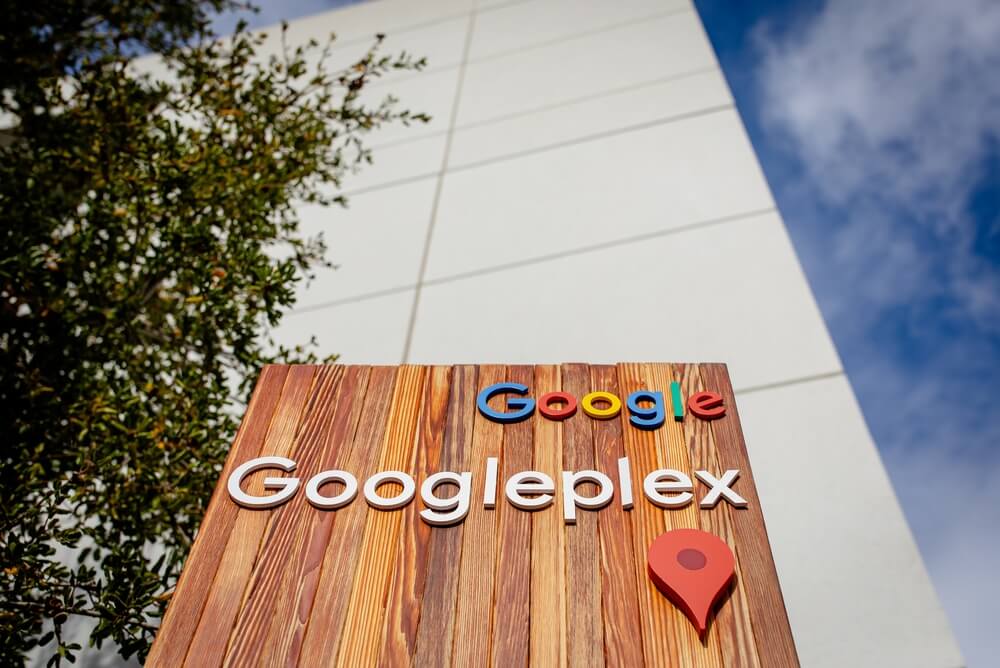 R&D now defines leadership in technology. The companies dominating global research investment understand this reality
Second, make a direct link between research and goods. Leading businesses reduce the time between concept and implementation. The engineering and product teams of startups should work closely together.
Third, make an early investment. R&D was prioritised over revenue by many IT giants. Early innovation produces defensibility. Competitive advantage is diminished by waiting for growth to slow.
Fourth, create ecosystems. Big businesses promote developer communities and collaborations. By releasing APIs and working with specialised partners, startups may duplicate this.
Fifth, think long-term. R&D does not produce immediate returns; it never has. Companies that invest consistently create durable advantages. Startups that commit to innovation build resilience.
R&D now defines leadership in technology. The companies dominating global research investment understand this reality. They are building products and are shaping infrastructure for artificial intelligence, connectivity, and computing.
If R&D is tech's biggest weapon, which emerging companies will invest aggressively enough to challenge today's giants?
