Jakub Wiech, the former editor-in-chief of Poland’s Energetyka24, recently mused that “there are three things you can watch endlessly: a fire burning, water flowing, and Gazprom being valued lower than Orlen.”
In March, that observation became reality, as the Polish energy major’s market capitalization surpassed that of Russia’s leading state-owned energy giant for the first time.
In this sense, Orlen’s rise and Gazprom’s fall offer a condensed history of modern Eastern Europe.
Just a few years ago, Gazprom’s valuation was more than 40 times higher than Orlen’s, reflecting the fact that it was no ordinary corporation.
For decades, the Kremlin has relied on oil and gas revenues to finance Russia’s imperial state, with Gazprom’s revenues alone accounting for nearly 5% of the country’s GDP.
Back in 2007, Gazprom was the world’s third-largest company, with a market capitalization exceeding $330 billion and ambitions of reaching $1 trillion within a decade.
Since then, however, Gazprom’s market capitalization has fallen to just $38.8 billion, roughly on par with an average European supermarket chain.
Gazprom is a textbook case of geopolitics sinking a company that once seemed indestructible.
After Russian President Vladimir Putin launched his full-scale invasion of Ukraine in 2022, the European Union slashed imports of Russian gas, switching to liquefied natural gas (LNG) from the United States, Qatar, and Norway.
Gazprom was left with pipelines leading to customers who no longer wanted to use them.
Its diminished market value has nothing to do with the size of its reserves, but with the Russian state’s utter lack of credibility as a supplier.
Orlen’s trajectory has been anything but easy
The Polish government holds a 49.9% stake in Orlen, yet its trajectory has been anything but easy.
It had to endure years of populist misrule under Jarosław Kaczyński’s Law and Justice (PiS) party, which often saw the company as an extension of its own campaign headquarters.
Consider the saga of Daniel Obajtek, whom Kaczyński promoted from his position as mayor of Pcim (a Polish “Nowheresville”) to serve as president of Orlen’s board.
After PiS lost power in 2023, Obajtek fled to Hungary, yet still won a seat in the European Parliament while abroad, which he still holds despite losing his immunity against a 2013 indictment on corruption charges.
During his tenure at Orlen, Obajtek sabotaged the company’s finances by lowering fuel prices to improve PiS’s chances ahead of the 2023 elections, and by purchasing billions of dollars’ worth of oil that somehow never made it to Poland.
Following Obajtek’s departure, the company recovered, climbing into the ranks of the world’s 600 largest companies and emerging as a leading player in the Eastern European energy sector, with revenues in the tens of billions of dollars.
It is no longer just a refinery with gas stations, but an integrated conglomerate controlling everything from upstream operations on the Norwegian Continental Shelf to refineries, power generation, and hydrogen projects.
The market has rewarded Orlen not for its imperial ambitions but for its diversification and demonstrated ability to operate within European rules
Notably, the market has rewarded Orlen not for its imperial ambitions but for its diversification and demonstrated ability to operate within European rules.
Its LNG contracts with the US and Qatar, access to Norwegian deposits, and gas interconnections with Lithuania, Slovakia, and the Czech Republic have transformed Poland from a Gazprom customer into a regional energy-security hub.
With yet another war-driven energy shock emanating from the Middle East, the company’s outlook has continued to improve.
Beyond Gazprom, it also helps to compare Orlen’s story to MOL, the Hungarian energy conglomerate.
MOL was operating in a gray zone
MOL also has an integrated oil and gas business with refineries, gas stations, and a presence throughout the region.
It is the market leader in Hungary, Slovakia, and Croatia, and it operates upstream in more than a dozen countries.
Much like the Hungarian government under Prime Minister Viktor Orbán, MOL has been “hitchhiking” between East and West for years.
After Russia’s invasion of Ukraine, MOL took advantage of the situation
After Russia’s invasion of Ukraine, it took advantage of the situation by purchasing cheaper Russian oil via the Druzhba pipeline, which it processed in its own refineries and then sold as “Hungarian” fuel on the European market.
Formally, this was permissible because the EU had granted exemptions to several landlocked countries, including Hungary. But politically, MOL was operating in a gray zone.
Considered in isolation, this bet may have paid off in the short term, given that the company’s market capitalization has roughly doubled since 2021.
But when compared to Orlen’s fivefold growth, MOL’s valuation is far from impressive, nor does it speak well for the Hungarian “in the EU, but against the EU” development model.
In fact, foreign investors are fleeing Hungary as Orbán continues to block successive rounds of sanctions against Russia, provokes disputes with the European Commission, and reports on the EU to his friends in Moscow (and perhaps also Beijing).
Gazprom represents imperialist populism
The Gazprom-MOL-Orlen triptych reveals three different political-economic models.
Gazprom represents imperialist populism. It sold gas like a drug dealer, and the market valued it as a state within a state, which worked in its favor until it didn’t.
MOL represents transactional populism. Rather than building an empire, it lives shrewdly off political hooliganism: exploiting loopholes in sanctions, balancing between Europe and Russia, and circumventing rules and regulations.
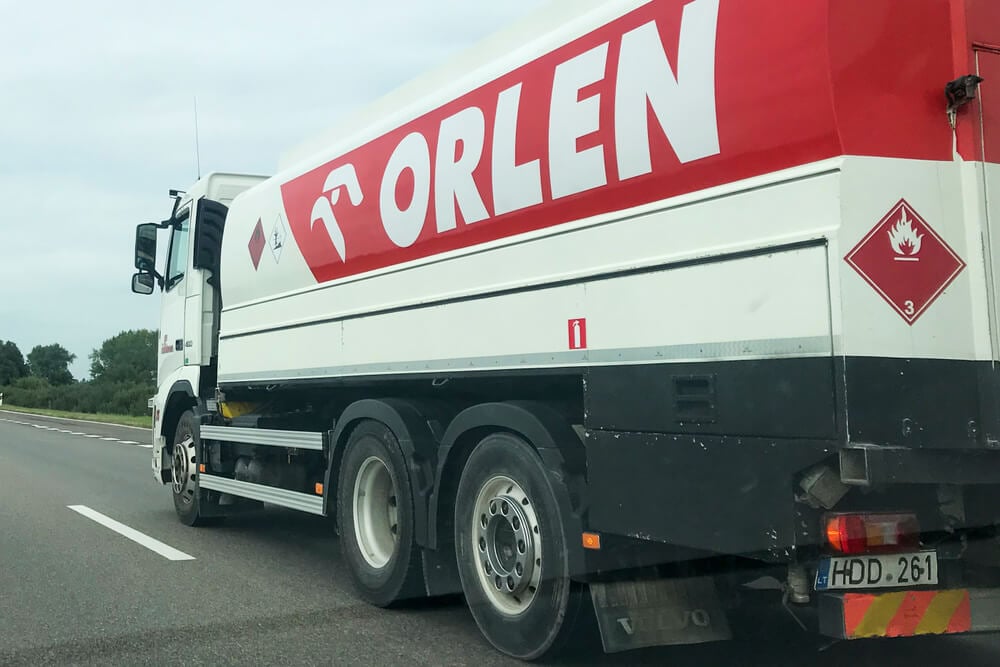 Orlen represents European-style market liberalism
Finally, Orlen represents European-style market liberalism. It is state-owned and thus exposed to potential politicization (as happened under PiS), but it respects the EU legal order and the supervision of EU institutions.
The differences are visible not only in the companies’ respective valuations but also in their home countries’ economic trajectories.
In 2025, Poland recorded economic growth of over 3%, alongside relatively stable investment levels and a gradual decline in inflation.
Meanwhile, Hungary flirted with recession, and Russia has suffered from years of high inflation, a sharp decline in investment, and an outflow of human capital.
Under Putin, Russians have no choice about their future. But Hungarians do. Like Polish voters three years ago, they will soon decide whether what they have is what they want.
Sławomir Sierakowski, Founder of Krytyka Polityczna, is Head of the Program Board of Impact CEE and a senior fellow at the German Council on Foreign Relations (DGAP).
