Battling a hostile media environment and a gerrymandered electoral map, the Hungarian opposition, led by Péter Magyar, has triumphed over Viktor Orbán, winning not just a bare majority but the supermajority needed to amend the constitution.
It is a stunning reversal, especially considering that Orbán secured supermajorities in 2014, 2018, and 2022, allowing him to entrench his party, Fidesz, in state institutions and the public sphere.
Magyar now must deliver on the bread-and-butter issues that featured prominently in his campaign—in the face of Europe’s unfolding energy crisis, no less—while also restoring democratic norms.
If he mishandles these challenges, Fidesz holdouts in the government, the courts, and the media will do whatever they can to undermine or even derail the country’s democratic renewal.
The holdout problem is substantial. Magyar’s government will be confronting a judiciary packed with Fidesz appointees.
The Supreme Court’s president was parachuted into his role in 2021 with a nine-year term, despite complaints from the United Nations special rapporteur on judicial independence.
Too few judges will rotate off the bench for its pro-Fidesz orientation to fade during Magyar’s first term.
Various state agencies and offices have also been captured. The public prosecutor, for example, has demonstrated an unerring capacity to overlook corruption by Fidesz officials.
And thanks to Fidesz allies in the media and in universities, the party will maintain a “tentacular” grip on civil society.
Biden’s presidency offers two clear lessons
Still, the experience of other backsliding countries sheds some light on how to manage these challenges, and Magyar’s successes or failures on this front will offer new lessons for others.
Joe Biden’s presidency, for example, offers two clear lessons. First, Magyar must take quick and decisive action to show that there is a price for defecting from legal and constitutional norms.
Rather than making it a high priority to publicize and punish the criminality seen during Donald Trump’s first administration, Biden’s team made an ostentatious show of proceeding in a debilitatingly meticulous fashion.
There were never any serious investigations into Trump’s financial conflicts of interest or self-dealing
As a result, there were never any serious investigations into Trump’s financial conflicts of interest or self-dealing, and in addressing Trump’s role in the deadly violence of January 6, 2021, the Justice Department pursued what the New York Times called a “dysfunctional and maddeningly slow, investigation.”
Indeed, it took almost two years even to appoint a special counsel (Jack Smith), at which point the political wind had completely dropped out of the Biden administration’s sails.
The start of the investigation was so poorly timed that it allowed Trump to accuse Smith of election interference.
Similarly, Attorney General Merrick Garland waited until six months after the inauguration to issue a memorandum restricting contacts between the Justice Department and the White House.
And to the extent that this had any public effect, it was likely dissipated by Biden’s later pardon of his son, Hunter, which Trump predictably presented as evidence of Biden’s “weaponization” of the justice system.
The working theory at the time seems to have been that prompt legal action against Trump would have backfired by seeming partisan.
Restoring accountability
This rationale now seems plainly wrong, and Magyar has a chance to avoid making the same mistake.
His efforts at restoring accountability, moreover, should not be limited to preventing Fidesz holdovers from subverting re-democratization efforts.
Given his campaign’s focus on the Orbán regime’s endemic corruption, it would make perfect sense for government prosecutors to investigate those who have benefited improperly from their offices, including Orbán himself.
In terms of dealing with holdovers, the courts are particularly important in this respect.
Had it not been for the US Supreme Court’s decisions defanging the Fourteenth Amendment’s disqualification clause (unanimously—to the shame of the liberal justices), and then eviscerating the possibility of criminal prosecution (over the liberals’ sharp dissent), Trump would have entered the 2024 election on a very different footing.
Instead, those rulings meant that Trump would never have to face, in open court, the evidence of his dangerous and unlawful election subversion.
Fortunately, Magyar’s government has the enormous advantage of a two-thirds parliamentary majority capable of amending the constitution
Even if the specifics of these Trump-enabling decisions could not have been anticipated, there was ample reason for concern about how justices appointed by Republican presidents (including the three Trump himself appointed) would treat Trump’s violations of the law.
While the US Constitution constrains what a president can do about such judicial holdovers, the clash between Franklin Roosevelt and a conservative Supreme Court over the New Deal in the 1930s show what is possible.
Roosevelt proposed an expansion of the Court, and this legal, albeit highly controversial, measure successfully pressured the justices to abandon their reactionary obstructionism.
By contrast, Biden dithered, appointing a sprawling committee to explore the idea of Supreme Court reform. The result, months later, was a widely unread 200-page report that had no effect on public opinion.
Fortunately, Magyar’s government has the enormous advantage of a two-thirds parliamentary majority capable of amending the constitution.
While Fidesz abused this power, the proper response is not saintly inaction. It is to right the democratic ship.
Inflection point for democracy globally
Like Hungary today, there will come a time when the US needs to move past the second Trump term and address all the damage that has been done to the courts and the Justice Department’s credibility.
Watching what does and does not work for Magyar will be instructive. If Hungary can become a model for MAGA to emulate, it can also become a sandbox for experimenting with democratic renewal.
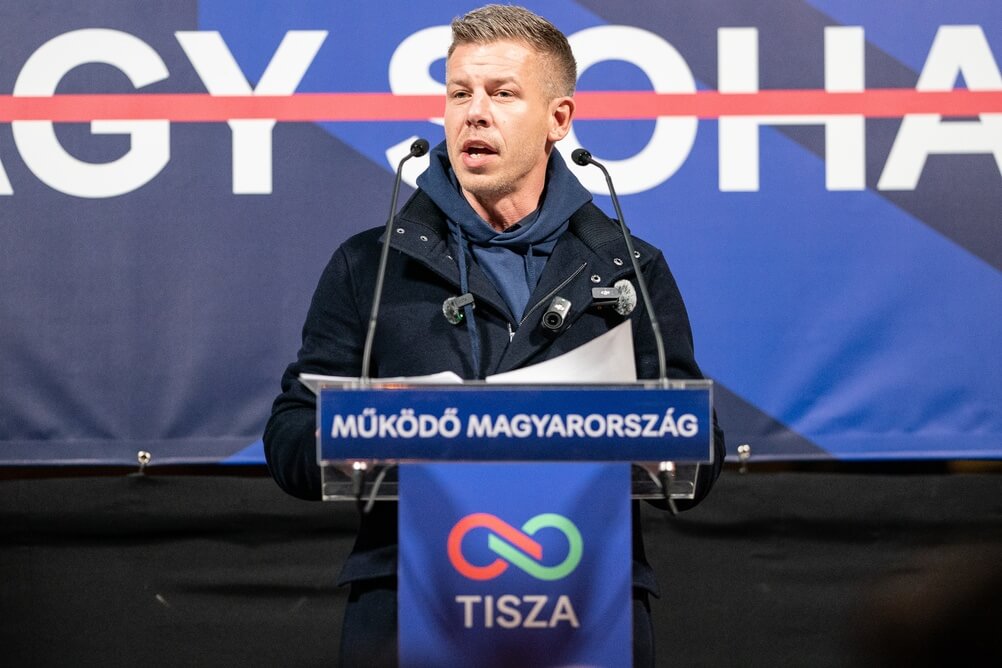 If Hungary can become a model for MAGA to emulate, it can also become a sandbox for experimenting with democratic renewal - Péter Magyar
At a minimum, Hungary will be a test case for whether criminal investigations and prosecutions can puncture the myth that populist leaders stand for “the people.”
It can show us whether it is better to highlight past corruption or to focus on anti-democratic behavior.
Of course, because Magyar has more legal tools to uproot and reform distorted political institutions—like the gerrymandered electoral map—his experience will offer the US no simple template.
But by acting with determination to root out Fidesz obstructionists, he can provide an important lesson in how supporters of liberal democracy can defend their own values.
Will Orbán’s fall mark an inflection point for democracy globally? As the jubilation fades, more difficulties are likely to become clear.
Yet in confronting these challenges, Magyar’s Hungary offers a vital opportunity for the rest of us to think about how best to reform and redeem our own polities.
Aziz Huq is Professor of Law at the University of Chicago Law School and an associate professor in the University’s Sociology department.
