Negotiations to end the current round of violence in the Middle East or make the Iran ceasefire permanent will need to overcome not only distrust and animosity but, regardless of the outcome, will face a lack of credibility.
Even if agreements are reached, these risk being either just stopgaps or worse – ineffective face-saving mechanisms that will pave the way for future conflict.
Neither in Iran nor in Lebanon is there any realistic prospect of a solution that would set the region on a course of stability and peace. In fact, it currently appears as if the recent US and Israeli military action has significantly worsened the outlook.
Iran’s regime is left in place for now and can be expected to maintain its nuclear course, which has in all likelihood always been towards eventually developing a nuclear weapon or maintaining near break-out capacity, even if it concludes a deal that would say otherwise.
It has proved it can block the Strait of Hormuz and target its Gulf neighbours. Even in the unlikely event that Tehran agrees to curb its ballistic missile programme, it will almost be impossible to curtail its drone development and methods of asymmetrical warfare, which could become ever more effective.
Linked theatres of operation
In Lebanon, the fiction that the government can and will disarm Hezbollah is being reinforced by direct negotiations with Israel.
The current fighting and the resistance Israel encounters during its invasion of southern Lebanon show that earlier talk of the Beirut government having largely disarmed the group south of the Litani River was hollow, which was also entirely predictable.
Even if significant progress can be made on the state-to-state level, there are no viable options on the table to deal with Hezbollah, both for internal Lebanese reasons and for regional ones.
Iran and Hezbollah have now openly linked their theatres of operation
The Israeli reason for engaging in these talks is likely mostly cosmetic and in order to appease the US.
Furthermore, while the US and Israel reject it as part of the current ceasefire, Iran and Hezbollah have now openly linked their theatres of operation.
Any flare-up of violence in Iran could in the future lead to a much quicker Hezbollah attack against Israel. And vice versa, an attack on Hezbollah could now be a reason for Iran to target Israel. Previously there was a much weaker linkage.
Untrustworthy parties
Israel and the US also appear more than before to be untrustworthy parties that cannot be relied upon to follow through on their commitments.
Trump has now twice attacked Iran while negotiations were still thought of as viable. Israel has kept attacking Hezbollah and also Gaza despite ceasefires. And both have breached a ceasefire with Iran that was reached after the previous round of violence in 2025.
Worse than that, though, the reasons for doing so are unclear, and the goals, if any, are unrealised.
If already deciding to violate earlier understandings, doing so without achieving a decisive outcome not only makes the US and Israel look untrustworthy, it also makes them look ineffective and irresponsible.
The best the rest of the world can hope for is for all sides to settle into a long-term waiting game
Under these circumstances, it is very hard to see how any new agreements will improve the situation. Neither side has reason to believe that these would even be worth the paper they’re written on.
Nor do the US and Israel now have sufficient deterrent capabilities to make them stick. On the contrary, it’s Iran that has proved itself to have a stronger deterrent than previously thought, with its ability to disrupt the Gulf economies and control global energy flows.
The best the rest of the world can hope for is for all sides to settle into a long-term waiting game that would push the can down the road sufficiently for something to change in the meantime.
The 20-year moratorium
This is why the 20-year moratorium on Iran’s nuclear programme, specifically uranium enrichment, proposed by the US, is not entirely without merit. It is built on the hope, a vain one some might say, that this would give enough time for the Iranian regime to change.
Tehran is clearly aware of what lies behind the proposal and has reportedly countered with a 5-year hiatus offer.
But this is even shorter than the 15-year period of capped enrichment under the 2016 Joint Comprehensive Plan of Action (JCPOA) that Trump withdrew from in 2018.
The Americans have already gone from demanding a permanent ban on enrichment to this finite 20-year offer
One of the main reasons given at the time for tearing up the JCPOA was exactly its eventual expiration, the ‘sunset clauses’.
The very temporary suspension of enrichment offered by Iran is therefore more an insult to Trump than a genuine offer, although it is clearly also an opening gambit.
The Americans, on the other hand, have already gone from demanding a permanent ban on enrichment to this finite 20-year offer.
Another layer of insecurity
But any agreement on this and other thorny issues, such as what to do with Iran’s existing enriched uranium stockpile, ballistic missile development, the Strait of Hormuz and more, would be extremely tenuous.
Israel and the US, and a large part of the international community, would assume that Iran was covertly continuing on its nuclear and ballistic course, even with verification processes in place.
Iran would know this and would be aware that its opponents could at any moment come up with a reason, or an excuse, to once more resort to force.
Tehran would also know that Israel and the US are likely to keep pushing for regime change, adding another layer of insecurity
This apart from the myriad ways in which proxies, shadow war incidents, and regional flare-ups could lead to a renewal of full-scale fighting.
Moreover, any finite agreement might incentivise the parties to adhere to it initially but seek ways to gain a further advantage towards its expiration or exit it altogether, as Trump did with the JCPOA in 2018.
Tehran would also know that Israel and the US are likely to keep pushing for regime change, adding another layer of insecurity.
Iran, on the other hand, can easily outwait Trump and Netanyahu, they will at some point disappear from the international stage, and their successors might be less focussed on the nuclear issue.
Deep-seated enmities
It might also see the current Israeli-US alignment as coming to an end, given the changed perception of Israel worldwide and among the American public. In the future, even in five years’ time, the US and other powers will be much less likely to fight alongside Israel.
Iran would also hope to change the regional situation further to its advantage, possibly by gaining even more influence in Iraq and waiting for the Gulf monarchies to change or implode.
The latter, by the way, are not likely to significantly change their posture in favour of Iran despite some speculation that they feel burnt or let down by both the Americans and the Israelis in this war.
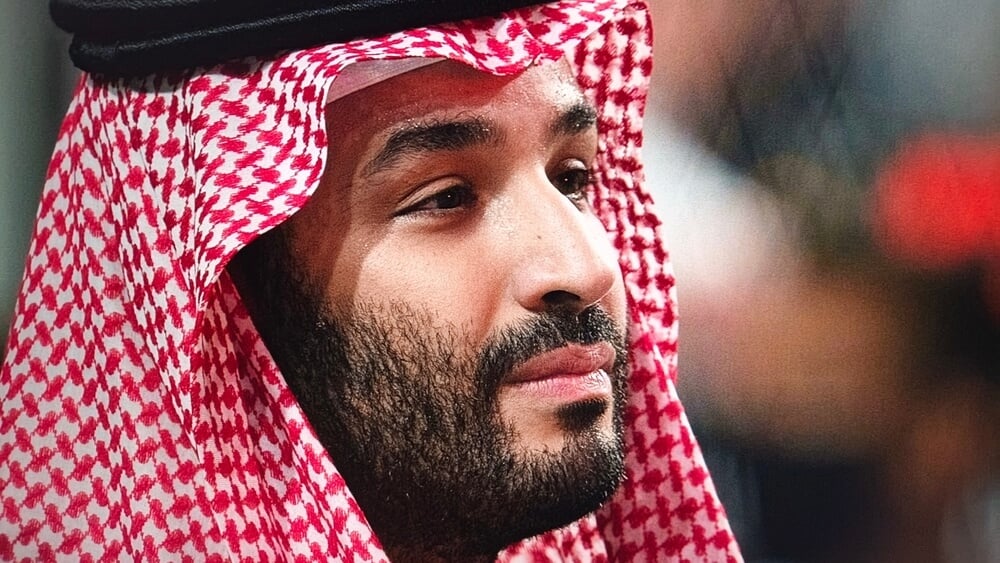 The Arab Gulf countries can be expected to recalibrate and probably re-energise their drives against Iranian influence in the region in places such as Yemen, Iraq and Lebanon - Mohammed bin Salman
The enmity between them and Iran is too deep-seated for that, and the interests are too much opposed across the region, despite periodic détentes. The bridging position that Qatar has taken in the past has come under pressure too, given what has transpired.
The Arab Gulf countries can be expected to recalibrate and probably re-energise their drives against Iranian influence in the region in places such as Yemen, Iraq and Lebanon.
None of this makes for a more stable Middle East. All the old issues will still be there, with new ones added plus an extra helping of hurt and distrust.
Some see this moment as a watershed for the region, but talk of America’s ‘Suez moment’ is overblown. If only because there’s no other superpower that is positioned to take over its role in the region the way it did when the British withdrew.
America enjoyed remarkable hegemony in the Middle East for decades, particularly after the disintegration of the Soviet Union. Even though it might now have been defeated by itself, the region is stuck with it and will have to keep muddling through.
