From Zaragoza in Spain to offshore wind farms, Europe's energy manufacturers deserve more attention. This week, an unexpected meeting and conversation about Europe's energy landscape reminded me that beyond event halls and political debates, another story is emerging.
It is a story about factories, grids, batteries, hydrogen, offshore wind, and the companies building the infrastructure that could determine how Europe responds to climate change. And the timing could not feel more appropriate.
The message from our planet is hard to ignore as Europe endures yet another summer of severe heatwaves (I have personally experienced six so far in three separate countries).
Every heat wave puts more strain on power systems, every drought tests the capacity of generators, and every geopolitical upheaval serves as a reminder that energy independence has strategic implications.
The systems that power residences, factories, data centres, and transport networks are often operated in the background by energy providers.
In this research note, I outline four companies that are shaping Europe's energy sector. Now, let's get started.
Manufacturers are driving Europe’s new chapter
INPOWER Energy shows how Europe's energy story is extending beyond its traditional borders. The company recently announced plans to establish operations in Zaragoza, Spain, through a €10 million investment that is expected to create approximately 120 jobs.
The project represents much more than another industrial expansion. It reflects Spain's growing role as a strategic hub for renewable energy, advanced manufacturing, and logistics.
INPOWER Energy focuses strongly on power equipment, energy storage solutions, and electrical infrastructure technologies that support modern energy systems.
As Europe continues to electrify transportation and expand renewable generation capacity, demand for these technologies is increasing. The journey ahead is full of opportunities that are yet to be discovered.
Offshore wind remains one of Europe's most important renewable resources
Over the years, Zaragoza has developed a strong combination of strong infrastructure, renewable energy potential, and growing interest from international investors.
Over the next five years, INPOWER Energy could strengthen its European footprint while contributing to Europe's broader energy resilience agenda.
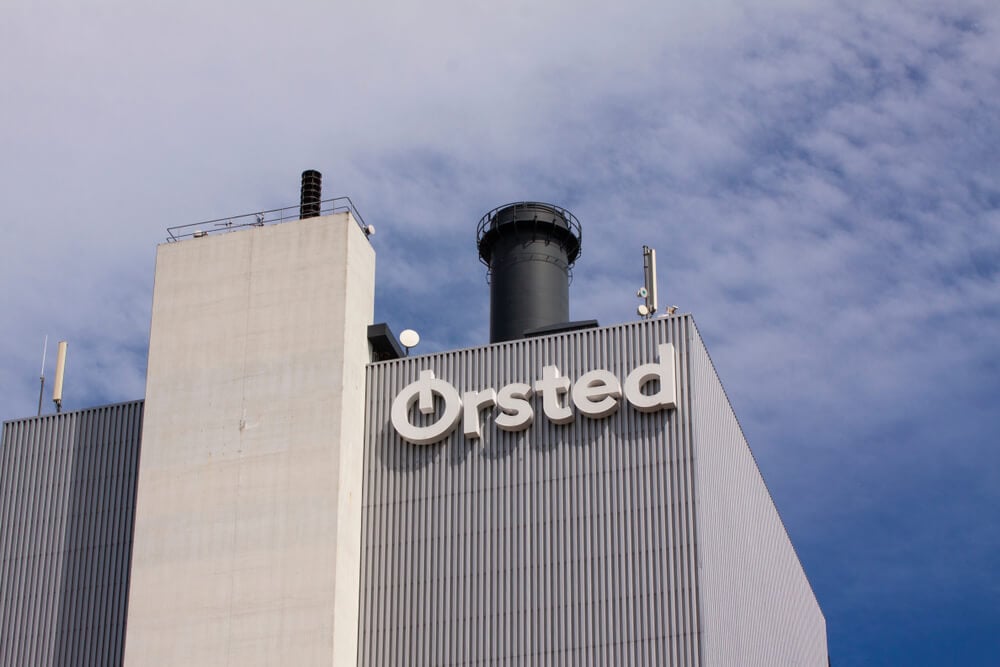
The second company needs little introduction. Ørsted has transformed itself from a fossil fuel company into one of the world's leading renewable energy businesses.
Its offshore wind portfolio continues to shape how governments and investors think about large-scale energy transition. Few corporate transformations have been as successful or as strategically significant.
Offshore wind remains one of Europe's most important renewable resources, and Northern European nations continue to increase their capacity to reduce emissions and improve energy independence.
At the heart of this movement is Ørsted. Greater integration of offshore wind, battery storage, and digital grid technology will be the focus of the upcoming chapter. Beyond production, renewable energy depends on resilience and intelligent distribution.
Europe's energy future depends on more ecosystems
Energy transitions rarely succeed because of a single breakthrough or a single company. They succeed because ecosystems emerge.
This brings me to Enel Green Power. Enel Green Power maintains a diversified portfolio spanning solar, wind, hydroelectric and energy storage technologies. Its scale provides an important lesson about Europe's energy future. Diversity matters.
No single technology will solve climate change. Europe needs a mix of generation methods supported by modern infrastructure and increasingly intelligent energy management systems.
Enel Green Power continues to expand renewable capacity while investing in innovation across multiple markets. Looking ahead, we should expect the company to play an increasingly important role in integrating distributed energy systems with digital platforms that can optimise production and consumption in real time.
Heavy industry, shipping and long-distance transport need alternatives that batteries alone cannot provide, and hydrogen offers one potential pathway
Demand forecasting, smart grids, and predictive maintenance are becoming commonplace as artificial intelligence continues to transform this sector. Energy companies that use these technologies should be at the forefront of the next phase of market development.
Hydros Power, a company at the other end of the spectrum, serves as a reminder of the enduring importance of innovation.
Hydros Power recently received recognition at the Global Startup Awards for its work in hydrogen technologies, but hydrogen continues to divide opinion within the energy community.
Heavy industry, shipping and long-distance transport need alternatives that batteries alone cannot provide, and hydrogen offers one potential pathway.
Startups that challenge preconceived notions and accelerate experimentation, such as Hydros Power, are crucial. Hydrogen has the potential to evolve from a promising technology into a practical one across several industrial applications.
Businesses already involved in this sector are positioning themselves at the outset of what could become a significant market opportunity.
Supporting the entire energy value chain
Manufacturers build machinery, renewable energy developers generate electricity, grid operators supply power, technology companies optimise efficiency, and utilities deliver energy to consumers. Collaboration is essential for the system as a whole.
We often celebrate companies that consumers recognise, while at the same time overlooking those that make modern energy systems possible.
 Each company today tells a different part of the same story. They are all interconnected
Europe's energy transition will require unprecedented investment across every layer of this value chain. Manufacturing capacity needs to expand, infrastructure needs to modernise, digital technologies need to improve efficiency, and policymakers must provide regulatory stability.
Each company today tells a different part of the same story. They are all interconnected.
INPOWER Energy strengthens manufacturing capacity, Ørsted advances renewable generation, Enel Green Power demonstrates the importance of diversification, and Hydros Power reminds us that start-ups often shape tomorrow's markets.
Europe possesses many of the ingredients required for success. It has engineering talent, ambitious climate goals, growing investment, and an increasingly urgent reason to act.
Extreme weather events will continue to test both our infrastructure and our resolve. Energy companies will keep responding by building, innovating, and adapting.
Neither a single technology nor a single company will define the future of energy. It will be shaped by thousands of people working in factories, laboratories, wind farms, control rooms, and start-up hubs across the continent.
Europe’s energy transition is already under way. Companies today are laying the foundations for a more resilient tomorrow. And if the past decade has taught us anything, it is that the companies operating behind the scenes often become the ones that change the world.
