The ceasefire that was reportedly just agreed between the United States and Iran reflects US President Donald Trump’s desperation to escape the quagmire that he created.
Gone is the muddled array of objectives he touted in the war’s early days. All the Trump administration has reportedly secured in the new agreement is a promise to reopen the Strait of Hormuz, which was open before the war, and plans for new negotiations on Iran’s nuclear program, which was already under discussion.
But even these pared-down goals might prove unattainable if Israel continues its fight against Hezbollah in Lebanon.
Trump is already fed up with Israeli Prime Minister Benjamin Netanyahu. It was Netanyahu who advised him in 2018 to abandon the nuclear deal then-President Barack Obama had reached with Iran three years earlier, putting Trump on the hook to deliver a better one.
Netanyahu also convinced Trump to launch the current war by touting a heady vision of the world’s two most powerful air forces quickly annihilating the Islamic Republic’s military and nuclear installations and toppling a regime that had long been a thorn in their sides.
Now, Netanyahu is the last obstacle to a deal that would allow Trump to leave the resulting nightmare behind.
Lebanon is a point of particular contention
Trump and Netanyahu were never really on the same page. While Trump liked the idea of Iran’s “unconditional surrender,” he had no appetite for a prolonged military engagement.
If push came to shove, a nuclear agreement that he could portray as superior to Obama’s would always have been enough for him.
For Israel, however, eliminating the ballistic-missile threat emanating from Iran, as well as the country’s support for its proxy militias in Iraq, Lebanon, Palestine, and Yemen, has always been non-negotiable.
The problem is that on these issues, Iran is utterly unwilling to compromise. Unlike nuclear weapons, ballistic missiles and proxy militias are existential necessities for Iran.
In open defiance of Trump, Israel launched an air strike on Beirut on Sunday, just as the US and Iran were finalizing their ceasefire
Lebanon, where Israel is attempting to decimate the Iran-backed Hezbollah militia, is a point of particular contention.
With northern Israel having lived under Hezbollah fire for the last three years, Israel has pledged to remain in southern Lebanon for as long as it takes to eliminate the threat, regardless of what the US says.
In open defiance of Trump, Israel launched an air strike on Beirut on Sunday, just as the US and Iran were finalizing their ceasefire.
This move could have scuppered the deal. As Iran’s foreign ministry has made clear, an end to Israeli hostilities in Lebanon is a prerequisite to “any ceasefire and any final agreement.”
If Israel continues to attack Lebanon, moreover, Iran will continue to retaliate against Israel.
“Supporting the resistance in Lebanon is the duty of all of us, and removing Israel from the region is an attainable goal for Muslims,” the head of the Quds Force, the foreign-operations and military-intelligence arm of Iran’s Islamic Revolutionary Guard Corps (IRGC), recently stated.
Trump could be a problem for Israel
Iran’s bravado will not deter Netanyahu. He knows that, while Iran’s strategic victory against two global military powers leaves the regime feeling invincible, its capacity to defend the country is limited.
A renewed onslaught by Israel’s air force, including against civilian infrastructure, can only diminish the Islamic Republic’s position.
The Trump administration might be able to claim that its master deal-maker has again triumphed—but only if Israel falls into line
Trump, however, could be a problem for Israel. The Iranian quagmire has tanked his approval ratings, distracted from his self-aggrandizing spectacles, such as his 80th birthday celebration, and prevented him from claiming the quick “victory” he craves in Cuba. And he is willing to sacrifice core Israeli interests to get out of it.
As Vice President JD Vance recently put it, the US and Israel “have a lot of shared interests,” but “also have some situations where our interests diverge”; America’s “main objective in Iran is to ensure that Iran does not have a nuclear weapon.”
By this logic, the Trump administration might be able to claim that its master deal-maker has again triumphed—but only if Israel falls into line.
Conspiracy between dishonest leaders
So desperate is Trump for Israel to get out of his way that he has begun frantically insulting Netanyahu. “You’re fucking crazy,” he reportedly yelled at him on a recent call. “You’d be in prison if it weren’t for me.”
At this point, Trump appears to show IRGC officials more respect than he shows Netanyahu.
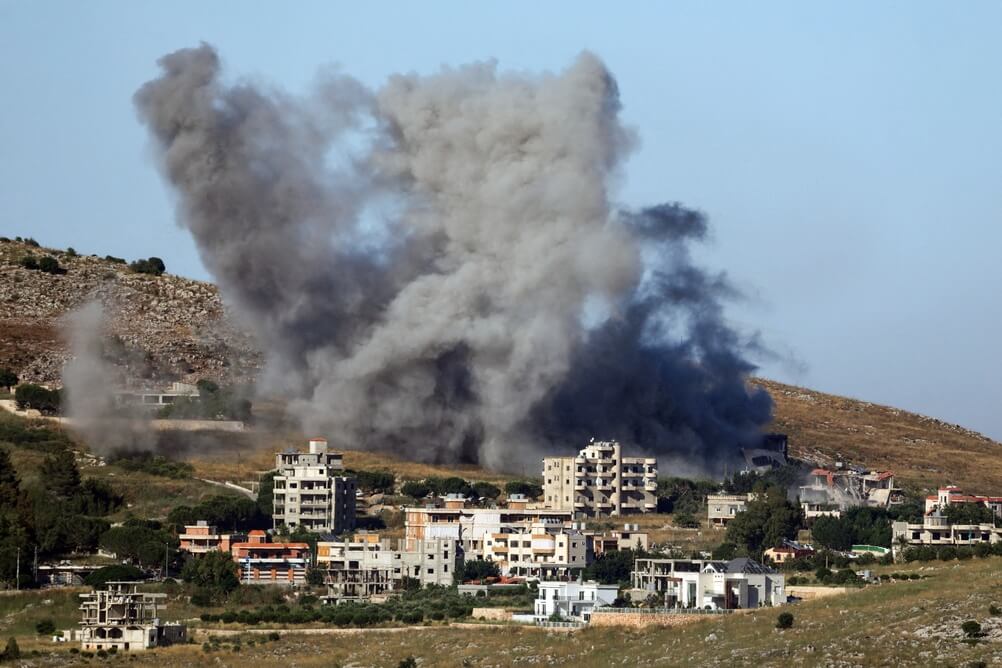 Whatever happens next, Trump and Netanyahu will not escape the judgment of history - Lebanon
There is perhaps no better sign of the deterioration of the US-Israel alliance than Trump’s insistence that he “calls the shots,” and Netanyahu has no choice but to submit, even if it means heeding an agreement that does not support Israel’s security interests.
A relationship between two democracies of pioneering immigrants has devolved into a conspiracy between dishonest leaders, in which the lord chastises the vassal for stepping out of line.
Whatever happens next, Trump and Netanyahu will not escape the judgment of history.
Their war of deception in Iran amounts to the most monumental strategic defeat two military superpowers have ever suffered at the hands of an ailing, bankrupt regime.
Iran has emerged from the war stronger than ever, as the master of the geopolitics of the postwar Middle East.
The new ceasefire only compounds its strategic windfall: the US president is now acting as a protector of Lebanon—and, by extension, Iran’s proxy there.
Shlomo Ben-Ami is a former Israeli foreign minister.
