Could the BRICS (Brazil, Russia, India, China, South Africa) ever launch a shared currency to challenge the US dollar’s dominant position in the world economy?
Like many conventional international economists, I have generally dismissed the idea, despite my own role in coining the BRICS acronym, which led to the creation of a formal BRICS club (since expanded into the BRICS+, with the addition of five new members).
Following the standard criteria of how major reserve currencies have developed historically, one requirement is a fully convertible capital account, so that investors both domestically and internationally can freely invest in and out of the issuing country whenever they choose.
And when it comes to a common, shared currency like the euro, it is necessary to establish a new central bank, implying that each participating country’s central bank will lose its independence, including its ability to set monetary policy according to domestic conditions and priorities.
Given these requirements, it is hard to believe that the ten BRICS+ members could make the sacrifices necessary to back a true rival to the dollar.
Can you imagine India ceding central-bank independence to promote a new currency bloc that also includes its longtime rival, China? And can you imagine either India or China giving up capital controls?
The Chinese renminbi is not widely used internationally because Chinese authorities have always made a conscious choice not to allow capital to flow in and out of China freely.
The Trump effect
These are indeed major obstacles. Still, I have begun to challenge my own thinking in recent months, for a few reasons.
First, Chinese President Xi Jinping himself has expressed an interest in the renminbi playing a bigger role as a global reserve currency.
Second, multiple BRICS+ leaders have made clear their opposition to the persistent dominance of the dollar, and their economic advisers surely know as much about monetary history and theory as I do.
Third, there is the Trump effect. The current US president has been waging war on the very institutions that underpin the dollar’s dominance, not least by pursuing politically motivated criminal investigations against members of the US Federal Reserve board.
The rest of the world is not taking US aggression lying down
The Trump administration also has openly rejected America’s role as a steward and provider of global public goods. In the name of “America First,” Donald Trump has fully indulged his obsession with tariffs, and the US dollar has weakened substantially as a result.
The rest of the world is not taking US aggression lying down. Most other countries – including many longstanding US allies – are pursuing new trade agreements with each other.
Just in the past few weeks, major deals have been announced: Canada and China, the European Union and Mercosur (Argentina, Brazil, Paraguay, and Uruguay), the EU and India, and so on.
The United States may still be the world’s largest economy, accounting for 25% of global GDP. But that leaves 75% of global GDP still on the table.
The success of the euro
Fourth, these recent developments have led me to question whether it is actually the case that major global reserve currencies require free capital flows.
In the broad sweep of history, this has been true only since the collapse of the Bretton Woods system in 1971-73.
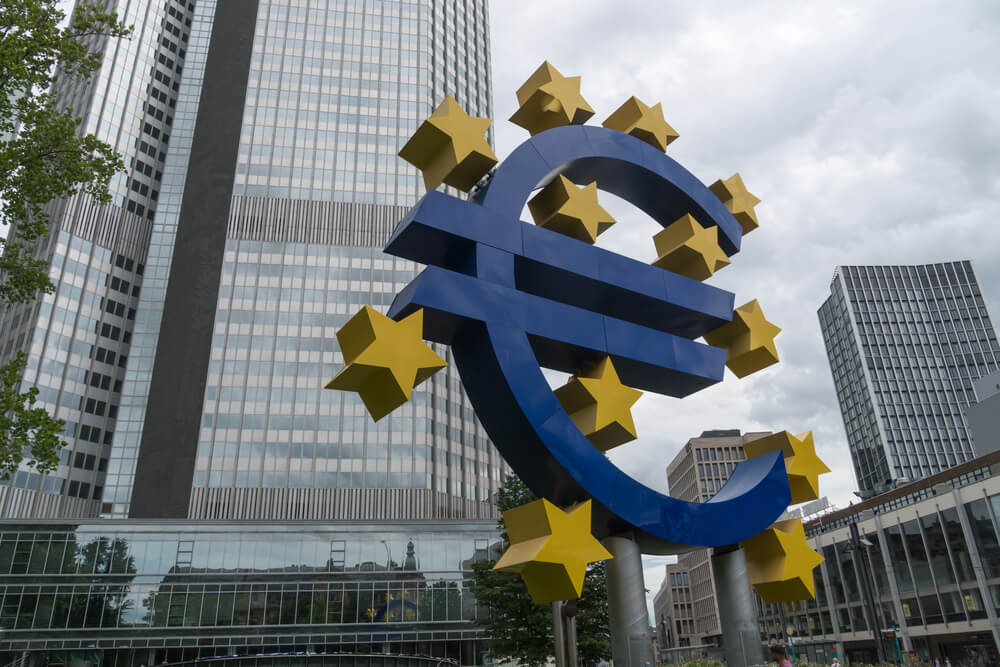 The euro has been successful as a currency of exchange between participating countries
Moreover, the euro has been successful as a currency of exchange between participating countries.
If it hasn’t been fully internationalized, that is partly because its largest member, Germany, never wanted to challenge the dollar directly, and was long reluctant to allow for a truly pan-eurozone bond market.
Given the success of the euro, perhaps it is feasible for BRICS+ members – especially the larger ones – to explore a common currency for use in settling trade among themselves, even if they resist liberalizing their capital accounts.
Digital currencies
The process would certainly be cumbersome at first, and it presumably would require a basket of participating countries’ currencies, weighted for their respective GDPs.
But if this was part of a larger process to pursue freer and larger volumes of intra-BRICS+ trade, it could be worth the effort.
Advocates of dollar-denominated stablecoins and other digital currencies claim that these will extend and deepen the dollar’s dominance
That brings me to a final thought. Advocates of dollar-denominated stablecoins and other digital currencies claim that these will extend and deepen the dollar’s dominance.
But there is a big problem with this argument: the same technologies also would make it easier for the BRICS+ to develop alternative payment rails for settling trade among themselves.
Is a BRICS currency feasible, or still a fantasy? We will find out soon enough.
Jim O’Neill is a former UK Treasury minister and a former chairman of Goldman Sachs Asset Management.
