George W. Bush campaigned against foreign wars and attempts at nation-building in faraway places when he ran for US president in 2000.
Yet once in the White House, he sent tens of thousands of troops to Afghanistan and tried to build a democracy there, and then attempted the same in Iraq.
Donald Trump also railed against meddling in what he has called “shithole countries,” yet he has now sent US special forces to Venezuela to capture its dictator, Nicolás Maduro.
But instead of trying to restore democracy to Venezuela, Trump has now teamed up with what is, in his own words, a “corrupt, criminal, illegitimate regime.”
It is as if the mayor of Chicago in 1930 had first called Al Capone a gangster and then gone into business with Capone’s successor Frank Nitti.
There are two explanations for why Trump is acting this way. The first is that he only cares about business. As long as he can get some oil flowing again and enrich a few friends along the way, he is happy.
This is not a crazy theory, given that Trump uttered the word oil 20 times at the press conference after Maduro’s abduction, and democracy not once.
But as long as a corrupt, criminal, and illegitimate regime is running Venezuela, oil companies will not invest the tens of billions of dollars required to rebuild the country’s oil industry.
As the CEO of ExxonMobil told Trump to his face, Venezuela today is “uninvestable.”
Iraqistan theory
Kinder souls, reluctant to believe that the leader of the free world could care only about money-grubbing, and that as a business tycoon he could be so bad at predicting what investors will do, have another explanation: call it the Iraqistan theory.
It goes something like this. In Iraq and Afghanistan (and also in Somalia, Libya, Haiti, and the Democratic Republic of the Congo), Western powers tried their hand at nation-building and failed.
They failed because the countries in question were divided along sectarian lines, lacked credible democratic leadership, had no tradition of checks and balances and the rule of law, and could not rely on a sizeable middle class as a political anchor.
Because the same flaws supposedly afflict Venezuela (including armed gangs and a divided opposition), the United States acts wisely in refraining from wild talk of democratic transition.
The only way to guarantee stability is to strike a deal with the thugs in charge.
Making policy toward Venezuela by analogy to Iraq and Afghanistan is just as crazy as believing that Caracas and the Maracaibo basin are about to be flooded by billions of dollars in private investment
Whether nation-building is always doomed (spare a thought for post-war Germany and Japan) is a subject for another day.
But one thing is clear: making policy toward Venezuela by analogy to Iraq and Afghanistan is just as crazy as believing that Caracas and the Maracaibo basin are about to be flooded by billions of dollars in private investment.
The Iraqistan theory sounds prudent, but applying it to Venezuela is simply ignorant.
Venezuela has none of the sectarian and linguistic divisions
Go down the list, starting with the observation that Venezuela has none of the sectarian and linguistic divisions that undermined political stability in Iraq and Afghanistan.
If anything, Venezuela stands at the other end of the spectrum: a country where nearly everyone speaks the same language and worships in the same way.
Of course, the country suffers from large income disparities and painful racial inequities. But so does the US.
The claim about divisions within the opposition to Venezuela’s dictatorship is old news.
Venezuela has a democratically elected president: Edmundo González, who – no doubt about it – won the 2024 election
Opponents of Hugo Chávez and later Maduro did find it difficult to unite. But unite they did, running a candidate who received two-thirds of the vote in the July 2024 presidential election.
The only problem was that Maduro stole the election, which the US, the United Kingdom, the European Union, and pretty much every democracy in the world, were quick to call out.
That brings us to the question of credible democratic leadership. Venezuela has a democratically elected president: Edmundo González, who – no doubt about it – won the 2024 election.
And it was González the opposition united around only because Maduro illegally banned the hugely more popular and charismatic María Corina Machado from running.
Machado, who won the Nobel Peace Prize for her efforts to restore democracy to Venezuela (and whose calculated political move to give her Nobel medal to Trump is yet to pay off), is the leader of a credible and democratic political movement that could very plausibly govern Venezuela.
The same could not be said about Iraq or Afghanistan. Unlike Iraq or Afghanistan (much less Haiti, Libya, or the DRC), Venezuela was long a functioning liberal democracy – imperfect, like so many others, but democratic enough to have free elections, peaceful transfers of power, institutionalized political parties, freedom of the press, a functioning judiciary, and pretty much all the rest.
Only democracy can bring lasting peace
Venezuela has a democratic tradition that is strong enough that even Chávez felt compelled to hold elections (and for a while did not steal them).
When it comes to a strong middle class, capable professionals and technocrats, and others who can promote political stability, Venezuela ticks those boxes, too.
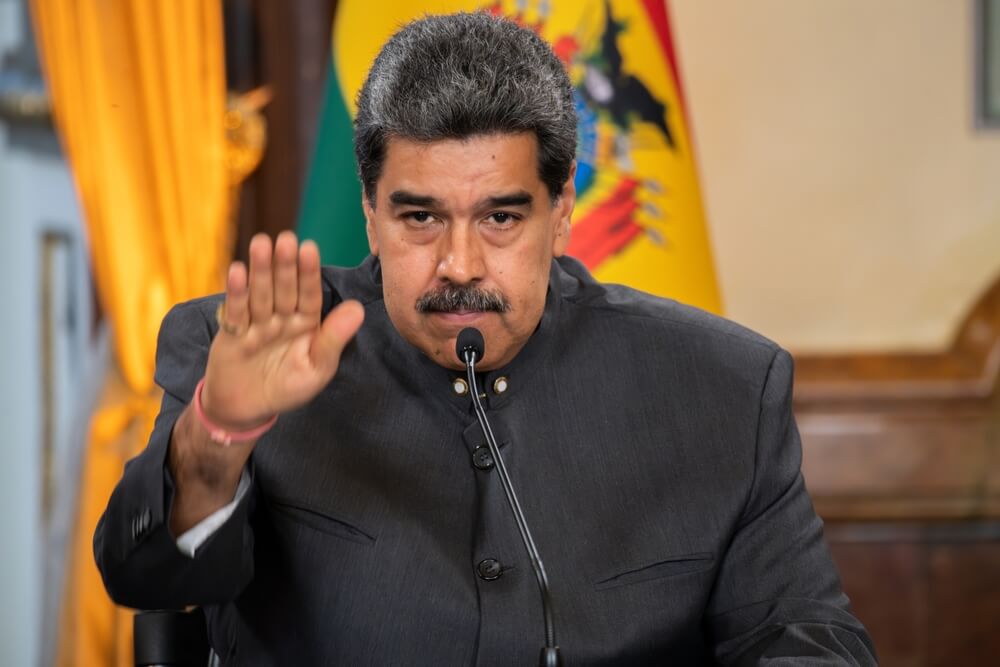 With Maduro gone, only democracy can bring lasting peace and a chance to restore the country’s prosperity
The economy has shrunk by 80% since Maduro took office (yes, you read that right), and eight million Venezuelans have been forced to leave their country, so the middle class is not what it once was – the richest in Latin America.
But the country has plenty of capable professionals, and a diaspora that could bring home the latest knowhow once the regime is gone.
Democracy entrenched itself in Argentina, Chile, and Uruguay in no small measure because of the contribution of returning exiles after their dictatorships fell. The same could happen in Venezuela.
So, beware of false historical analogies. Stability does not require Venezuela’s dictatorship to remain in place.
It is the other way around: with Maduro gone, only democracy can bring lasting peace and a chance to restore the country’s prosperity.
Andrés Velasco, a former finance minister of Chile, is Dean of the School of Public Policy at the London School of Economics.
