In 2027, NATO will not hold a leaders’ summit in Tirana and is reducing the number of regular meetings of defence and foreign affairs ministers. The Albanian Prime Minister Edi Rama, said that the summit in Tirana would definitely not take place in 2027, and NATO confirmed that Albania remained the host of the next summit and that the date had not yet been set.
Secretary General Mark Rutte said that the leaders would gather when necessary. The usual October meeting of defence ministers was not held this year and will not be held in 2027, and next year the foreign ministers will meet once instead of twice. NATO calls these changes a reorganisation package.
The decision comes at a time when European countries need to implement major armament plans, and Washington is reviewing where, and under what conditions, it will keep American forces in Europe.
The most plausible explanation for the less frequent meetings is a desire to protect already agreed programmes from new disputes with Donald Trump.
European governments gain time to implement these programmes, and the US President gains greater scope to negotiate separately with each capital over their military value to him. NATO has not officially provided such an explanation.
Tirana became a problem long before November
In the declaration of the summit in The Hague on 25 June 2025, the leaders announced a meeting in Turkey in 2026 and then in Albania. Already in April, NATO had debated dropping the annual summits.
Some allies believed that organising large gatherings diverted attention from implementing the agreed military plans. Others feared another public clash with Trump, which could cast joint decisions into doubt.
At the end of June, it emerged that the US administration opposed the planned date in Tirana and that some members objected to Albania because of its low defence spending. In the declaration adopted on 8 July in Ankara, there was no mention of Albania or of the year of the next summit.
In 2026, according to NATO’s estimates, Albania will allocate around 2.15 per cent of GDP to military needs
After talks between the leaders, Rutte confirmed that Albania would be the host, but that the date had yet to be determined.
In 2026, according to NATO’s estimates, Albania will allocate around 2.15 per cent of GDP to military needs. According to the same estimates, Belgium and Spain will each allocate 2 per cent, and Slovenia 1.61 per cent.
Albania spends more than those three members, and its military budget could have been used as an argument against holding the summit in Tirana, but it does not explain why political meetings of the entire alliance are being reduced.
The war against Iran changed US criteria
During the spring, Trump criticised European allies for providing insufficient support for US operations against Iran, and in an interview on 1 April he said he was “absolutely” considering withdrawing the US from NATO.
In doing so, he linked European governments’ support for US war operations to the question of whether the United States would remain in the alliance.
The North Atlantic Treaty obliges members to assist an ally that is attacked in Europe or North America, while US operations against Iran are conducted outside NATO’s joint command.
On 8 July in Ankara, before the start of the leaders’ talks, Rutte said that up to 5,000 American flights had taken off from European bases as part of the operation against Iran, and that Washington’s displeasure concerned only specific cases.
These individual cases now factor into the new US calculation, because the right to use bases and overflights determines how quickly American forces can operate in the Middle East and other regions.
A country that allows its bases to be used for US operations may gain an advantage in discussions about future force deployment
In June, the Pentagon began reviewing the deployment of US forces in Europe. According to an internal Pentagon document seen by Reuters, at least four possible timetables were to be prepared by 6 November, and the review was to be completed in December.
At the same time, the Pentagon is assessing access to bases and airspace, as well as space, cyber and intelligence capabilities; the plausibility of plans to achieve the promised military allocations; allies’ readiness to fill the gaps that would be left by US cuts; military procurement; and support for US foreign policy priorities.
Such criteria allow Washington to value allies with similar military budgets differently. A country that allows its bases to be used for US operations may gain an advantage in discussions about future force deployment.
A state that imposes restrictions risks a reduced US presence, even if it duly fulfils its joint NATO obligations.
The most serious consequence would be that the deployment of US forces in Europe is increasingly determined by individual states’ relations with Washington, rather than by the alliance’s joint plans.
The Pentagon has a plan, but Congress sets the limits
On 1 May, the Pentagon announced that approximately 5,000 troops would be withdrawn from Germany over the next six to twelve months.
At the same time, it cancelled the planned rotation of an American armoured brigade in Poland, as well as the previously planned deployment of a unit equipped with long-range missile systems in Germany. The Pentagon has not yet explained how, or in what order, the withdrawal from Germany will be carried out.
Operation Atlantic Resolve, the US military mission launched in 2014 to bolster the defences of European allies, is being monitored by inspectors general for Congress.
According to their new report, there were about 78,000 troops in the US European Command area on 30 September, roughly 12,000 fewer than at the start of the 2025 financial year.
Congress has set a threshold of 76,000 soldiers for 2026. A reduction below that number for more than 45 days requires separate assessments and confirmations, consultations with allies, and an additional 60 days after reporting to Congress. Without those procedures, Washington cannot implement every option the Pentagon is considering.
Elbridge Colby, the Pentagon’s top defence policy official, submitted the findings to the Defense Secretary, Pete Hegseth, who is to present the options to the President.
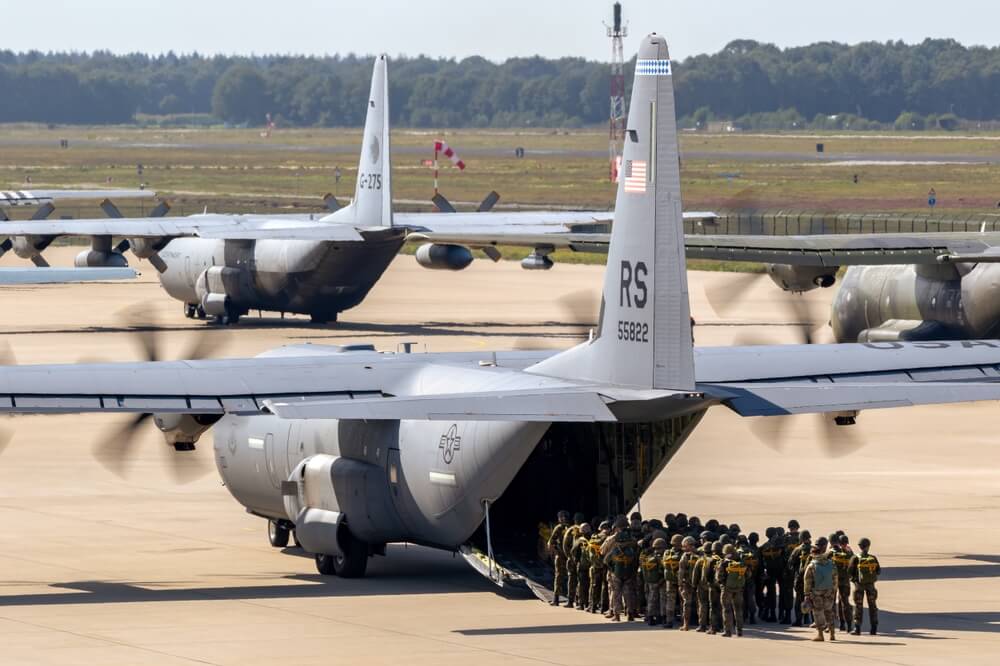 There were about 78,000 troops in the US European Command area on 30 September, 12,000 fewer than at the start of the 2025 financial year
According to available estimates, possible reductions range from 5,000 to 25,000 troops. Most of this would be in Germany, while countries on the eastern flank could receive more US forces.
It is not clear whether the smallest of these estimates, 5,000 soldiers, already includes the withdrawal from Germany announced in May or whether it would be a new reduction.
The legal threshold does not determine in which European countries US soldiers must be deployed, what equipment they should have or what tasks they are expected to perform.
The Pentagon can change the composition and geographical distribution of units while keeping the total number of personnel the same. The number of soldiers says little about the potential for rapid transfer of forces, air defence or intelligence support.
Congress has made a major withdrawal from Europe more difficult, but has left enough scope for the administration to decide which bases will gain units and equipment, which will lose them and under what conditions it will cooperate with certain allies.
These decisions will determine where European countries will have to invest the most money and time in their own capabilities.
European militaries remain dependent on American assets for reconnaissance, airlift, in-flight refuelling and the command of major operations, and such systems take years to acquire and to staff with trained personnel.
In The Hague, the allies adopted the goal of allocating a total of 5 per cent of GDP to defence and related security needs by 2035, of which at least 3.5 per cent is for core military capabilities.
Purchases worth more than $50 billion were announced in Ankara, as well as aid to Ukraine of €70 billion, about $80 billion, for the year 2026. European budgets are growing faster than the capabilities needed to replace part of the American contribution are being developed.
Who benefits when leaders meet less often?
Rutte has sound reasons for the new schedule. Large summits are expensive to organise, and the military objectives agreed in The Hague and Ankara will require years of investment, production and training.
The North Atlantic Council, the alliance’s main body in which member state ambassadors sit, continues to meet regularly and take decisions with the consent of all members.
However, meetings between presidents and prime ministers are particularly valuable when it is necessary to coordinate political decisions on major military expenditure and US guarantees.
Washington is most likely to direct most future reductions towards Germany, while maintaining or strengthening its presence on the eastern flank and agreeing the conditions for this separately with each government.
Congress can limit the speed and scope of the withdrawal, but it will not negotiate a common defence strategy on behalf of European governments
Allies able to offer bases, overflight rights and political support for US operations will benefit most. Germany will face greater pressure to compensate for the loss of certain US capabilities, and joint military plans will need to adapt to the timetable decided in Washington.
Washington’s bilateral talks with individual capitals are not new, but their political weight grows as meetings where European leaders can jointly ask the US President to explain his plans become rarer.
Such joint conversations are more important to smaller countries than to larger ones, because they can hardly influence the deployment of US forces on their own.
Congress can limit the speed and scope of the withdrawal, but it will not negotiate a common defence strategy on behalf of European governments.
A quieter year comes at a US price
The delay regarding Tirana is likely intended to spare NATO another public spat with Trump over the next year, but negotiations over the US presence are proceeding in a sequence that suits Washington.
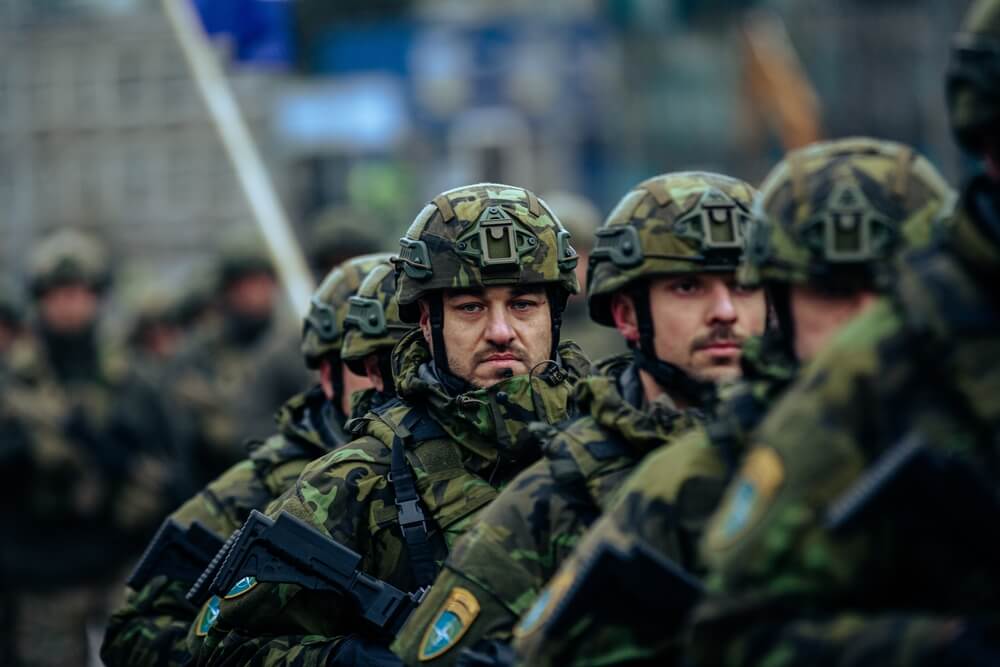 The next summit may find Europe with larger military budgets, new arms deals, and fewer clear answers about the US forces on which its plans rely
The administration can decide the future deployment of its forces before European leaders reconvene, while European governments are already constrained by investment plans agreed in The Hague and Ankara.
The alliance’s joint strategy will increasingly depend on decisions about the American presence made in Washington and in discussions with individual allies.
The next summit may find Europe with larger military budgets, new arms deals, and fewer clear answers about the US forces on which its plans rely. The reduction in political meetings may allow NATO to have a more peaceful year.
The price of that peace will be determined by decisions about US bases, troops and support that will be made before alliance leaders sit down again at the same table.
An alliance that postpones a meeting of its leaders to avoid a dispute with the US President risks learning about its own security from the Pentagon’s decisions instead of helping to shape them.
European governments, which now allocate record sums to defence, have both the right and the obligation to insist that decisions on US forces in Europe are made at the alliance’s common table before new arrangements become a done deal.
