Jensen Huang’s resignation as CEO of Nvidia, the world’s second-most valuable company, which he co-founded, has shaken global markets.
But momentous as it was, his resignation would likely have come long ago if Huang’s political allies, particularly United States President Donald Trump, had not simply shrugged off his affair with an alleged Chinese spy.
But they did, and Huang remained one of the key people setting the US government’s AI policy.
Huang’s resignation came little more than a week after Elon Musk, the world’s richest person, saw his nearly $500 million effort to influence the US midterm elections go up in flames.
Many Musk-backed candidates lost their races, most notably in Texas, where Democrats won a US Senate seat, the governorship, control of the state House, and all four contested seats on the state’s supreme court.
Losing Texas must have been especially painful for Musk, who has relocated much of his business empire to the state and cultivated close ties to its Republican establishment.
We have come to assume that big money decides elections, so it is a welcome surprise when even the biggest spenders don’t get their way.
But billionaires’ political power and influence do not fall when their candidate loses.
They can still dictate which interests the government serves through the kind of cronyism that protected Huang under Trump.
How to tackle the fusion of concentrated wealth with political power will be the question at the heart of the inaugural Paris Summit Against International Oligarchy on November 21.
A vicious cycle
First and foremost, that means dismantling the rules that allow the super-rich to turn their fortunes into unchecked power.
Billionaires don’t need to run for office to wield influence. They can fund campaigns, own media outlets, and gain privileged access to policymakers, enabling them to push for tax breaks and public subsidies.
In California, just 30 billionaires poured $293 million into the successful campaign to defeat the state’s proposed wealth tax
In California, just 30 billionaires poured $293 million into the successful campaign to defeat the state’s proposed wealth tax.
Others, like Trump, enter government without giving up their business interests.
The result is a vicious cycle. Weak rules help the rich amass vast fortunes and hire armies of lawyers and accountants to hide their assets behind anonymous companies.
They can use that wealth to buy political influence, which in turn allows them to shape laws and policies that make them even richer and more powerful. With no one holding them to account, corruption thrives and democracy suffers.
Flooding social media with political messages
The United States is far from the only country where money buys political influence.
In the United Kingdom, donors giving £1 million ($1.3 million) or more accounted for just 1% of private political donations in 2015.
By 2024, according to Transparency International UK, their share had skyrocketed to 35%.
Our colleagues in the Czech Republic have long challenged Prime Minister Andrej Babiš’s ties to Agrofert, the business empire he founded, whose companies receive European Union subsidies.
Although Babiš transferred his shares to a trust earlier this year, the European Commission found that the move failed to resolve his conflicts of interest. Babiš disputes that finding, but when elected officials stand to benefit from public subsidies or contracts, it’s hard to trust them to put the public interest ahead of their own bottom line.
The mega-rich can use their money to flood voters’ social media feeds with political messages
The mega-rich can also use their money to flood voters’ social media feeds with political messages.
Ahead of Brazil’s presidential election last month, researchers found that Meta ran more than 1,600 political ads paid for by users abroad, despite Brazilian rules barring foreign-funded political advertising.
Closer to election day, UN human-rights experts warned that Meta’s algorithms “disproportionately restricted one side of Brazil’s electoral debate.”
Internal reports by Meta employees indicated that President Luiz Inácio Lula da Silva’s Instagram accounts were being restricted while far-right presidential candidate Flávio Bolsonaro’s profile was being recommended to users.
Meta denied any bias, blaming technical errors. But whatever the explanation, the episode shows how much power tech giants have over what voters see and hear.
Limiting political donations is not enough
Political parties need money to operate and campaign, and people have every right to support causes they believe in. But democracy is in trouble when a handful of billionaires wield disproportionate influence over decisions that affect millions of ordinary voters.
The good news is that voters are pushing back. In Nepal, youth-led anti-corruption protests propelled an anti-establishment party to power, while Serbia’s student-led protest movement ended President Aleksandar Vučić’s 14-year authoritarian rule.
These victories show how demands for accountability open the door to reforms that ensure political influence is not determined by the size of one’s wallet.
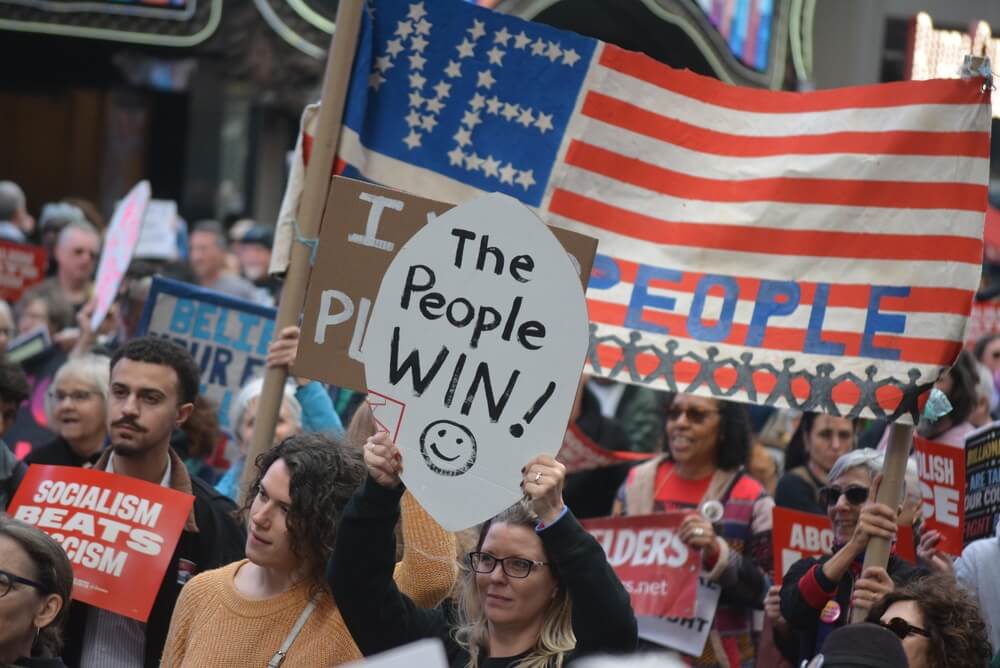 Voting corrupt politicians out of office won’t stop wealthy donors from buying political influence
But limiting political donations is not enough. Governments also need to expose who really owns companies and assets, and close the loopholes that allow dirty money to be hidden.
Officials who use public office to enrich themselves must face legal sanctions, and corporate lobbyists’ role in allocating public subsidies and contracts should be strictly limited.
Watchdogs need the power to investigate, while journalists and civil society must be free to expose corruption without fear of retaliation.
The rules that give the rich an unfair advantage are not set in stone. In 2024, India’s Supreme Court struck down an election funding system that concealed large political donations from public view.
And last December, governments adopted the first UN anti-corruption resolution dedicated to political financing, setting out 22 commitments aimed at tightening oversight of campaign funding and holding parties and candidates accountable for breaking the rules.
But international agreements mean little unless governments turn those pledges into laws they actually enforce.
Voting corrupt politicians out of office won’t stop wealthy donors from buying political influence.
Many laws and regulations need to change, too, especially regarding campaign finance, so that elected officials answer to voters rather than those with the deepest pockets.
Maíra Martini is CEO of Transparency International.
