When US and Israeli forces launched Operation Epic Fury on 28 February, no European leaders were notified in advance.
There was no consultation within the North Atlantic Council, nor any attempt at political harmonisation within the alliance. Europe learned about the start of the war from Trump's announcement on social media.
What followed was not a traditional allied crisis. The war against Iran has brutally exposed a process that has been ongoing for years: NATO no longer functions as an alliance based on political solidarity and joint decision-making.
It has been more openly transformed into a system of transactions, loyalty assessments, and redistribution of security guarantees.
Three months later, the Pentagon announced the withdrawal of five thousand soldiers from Germany, the cancellation of the planned rotation of four thousand soldiers in Poland, and the suspension of the deployment of a battalion specialised in long-range missile systems.
Trump then stated that he planned to reduce the US presence in Europe "by much more than five thousand".
At the same time, Britain, Poland, and Lithuania received a signal that they should expect delays in arms deliveries as Washington replenishes arsenals depleted during operations against Iran.
On 19 May, three sources familiar with the Pentagon's plans confirmed that allies would be informed at a 22 May meeting of NATO defence policy chiefs in Brussels of a significant reduction in the US contribution to the NATO Force Model – a classified force planning system for collective defence.
Alliance as a political balance of loyalty
The White House has compiled an informal list of allies ranked by their level of support during the war against Iran, according to multiple diplomatic sources.
White House Principal Deputy Press Secretary Anna Kelly did not attempt to downplay the allegations. On the contrary, she stated that Washington would "remember" the countries that refused to support the United States during the Epic Fury operation.
Spain immediately banned overflights and closed bases for war-related operations. Trump responded by threatening to sever economic relations with Madrid.
Britain initially refused the use of its bases, later granting limited permission only for defensive activities. Trump described this decision as the behaviour of a "very uncooperative" ally.
France considered the American strikes to be actions outside the framework of international law, which was unsurprising. However, for the first time in a long period, Washington responded not with diplomatic disagreement but with a practical review of security arrangements.
Not all the allies from whom Trump expected political closeness remained on his side
Germany found itself in a particularly sensitive position. Chancellor Friedrich Merz permitted the use of the Ramstein base for logistical support of the operations but rejected direct German military involvement and called the war "unnecessary".
Trump responded that Merz "does not know what he is talking about." After the telephone conversation, Berlin's tone softened, but there was no real change in German policy.
Today, Berlin is trying to balance preserving relations with Washington and avoiding direct political involvement in a war that lacks international legitimacy or domestic support within the United States itself. Ramstein is practically the only serious lever that allows Germany such room for manoeuvre.
Not all the allies from whom Trump expected political closeness remained on his side. Italy initially appeared to be an exception: Trump praised Giorgia Meloni in early March as a "great leader" and a friend who "always tries to help."
However, that relationship quickly changed when Rome refused to allow US military aircraft to use the Sigonella base for operations in the Middle East, as Washington did not ensure prior approval from the Italian government or compliance with the procedures applicable to US bases in Italy.
After that, Meloni was no longer evidence of Trump's European support, but an example of how ideologically close allies withdraw when a war lacks an allied mandate, parliamentary procedure, and a clear legal basis.
What does reducing the NATO Force Model actually mean?
The NATO Force Model is not a symbolic structure or a bureaucratic catalogue of units. It is a classified system by which each member defines which forces, capabilities and timelines it makes available to the alliance in the event of a crisis or activation of Article 5.
The American contribution to this system is important not only because of the number of troops. Its essence lies in the capabilities that Europe still lacks: strategic air transport, satellite reconnaissance, integrated intelligence platforms, long-range missile systems, logistics infrastructure and anti-submarine capabilities.
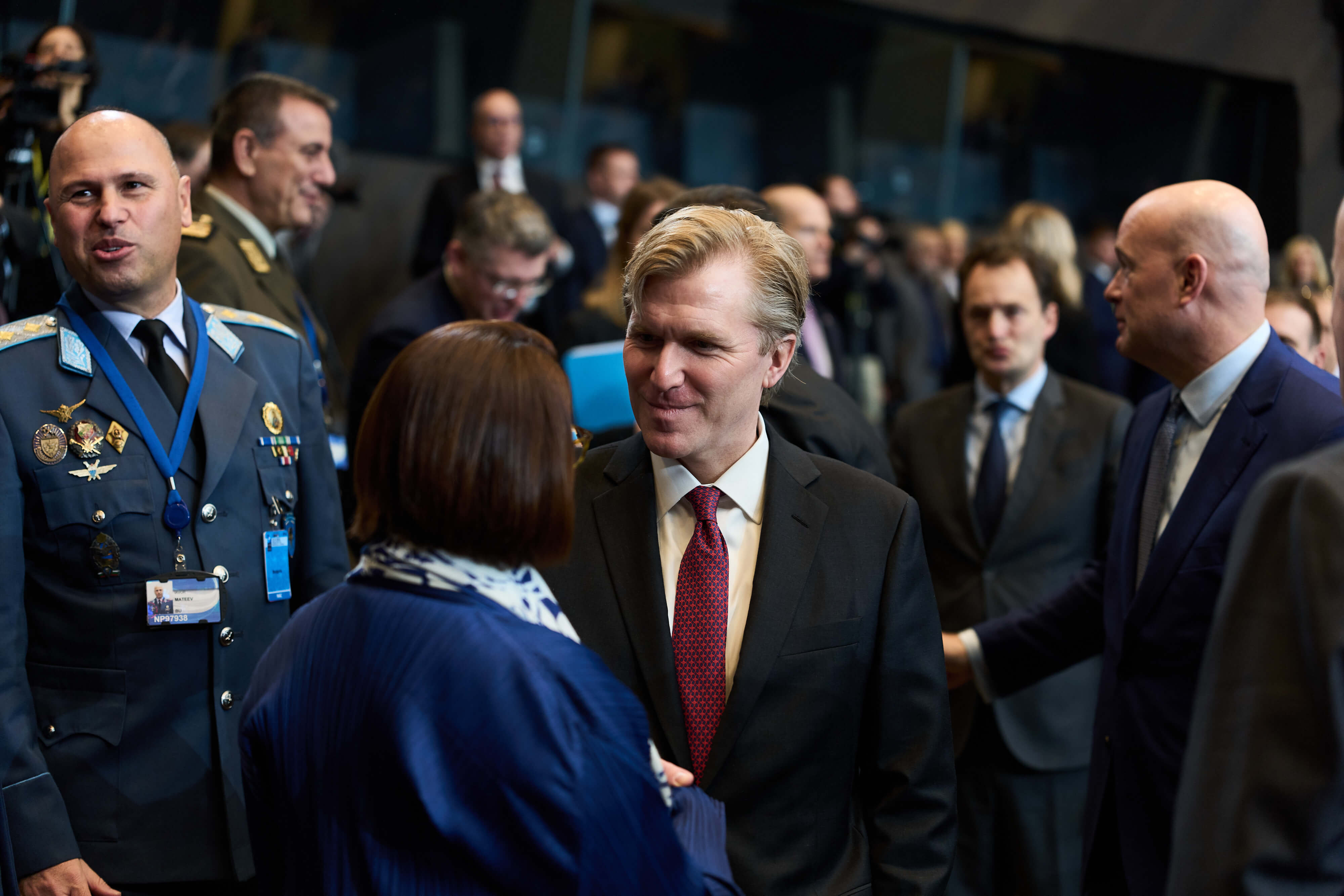 The US nuclear guarantee to NATO remains intact, but conventional defence must become primarily a European responsibility - Elbridge Colby
Undersecretary of Defence for Policy Elbridge Colby has stated that the US nuclear guarantee to NATO remains intact, but conventional defence must become primarily a European responsibility.
That wording seems bureaucratic and procedural. In reality, it concerns the very foundation of European security.
If Washington significantly reduces its conventional contribution to the Force Model, the basic assumption underlying European security since the end of the Second World War changes.
No European country today has the capacity to independently replace American logistics, reconnaissance, and force projection in the event of a serious military crisis on the eastern flank of the alliance.
The increase in European military budgets since 2022 is politically significant, but it does not address the issue of time. Such capabilities cannot be developed within two or three budget years.
The European response was not anti-American
In Washington, European restraint during the war is often presented as evidence of the allies' unreliability. The problem with this interpretation is that it ignores a key fact: no European government was consulted before the start of Operation Epic Fury. More importantly, the US Congress never formally authorised the war.
On 19 May, the US Senate, for the eighth consecutive time, procedurally passed a resolution on war powers by a vote of 50 to 47, with the support of four Republican senators who believe the president has no constitutional basis to continue operations without congressional approval.
This provides European allies with a strong political and legal argument to reject direct involvement.
The real problem for NATO is not Europe's refusal to support a war against Iran
Spain did not violate any allied obligations by banning overflights. Article 5 refers to the collective defence of an ally under attack, not to automatic support for offensive operations not authorised within the alliance.
Britain allowed only defensive activities. France remained consistent with its legal position.
All these reactions were predictable.
The real problem for NATO is not Europe's refusal to support a war against Iran. The problem is that Washington is now redefining allied relations based on states' willingness to support a war that even America itself has not fully legitimised institutionally. This raises a much more serious issue than Iran itself.
Brussels is just the beginning
The meeting in Brussels on 22 May will not mark a formal rupture within the alliance. On the contrary, the most significant changes will occur without major official decisions or dramatic political conflicts.
The Pentagon is expected to confirm a reduction in contributions to the Force Model, but without releasing precise figures. Washington will insist that the nuclear umbrella remains unchanged, and formally, this will be the case.
However, the conventional gap will gradually widen.
If Moscow perceives that the US response to a potential crisis in the Baltics is slower, more politically complicated, or militarily weaker than before, that perception itself becomes a factor in Russian calculations, regardless of what NATO formally communicates.
Most major European economies cannot quickly achieve that target without severe fiscal cuts, tax increases, or political conflicts
The July NATO summit in Turkey will therefore carry much greater significance than it currently appears. Erdoğan has his own reasons for hosting the alliance at a time when internal divisions are evident.
Meanwhile, the American demand that European members increase military spending to three per cent of GDP will become a central political issue.
Most major European economies cannot quickly achieve that target without severe fiscal cuts, tax increases, or political conflicts that no government currently desires. Differences within the alliance will therefore become more evident.
Poland and the Baltic states will accept almost any American condition because they perceive the Russian threat as immediate and existential. For them, the reduction of the Force Model is not an administrative adjustment but a matter of national survival.
France and Spain will continue to advocate European strategic autonomy, although the concept still lacks serious operational substance. Germany will attempt to remain close to Washington through military spending and logistical cooperation, but without overt political alignment.
NATO will not disappear. Its essence is changing
The most realistic scenario for the coming period is not NATO's disintegration. No major European country will leave the alliance, nor will Washington formally withdraw from the European security structure. The change is deeper and slower.
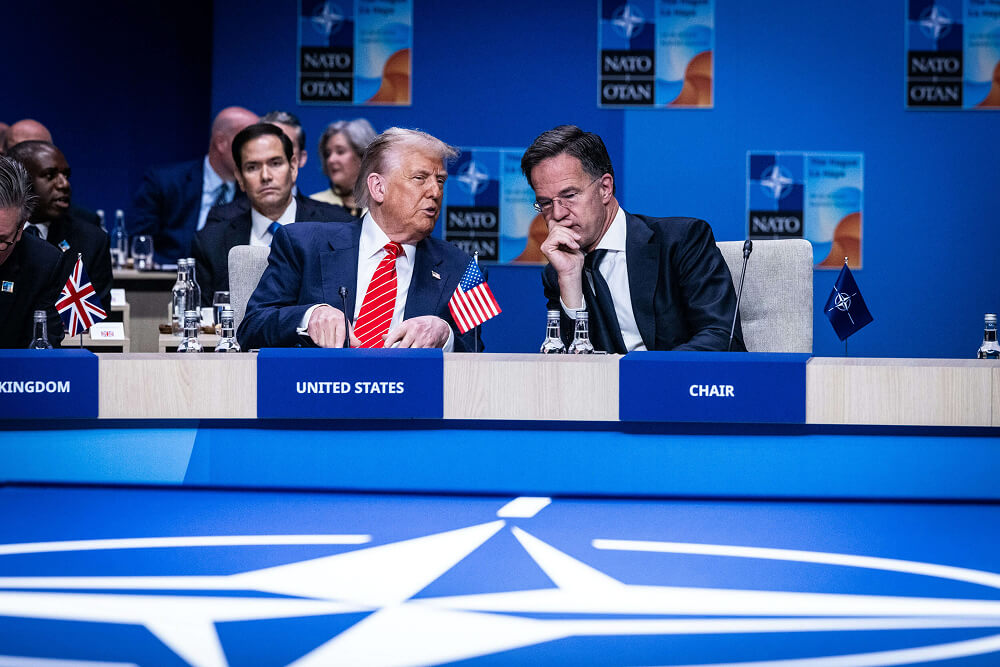 Trump's "loyalty list" may not have started as a strategic doctrine, but its consequences are strategic
NATO is gradually shifting from an alliance based on collective obligations and political solidarity to a system of bilateral relations, in which each country assesses what it can offer Washington and what the consequences may be if it does not do so.
In such a system, smaller and more security-exposed states become increasingly dependent on American protection. Major European powers aim to maintain flexibility and develop their own courses of action, without grand historical speeches or a formal break with the alliance.
Trump's "loyalty list" may not have started as a strategic doctrine, but its consequences are strategic.
The moment allied status is measured by conduct in a war not authorised by the alliance itself, and those assessments begin to influence troop deployments, arms deliveries, and collective defence plans, NATO ceases to operate on the principles on which it was founded.
At the summit in Ankara, this will probably not be discussed directly. However, it will be the first meeting of the allies after which no one can pretend that NATO still operates according to the rules it followed for decades.
