Most Americans are skeptical and fearful of AI, with public concern rising even faster than chatbot adoption.
According to the Pew Research Center, 37% of Americans were more concerned than excited about AI in 2021; by 2023, that figure had risen to 52%.
Today, more US adults believe AI will have a negative rather than a positive impact on their own lives and on society.
For companies betting hundreds of billions of dollars on AI, this is not merely a public-relations problem.
Despite their eye-popping valuations, OpenAI and Anthropic remain cash-flow negative.
To justify those valuations—close to $1 trillion—they will need to expand their user bases, increase revenues, persuade businesses and government agencies to adopt their products, and secure permits for the data centers required to scale them.
As AI becomes more integrated into the economy and everyday life, public attitudes will become increasingly important.
The policy implications could be far-reaching. High levels of distrust tend to generate demands for more restrictive regulation, as banks discovered in the aftermath of the 2008 global financial crisis.
And when a crisis erupts, public distrust can derail an entire technology.
Following the 2011 Fukushima nuclear disaster, for example, widespread public opposition led the German government to shut down all of the country’s nuclear power plants.
What causes the public to lose trust?
What causes the public to lose trust? Other technologies provide some clues. Biotechnology enjoyed high levels of public confidence in the early 1990s.
By the end of the decade, however, European countries were considering bans on genetically modified organisms (GMOs). In the United States, the share of people who believed genetically modified foods were safe fell to 37% by 2014 and to just 27% by 2020.
This shift occurred despite overwhelming scientific consensus—roughly 88% of scientists surveyed by the American Association for the Advancement of Science regarded GM foods as safe.
Vaccines offer another example. In the 1990s, public trust in vaccination was extremely high.
Yet by 2024, only 40% of Americans considered vaccination “extremely important,” down from 64% in 2001.
Public trust depends on whether people believe a technology is safe, benefits society, and is being managed responsibly
Trust is not simply a function of public knowledge or scientific literacy. Most people, after all, cannot evaluate trial methodology or epidemiological evidence.
Instead, public trust depends on whether people believe a technology is safe, benefits society, and is being managed responsibly, as well as on their confidence in the institutions that develop, market, and regulate it.
The decline in vaccine confidence was driven less by new scientific evidence than by declining trust in institutions, information sources, and governance.
Many vaccine skeptics believe that pharmaceutical companies prioritize profits over safety, that regulators are captured by industry interests, and that adverse effects are not disclosed honestly.
Concerns are not unfounded
Similar concerns are now emerging around AI. Most people do not understand how large language models (LLMs) work and cannot assess safety claims about machine learning.
But they worry that AI will eliminate jobs, that it will be used for government surveillance or criminal activity, and that its benefits will accrue disproportionately to powerful actors, leaving ordinary citizens with little say over how it is developed or deployed.
These concerns are not unfounded. The promise of greater efficiency—and therefore workforce reductions—lies at the heart of many commercial arguments for AI adoption.
And even as tech companies are being sued by bereaved parents who claim that their products contributed to their children’s deaths, tech titans are accumulating unprecedented wealth and influence, enabling them to buy up competitors and media outlets, as well as the politicians and regulators charged with holding them accountable.
The tech sector may soon discover that trust in government is crucial to its own success.
Public attitudes toward AI are closely linked to confidence that governments, employers, and tech companies will deploy and regulate it responsibly
Studies have repeatedly shown that public attitudes toward AI are closely linked to confidence that governments, employers, and tech companies will deploy and regulate it responsibly.
Citizens who trust governing institutions are generally more willing to defer to expert judgment, comply with public-health guidance, and accept regulatory decisions.
That helps explain why attitudes toward AI are often more positive outside the US.
While Americans remain deeply skeptical of AI, countries like South Korea, India, Nigeria, and Sweden are far more excited about its potential.
According to the 2026 Edelman Trust Barometer, at least half of respondents in each of these countries agreed with the statement, “I trust the government to do what is right.” Among US respondents, only 39% expressed the same level of confidence.
When citizens lose trust in government, they often turn for guidance to groups with which they most closely identify.
This dynamic was particularly visible during and after the COVID-19 pandemic, as attitudes toward vaccines came to reflect partisan affiliations, cultural identities, and views on authority, elite institutions, regulation, and corporate power.
Such divisions create a difficult environment for businesses, forcing companies into zero-sum contests in which winning the trust of one group may mean alienating another.
Strengthening institutions
The alternative is to strengthen the institutions capable of generating broad-based public trust.
Rather than simply calling for governments to regulate, thereby shifting blame if something goes wrong, tech companies should help policymakers design and implement effective regulatory frameworks.
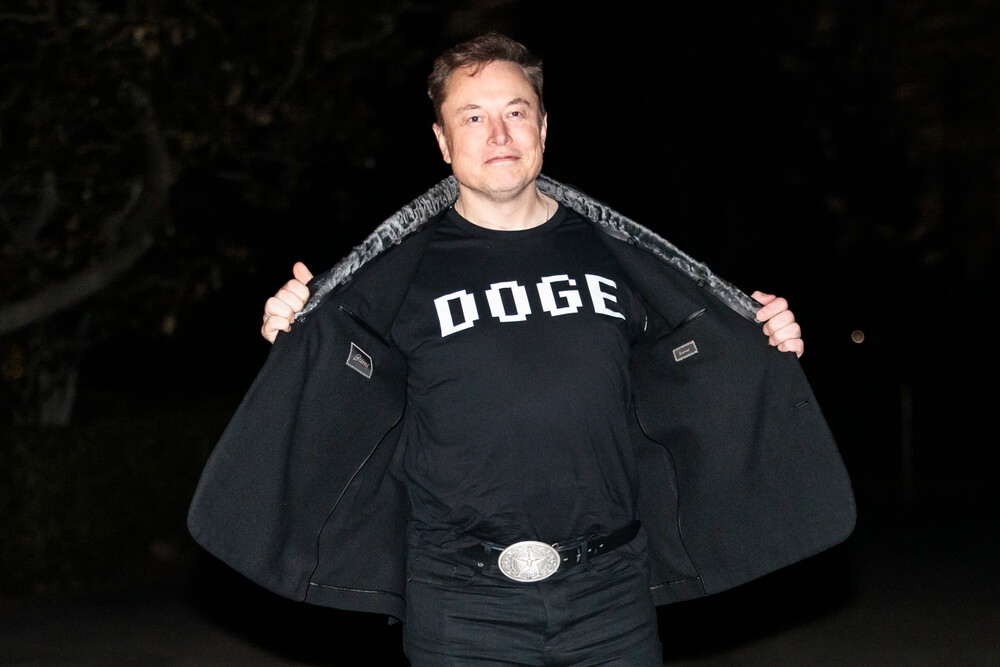 DOGE advocates—particularly its former head, Elon Musk—took a small yet tangible step toward making government less trustworthy
But some tech companies have instead sought to undermine those very institutions. Strategically, this may prove to be an own goal.
Consider the dismantling of the Internal Revenue Service’s Direct File system, which allowed Americans to file their taxes online at no cost, by President Donald Trump’s Department of Government Efficiency (DOGE).
In an era of deepening political polarization, frustration with the complexity of the US tax system is one of the few issues that unites Republicans and Democrats.
But by siding with private tax-preparation companies that lobbied to protect their lucrative market position, DOGE advocates—particularly its former head, Elon Musk—took a small yet tangible step toward making government less trustworthy.
Now, many of the same individuals—including Musk—are asking Americans to embrace AI.
They may discover that by undermining trust in government, they have made Americans considerably more resistant.
Ngaire Woods is Dean of the Blavatnik School of Government at the University of Oxford.
