As the United States withdraws from Europe under President Donald Trump’s second administration, it is not only reducing its military presence and casting doubt on its security guarantees, but also renouncing its de facto (but never formally declared) leadership of the geopolitical West.
That means the US is shedding a political leadership role it has exercised within Western Europe since 1945, and within Europe overall since 1990.
The obvious corollary is that Europe will be on its own, left to resolve its geopolitical problems and challenges by itself.
Yet providing its own geopolitical leadership is not something Europe has done since the beginning of the 20th century. Its efforts to rise to the occasion therefore merit close attention.
“Europe” does not mean only the European Union. The EU undoubtedly plays a central role in economic affairs, underpinning a common market and customs union, a shared currency and central bank, a supranational legal and regulatory framework, and, above all, robust external trading relationships.
But NATO, even in its European and Canadian dimension alone, also remains indispensable to the continent’s security—even if it will be far weaker without the participation of the world’s premier superpower.
A big question remains, however: Who is supposed to lead this fragile, politically unfinished entity?
Intangibles required for effective governance
No single European power has the means to do so on its own. None has the necessary scale in terms of territory and population, financial strength, or technological and economic potential.
Moreover, two other intangibles are required for effective governance: a long historical tradition of providing regional leadership and a population that is broadly committed to the European project.
As matters stand, only France and Germany can be said to check these boxes.
Without the Franco-German partnership, the idea of European leadership is dead on arrival
Most other member states might be able to check one, but not both. Without the Franco-German partnership, the idea of European leadership is dead on arrival.
But America’s withdrawal from Europe poses a particular challenge for Germany, especially in the context of today’s military buildup and the strengthening of neo-nationalist forces across Europe—including in Germany itself.
For decades, the US military presence reassured many Europeans, not least Germany’s former wartime adversaries, who feared a resurgence of German power.
This factor, too, will be absent in the future, requiring Germany to show even greater sensitivity toward its own history. Leading without dominating will mean striking a careful balance.
Joint initiatives
Europe’s progress has always been driven by joint initiatives, most of which were developed by France and Germany.
Under pressure from Russian aggression—which has reached its full expression in the ongoing war against Ukraine—and an increasingly hostile US administration, the immediate priority is to create a European Defense Union.
The breakdown of the joint Franco-German Future Combat Air System (FCAS) project should be treated like a five-alarm fire
Yet given this need, and the indispensable role of Franco-German leadership in meeting it, the breakdown of the joint Franco-German Future Combat Air System (FCAS) project should be treated like a five-alarm fire. If that failure is a preview of what is to come, Europe is already doomed.
Competition is often said to be good for business. In the context of the Franco-German relationship, however, this is true only if competition is grounded in a solid foundation of mutual trust.
Otherwise, it can all too easily become mutually destructive. Given the current geopolitical and strategic environment, that is the last thing Europe can afford.
Politically weak governments
Unfortunately, we now have politically weak governments on both sides of the Rhine. French President Emmanuel Macron has only about a year remaining in office, after which France may well elect a far-right Euroskeptic from Marine Le Pen’s National Rally party.
And no one can say with confidence how long German Chancellor Friedrich Merz will remain in office, given his government’s dismal approval ratings and Germany’s equally troubling economic indicators.
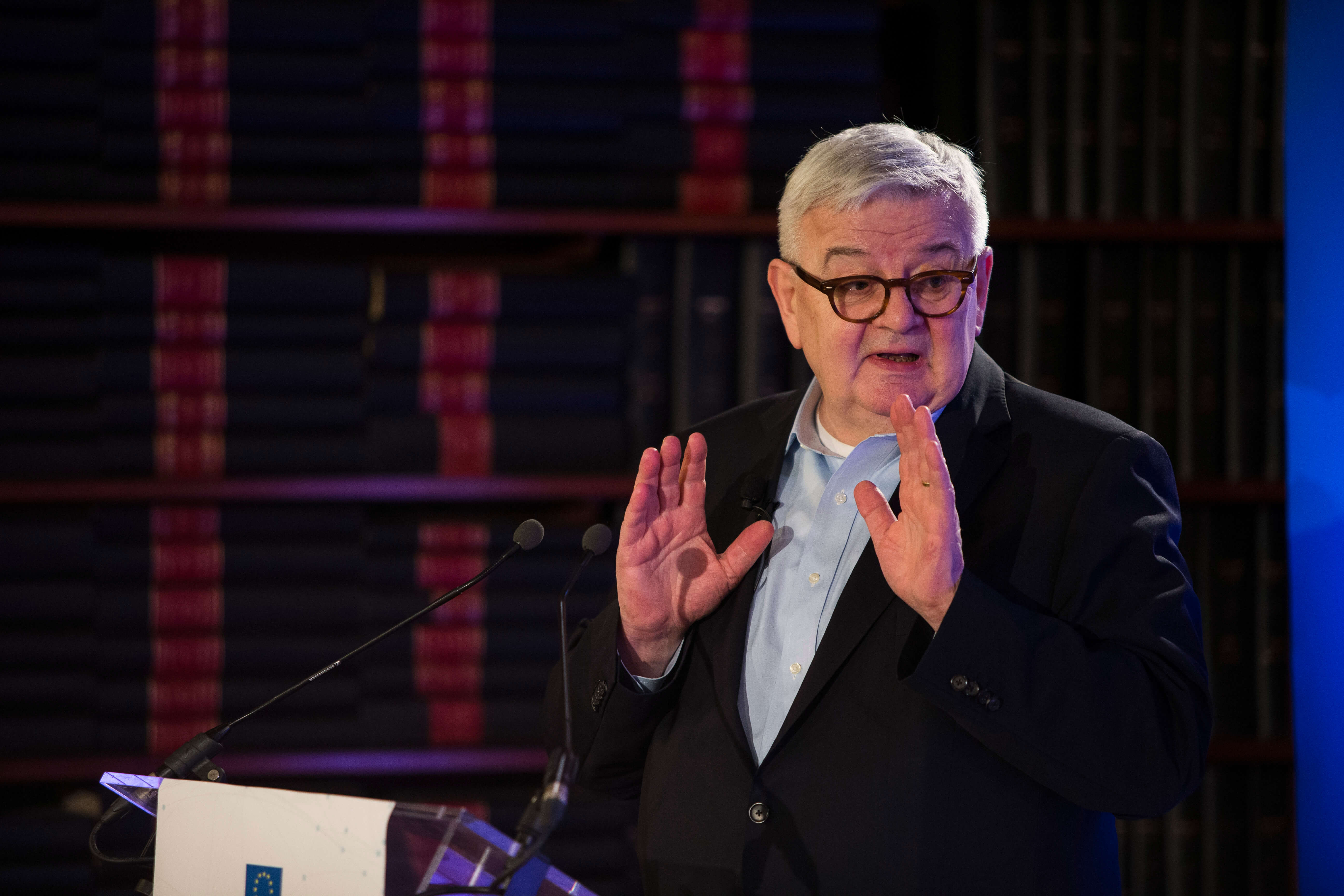 This is precisely the moment when Europe needs strong leadership in both Paris and Berlin - Joschka Fischer
Yet this is precisely the moment when Europe needs strong leadership in both Paris and Berlin.
It will take ambitious, clear-eyed, proactive, and civic-minded politicians to launch and sustain the initiatives that this moment demands—starting with a defense union.
We Europeans have been at peace for more than 80 years. But we ought to have learned by now that history can be cruel and unforgiving.
No one is coming to our rescue this time. We will have to save ourselves.
Joschka Fischer, Germany’s foreign minister and vice chancellor from 1998 to 2005, was a leader of the German Green Party for almost 20 years.
