In the second week of the U.S.–Israeli military campaign against Iran, Tomorrow’s Affairs raised a pre-emptive question: would Central Asia remain insulated from the consequences of this war?
As the campaign enters its third week, it becomes tempting to push the question further, even at the risk of theoretical speculation: were the states of Central Asia and the South Caucasus among the underlying motivations behind the decision to go to war with Iran?
Or, more cautiously, does this region form part of the war’s undeclared strategic objectives?
The legitimacy of this question stems from the absence of a convincing official narrative explaining the war’s broader strategic rationale.
So far, public debate has revolved around two main interpretations. The first argues that the goal is to reshape the Middle East within a new regional order led by Israel.
The second looks inside the White House, portraying Trump as acting impulsively, driven by the rapid success in Venezuela and convinced that the same scenario could be repeated in Iran.
Both narratives explain part of the picture, but neither exhausts the logic of the decision.
The first confines the analysis to the Middle East, while the second assumes that U.S. foreign policy is being conducted without any overarching vision.
Yet an escalation of this magnitude is difficult to understand without placing it within a broader strategic framework. To grasp that framework, one must look beyond the Middle East itself.
Grand strategy
Strategists usually refer to such a comprehensive logic as grand strategy, meaning the long-term coordination of political, economic, and military instruments to protect national interests.
For the United States, this framework has passed through several phases: containment after the Second World War, unipolar dominance after the collapse of the Soviet Union, and then more cautious approaches as the costs of prolonged wars increased and China’s rise accelerated.
The doctrine of Offshore Balancing emerged as a realist approach
In this context, the doctrine of Offshore Balancing emerged as a realist approach calling for the preservation of American primacy, the prevention of rival hegemons in Eurasia, the reduction of unnecessary military commitments, and reliance on regional partners whenever possible.
Elements of this approach appeared under Obama and continued, in different forms, under Biden.
Naked realism
Trump’s second administration did not depart from this trajectory so much as adopt a more explicit and harsher version of it.
While previous administrations framed American leadership in the language of liberal internationalism, Trump advanced a more transactional view of power that could be described, roughly, as naked realism – an approach prioritising national interest and favouring pressure and coercion over diplomatic consensus.
Economically, this orientation translated into protectionist policies, attempts to rebuild American industrial capacity – especially in the defence sector – and efforts to secure supply chains for strategic resources.
In practice, a new regional war centred on Iran has expanded
Geopolitically, it took the form of a multi-track regional strategy aimed at preserving American primacy: from reviving the Monroe Doctrine in the Western Hemisphere to pressing European allies to shoulder greater burdens to an increasing focus on preventing China from becoming a peer superpower.
At first glance, Trump’s Middle East policy appears inconsistent with this framework.
Official documents speak of reducing costly wars, preserving stability, securing trade routes, protecting Israel, and maintaining partnerships with Arab states. Yet in practice, a new regional war centred on Iran has expanded.
Eurasian Balkans
To understand this apparent contradiction, one must look north – to the space stretching from the Caucasus through Central Asia to Afghanistan.
In the 1990s, Zbigniew Brzezinski described this region as the “Eurasian Balkans.” Like the Balkans of nineteenth-century Europe, it is marked by fragile states, ethnic complexity, and competition among larger powers such as Russia, China, Turkey, and Iran.
For decades, the United States has struggled to establish a lasting presence at this strategic crossroads.
Geography distances it from American naval power and surrounds it with rival spheres of influence.
Even when Washington gained a temporary foothold through its military presence in Afghanistan, that position sharply declined after the 2021 withdrawal.
Yet the importance of this region has grown in recent years. Central Asia and the Caucasus hold significant reserves of energy and rare minerals, and their geographic position makes them a link between Europe, the Middle East, and East Asia.
Control over the political and economic networks connecting these regions can influence the balance of power across Eurasia.
For this reason, Donald Trump – unlike several of his predecessors – showed notable interest in the “Eurasian Balkans.”
In 2025 he called for re-establishing the Bagram air base in Afghanistan; Washington sponsored new understandings between Azerbaijan and Armenia that led to a historic peace agreement and opened the way for the so-called “Trump Corridor” between the two countries; and the U.S. president held a high-level summit with Central Asian leaders to strengthen ties and promote major economic projects.
Iran functions as a geopolitical barrier that constrains the projection of U.S. influence northward towards Central Asia and the Caucasus
Political, economic, and security diplomacy, however important, remains limited in its ability to overcome geopolitical obstacles. Here, the decision to wage war on Iran may acquire a new dimension.
Geographically, Iran lies between the Middle East – where the United States still possesses significant political and military influence – and the heart of Eurasia, where American influence remains limited.
From a strictly strategic perspective, Iran functions as a geopolitical barrier that constrains the projection of U.S. influence northward towards Central Asia and the Caucasus.
If geopolitics is viewed through the eyes of a real-estate developer – linking markets, removing obstacles, and building corridors – the logic becomes clearer.
Integrating the Middle East with the Eurasian Balkans could allow the United States to redirect its regional influence towards a strategic theatre where its presence has historically been weak.
Trump hinted at such a direction in late 2025, when he announced the expansion of peace agreements to include Kazakhstan and Israel, describing the Abraham Accords as a “club of strength” that other Central Asian states, along with countries of the Middle East, would soon join.
The division of Asia into eastern and western strategic theatres
From this perspective, the war on Iran may not be merely about the nuclear programme or immediate regional rivalries.
It may reflect a broader attempt to reshape the geopolitical structure of what could be called the “Eurasian South,” the arc stretching from the Middle East to Central Asia.
In this sense, the similarity between Venezuela and Iran lies not in outcomes but in underlying strategic motivations: just as the former served as an entry point for consolidating American dominance in the Western Hemisphere, the latter could become a gateway for re-engineering the balance of power across Eurasia.
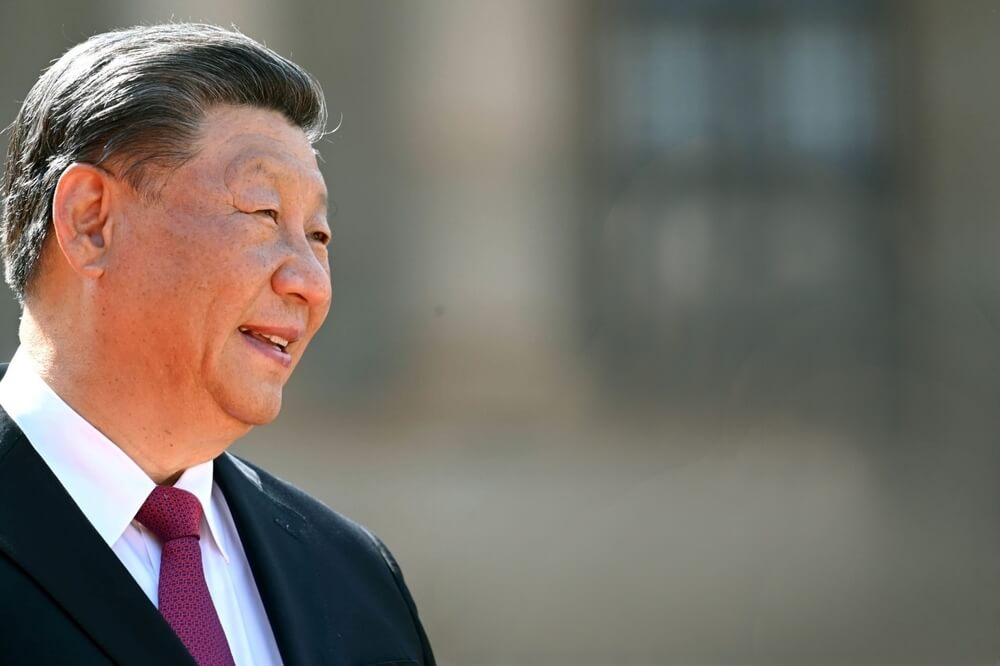 It is difficult to imagine Russia and China remaining passive if Washington attempts to reshape the Eurasian balance of power on this scale - Xi Jinping
If Trump succeeds in achieving his objectives – whether by strategically subordinating the Iranian regime or by overthrowing it militarily – the long-term consequences could be profound.
They might include the weakening of the anti-Western alignment between China, Russia, and Iran, the opening of new corridors of economic, political, and security influence linking the Middle East with the Caucasus and Central Asia, and the division of Asia into eastern and western strategic theatres, making it more difficult for any single power to dominate the entire continent.
Yet such a strategy remains fraught with risks. Military escalation could easily produce the opposite result, leading to greater chaos in the Middle East and draining American resources.
It is also difficult to imagine Russia and China remaining passive if Washington attempts to reshape the Eurasian balance of power on this scale.
History offers a cautionary note. In the 1950s, George Kennan, the architect of containment, later expressed regret that his ideas had been interpreted as justification for global militarisation.
Strategic theories often end up serving policies their authors never intended.
That paradox may now confront Stephen Walt and John Mearsheimer: ideas originally formulated to restrain American power and encourage accommodation with Iran could, in Trump’s hands, become the theoretical cover for a war aimed at subduing or toppling the Iranian regime.
Hussam Radman is a senior researcher at the Sanna’s Center for Strategic Studies.
