In addition to the wider Middle East, the war in Iran has placed the countries of Central Asia in a very unfavourable position.
The region, geographically situated between Russia (formerly the Soviet Union) and Iran, now faces economic and security challenges due to the US-Israel attacks on Iran.
For years, Central Asian governments have pragmatically focused on balancing between the surrounding regional powers – primarily Russia and Iran, but also China and the West.
They are aware that the conflict will have a severe impact on their economic and development strategies.
The region is not directly threatened by the conflict in Iran, except for the recent missile attack by Iran on Azerbaijan, an important Caspian partner of the Central Asian states.
However, the risk of the Iranian conflict spilling over to the northern neighbourhood is a major concern for the entire region.
A potential scenario involving internal conflicts in Iran, especially inter-ethnic clashes, would create a significant security risk, primarily for Iran’s neighbours – Azerbaijan and Turkmenistan – but also for other countries in the region that do not share a border with Iran.
This is why Central Asian governments are following the escalation of the conflict in and around Iran with considerable anxiety. Unsurprisingly, they have adopted a common diplomatic position and are acting practically as a bloc in response to the crisis.
Coordinated diplomacy
The governments of the five Central Asian countries – Kazakhstan, Uzbekistan, Kyrgyzstan, Tajikistan, and Turkmenistan – adopted a balanced position at the outset of the US-Israel operation in Iran. They advocated a political solution, expressed regret for the victims, but did not condemn the actions of the US and Israel.
The foreign ministers of these countries, along with Azerbaijan, also held telephone consultations at the very start of the Iranian conflict, demonstrating a shared approach to the crisis and simultaneously strengthening cooperation.
After the Middle Eastern economies, Central Asia is undoubtedly the biggest regional loser from the Iran crisis
After the Middle Eastern economies, Central Asia is undoubtedly the biggest regional loser from the Iran crisis.
These landlocked economies deliberately maintained strong economic ties with Iran, their most important partner and the main route for most of Central Asia's international trade.
Ports in the Persian Gulf are the nearest transport hubs for Central Asian economies, whose trade with the world is expanding rapidly.
This dependence compels Central Asian governments to maintain good political relations with Tehran, even as they seek to strengthen economic ties with the West.
The food crisis
Tehran’s decision on 3 March to ban food exports dealt a serious blow to regional economies, as Central Asian countries are major importers of food from Iran.
If the conflicts and crisis persist, the region risks shortages, as it cannot secure alternative suppliers in the short term.
The blockade of the corridor to the Persian Gulf ports and the closure of navigation through the Strait of Hormuz have also decimated their export capacities.
The war in Iran is now putting this Central Asian strategy to the test
The Iranian crisis has thus created a real nightmare for planners in Central Asia, as they are now facing exactly what they have sought to avoid for decades by pursuing a balanced policy of diversification with respect to regional and global actors.
Their middle path in both economy and diplomacy aimed to minimise dependence on neighbouring giants, primarily Russia and China, and to position themselves as pragmatic partners rather than as colonies.
The war in Iran is now putting this Central Asian strategy to the test. The states of the region find their strategies even more constrained as they confront a surge in economic disruptions and potential security risks from the possible spillover of the Iranian conflict.
The Middle Corridor is becoming increasingly important
Initial indications show that the governments of the region are aware of this and, moreover, are determined to address the new challenge together.
The Iranian crisis has suddenly heightened the significance of the Trans-Caspian International Transport Route, also known as the Middle Corridor, a strategic link between Central Asia, the Caucasus, Turkey, and Europe.
 Over the past decade, container transport through the Middle Corridor has increased sixfold
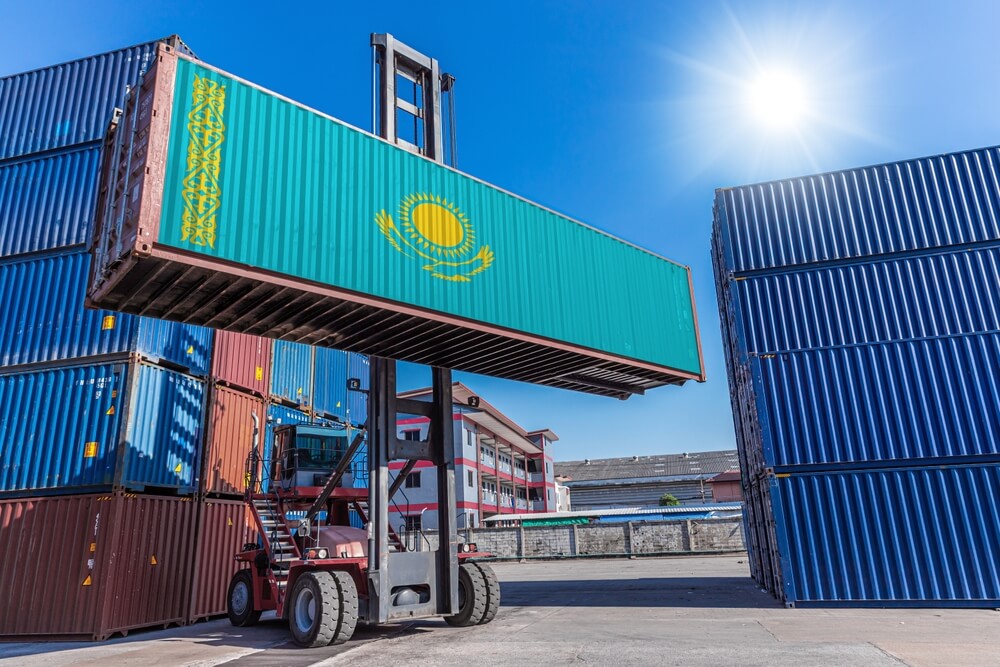
Over the past decade, container transport through this corridor has increased sixfold, and its role has grown particularly since the start of the Russian invasion of Ukraine in 2022.
As an alternative to routes through Russia, which is now at war, the Middle Corridor almost doubled its growth in the first year of the conflict in Ukraine alone, rising from 1.5 million tonnes in 2022 to 2.8 million tonnes in 2023.
Today, the Middle Corridor receives further validation, as the war in Iran blocks the so-called southern transport route through Iran towards the Persian Gulf.
In this context, the Iranian crisis presents an opportunity for Central Asian economies to focus even more on developing the Middle Corridor, particularly by addressing its bottlenecks on the Caspian coast.
In the long term, greater reliance by Central Asia on this trade corridor will also mean increased dependence on the markets of Turkey and Europe, which indirectly leads to stronger political and security ties with the West.
The United States has reason to support such a development, as it would limit China’s growing ambitions in the Central Asian region.
Europe has even more reasons to do so, not only because of its expanding economic activities in the region, but also due to the distancing of Central Asia from Russia and its economic and security pressures.
