Germany’s far right has won again, capturing the largest share of the vote in the northeastern state of Mecklenburg-Vorpommern, as it did in Saxony-Anhalt earlier this month.
Though it is unlikely to take power in the former, it still has a chance to do so in the latter.
It needs the support of only three other members of parliament in Magdeburg, and the far-left Sahra Wagenknecht Alliance (which fuses socialism with nationalism) has signaled some willingness to cooperate with the Alternative für Deutschland (AfD).
Is the German “firewall” crumbling? For years, all other German parties have staunchly refused to work with the far right, and critics (including US Vice President JD Vance) have argued that this practice is undemocratic and ultimately self-defeating. Have they been vindicated?
In Saxony-Anhalt, the AfD received more than twice as many votes as the second-placed Christian Democrats, Germany’s governing center-right party. Yet the fact remains that no party is entitled to hold power unless it wins a majority (50% plus one vote).
So, another way of reading the same result is that a clear majority voted against the far right—not by accident, but as a conscious effort to deny power to a party that many rightly see as a threat to democracy.
It would be quite strange to claim that ignoring this large anti-AfD vote is “democratic.”
Only one prominent theorist of democracy, the Austrian jurist Hans Kelsen, has ever gone so far as to suggest that all parties in a representative assembly ought always to pursue compromises and reach out to minorities.
The promise of democracy, he contends, rests on collective self-government. The greater the number of people who can see their will reflected in a government’s policies, the freer they are.
Seeking compromise
But Kelsen’s vision of maximal inter-party cooperation is not as democratic as it seems.
If an overwhelming majority favors closing tax havens, why should they have to compromise with the billionaire beneficiaries of the status quo?
Seeking compromise becomes even harder to justify when parties are elected because voters do not want to see cooperation with the far right.
Critics of the firewall argue that it denies representation to far-right voters. But this is obviously false
Critics of the firewall argue that it denies representation to far-right voters. But this is obviously false.
Far-right deputies are already quite vocal and active in parliaments where they have won seats, especially in political systems that give opposition parties many levers to hold a government accountable. Germany is one such country. The far right has many opportunities to apply pressure on the current government and force debates on issues of its choosing. In a democracy, being out of power does not mean being out of sight.
Breaching the firewall
When the political scientist Christian Stecker (a prominent critic of the firewall) laments Germany’s deficit of “thematic representation,” he is overlooking the crucial distinction between a right to be heard and a right to exercise authority.
True, if far-right parties hold seats in parliament, other parties should not refuse to debate them.
But talking with duly elected far-right populists does not mean you need to accommodate their positions.
Unfortunately, accommodation is exactly what has happened in many European countries in recent years.
While officially refusing coalitions with the far right, plenty of (primarily center-right) politicians have effectively copied the far right’s rhetoric, breaching the firewall
While officially refusing coalitions with the far right, plenty of (primarily center-right) politicians have effectively copied the far right’s rhetoric, breaching the firewall.
As multiple studies have shown, trying to destroy the far right by imitating it usually backfires on the center right.
Likewise, the theory that including the far right in government will expose it as incompetent and thereby erode its support has not been borne out.
In research testing this hypothesis, the far right has performed better by an average of six percentage points at the next election, and this result also holds when the far right supports a minority government.
To be sure, the far-right Sweden Democrats had been propping up a center-right minority government, but lost votes in the country’s recent election for the first time since entering parliament in 2010. (Moreover, ahead of this month’s vote, the center-right parties had even proposed including the Sweden Democrats in an official coalition in the future.)
But one should not generalize from this result. By supporting a minority government, the far right can influence the agenda without having to take responsibility for its implementation or outcomes—hardly a plausible understanding of democracy.
Incoherent alliances
It is true that if the far right keeps doing better at the ballot box, coalitions to keep it out of power are bound to become more heterogeneous, and this will potentially backfire.
Ideologically incoherent alliances comprising everyone from the far left to the center right will suffer from constant squabbling and ineffectiveness.
They also risk confirming far-right populists’ standard claim that a nefarious political establishment will do anything—including abandoning its own stated principles—to keep them from power.
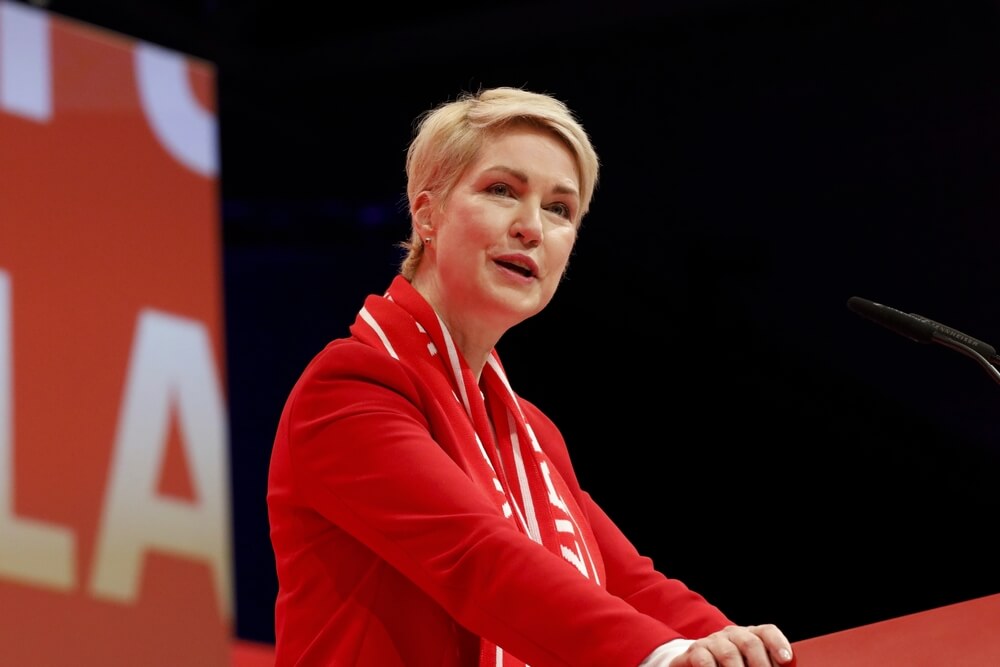
In Mecklenburg-Vorpommern, the incumbent, Manuela Schwesig (SPD), presented herself as “The Woman Against Blue”. It was not enough to prevent the AfD from finishing first
Fortunately, that result is not inevitable. But to avert it, other parties must stop campaigning only against the far right at the expense of offering their own positive vision for the future.
In Mecklenburg-Vorpommern, the incumbent, Manuela Schwesig of the Social Democrats, presented herself as “Die Frau gegen Blau” (“The Woman Against Blue”).
That had some effect, but it was not enough to prevent the AfD from finishing first.
More to the point, in Saxony-Anhalt, the AfD made historic gains partly because it projected hope (its slogans, “Anything is possible” and “All will turn out well,” could have come from a Barack Obama campaign).
It responded confidently to voters’ primary concerns, which centered not so much on migration as on economic conditions.
When it came to that crucial topic, the other parties seemed to have little to say.
Jan-Werner Mueller, Professor of Politics at Princeton University, is a fellow at the Institute for Human Sciences in Vienna.
