Reuters reported on 21 September that Chinese regulators were slowing the IPOs of humanoid robot companies after a sharp rise followed by a steep fall in Unitree’s shares showed how far market expectations had diverged from current sales.
The agency cited several anonymous sources familiar with decisions by Chinese regulators.
According to these sources, some planned stock market listings by humanoid robot companies have been delayed by informal regulatory guidance.
One source described a temporary freeze on new offerings, while another said that no formal ban had been introduced.
The China Securities Regulatory Commission did not respond to a request for comment, so the scope and duration of this measure have not yet been confirmed in any official documents.
State support for humanoid robotics remains strong, with Beijing designating the field a strategic industry, local governments funding factories and data-collection centres and state funds investing in leading manufacturers.
Companies seeking money from public investors now have to demonstrate more than technological progress and state backing.
Regulators are checking how much revenue comes from customers who would have ordered robots even without subsidies, local development programmes or political decisions to create a new market.
The answer will determine which Chinese companies can turn technological advances into sustainable businesses.
Unitree’s share price decline has intensified scrutiny of other manufacturers
In March, Unitree filed to raise 4.2 billion yuan, about $610 million, on the Shanghai Stock Exchange to fund research, development and production expansion.
The company generated operating income of 1.708 billion yuan, approximately $248 million, in 2025, an increase of 335 per cent, while the share of humanoid robots in its main business revenue rose from 27.6 per cent in 2024 to 51.5 per cent in the first nine months of 2025.
These results gave investors a rare opportunity to buy shares in one of China’s best-known manufacturers in a sector that for years has largely relied on private equity and sovereign funds.
Unitree’s shares rose to more than five times their initial price after the company went public on the Shanghai Stock Exchange, then fell by about 55 per cent from their peak.
Even after that drop, the stock was worth more than double the price at which it had been offered to investors at the IPO.
Unitree became the first major stock market indicator of how much investors are willing to pay for a Chinese manufacturer of humanoid robots
Unitree thus became the first major stock market indicator of how much investors are willing to pay for a Chinese manufacturer of humanoid robots.
At least six other companies, including Deep Robotics, X Square Robot and AGIBOT, have been preparing their own IPOs.
Until now, their valuations have largely been determined in private financing rounds, where the price is set by a small number of funds and state-backed investors.
Movements in Unitree’s stock have given regulators and prospective shareholders a public benchmark by which to assess these companies.
Producers whose income and output do not justify previously established valuations will have to accept a lower share price or postpone their IPO.
Unitree sells thousands of robots and generates about $248 million in annual revenue, but its stock market value rests on expectations that humanoid robots will soon be widely used in factories and other workplaces.
The sales volume to date does not yet support that expectation. Beijing has good reason to prevent a few successful demonstrations, grand government plans and limited share supply from combining to drive up valuations that subsequent sales cannot justify.
The first large orders are paid for by local authorities
The most sensitive part of the review will be income linked to local authorities.
In recent years, cities and provinces have established centres where robots repeat movements, and the data collected is used to train the models that operate the machines.
Local government often finances the initial equipment, premises and the joint venture with the manufacturer.
In some projects, the public partner provides between 80 and 90 per cent of the initial investment.
Such arrangements accelerate development and immediately bring the manufacturer an order, but demand depends on decisions taken in the local budget.
A commercial customer typically requests a quotation based on operating hours, reliability, maintenance costs and labour savings.
A robot training centre can measure success by the amount of data collected, the number of companies involved, and a city’s ability to attract new industry.
The regulator is trying to determine how much of sales comes from recurring business needs and how much from public money used to start a new sector
The producer’s income is real in both cases, but its durability depends on different factors.
The regulator is therefore trying to determine how much of sales comes from recurring business needs and how much from public money used to start a new sector.
This momentum stems from the Ministry of Industry’s 2023 decision that China should establish a humanoid robotics innovation system by 2025 and a reliable industrial chain with internationally competitive companies by 2027.
The government's 2025 work report listed, among future industries, the development of artificial intelligence systems that use robots and other machines to perceive the environment and perform physical tasks.
Government support then channelled money into manufacturing components, laboratories, factories and the purchase of robots.
The regulator is now trying to determine how much of the sales is due to genuine demand from companies and how much depends on subsidies and orders from local authorities.
Stock market expectations are based on a market of only 7,000 robots
The first global assessment by the International Federation of Robotics reveals how small the market still is.
In 2025, around 7,000 humanoid robots for industry and professional services were sold worldwide.
By “humanoid robot”, the Federation means an autonomous, human-shaped machine that can operate in spaces designed for humans; legs are not a mandatory requirement.
For comparison, 542,000 conventional industrial robots were installed worldwide in 2024, while around 199,000 professional service robots were sold.
The data refer to different years and categories, but clearly show how far humanoid robotics is from mass industrial use.
A large proportion of humanoid robots are purchased by research institutions, development teams and data-collection centres.
The decision to buy more robots depends on much longer periods of operation under real factory conditions
Car companies test them in factories, usually in single- or double-digit numbers.
For now, carmakers and other industrial companies generally buy a small number of humanoid robots to test them on a single, limited task.
Such testing can demonstrate that a robot successfully transfers parts, sorts materials or services a particular machine.
The decision to buy more robots depends on much longer periods of operation under real factory conditions.
Customers need to know how often the robot stops, how long repairs take, how many employees are needed to supervise it, and whether the machine works quickly and accurately throughout the entire shift to justify its price.
This difference directly affects the valuation of any company preparing to go public.
A customer can order a few robots for testing without subsequently expanding their use.
The manufacturer will still report the income from that sale in its financial results.
Because of this, regulators and investors will look for data on how many robots have actually been put into regular operation, how many customers have ordered additional units after the trial period, and to what extent sales can be repeated without new subsidies.
Software determines the return on investment
China is entering this phase with a strong manufacturing base. Domestic companies already produce electric motors, reducers, batteries, sensors and electronic assemblies, and the proximity of suppliers shortens the time between a prototype and a new production run.
This advantage reduces hardware costs and allows manufacturers to change designs more quickly.
However, a robot’s ability to perform a task reliably depends on software that integrates vision, balance, motion planning and responses to changes in the environment.
An error in object recognition or grasping can halt the line and wipe out the savings achieved with cheaper hardware.
Factories and warehouses are likely to be the first to start buying humanoid robots on a regular basis
Spirit AI, a Chinese start-up that develops robot control software and produces the humanoid robot Moz1, illustrates how much work is required to build such systems.
The company has hired around 1,000 associates who perform and record everyday movements, and the collected data is used to train the software that controls the robot.
In a controlled environment similar to a living room, the robot successfully completes simple tasks in about 90 per cent of attempts, while several dozen units are being tested at the facilities of CATL, the world’s largest manufacturer of batteries for electric vehicles, and JD.com, one of China’s largest e-commerce and logistics companies.
A success rate of 90 per cent has been achieved for predetermined tasks in a controlled environment.
In a real factory or home, the robot must reliably respond to moved objects, the presence of people, and situations not covered during training.
Factories and warehouses are likely to be the first to start buying humanoid robots on a regular basis, because their workspaces can be arranged so that the machines consistently perform the same tasks with the same types of objects.
Larger orders will follow only when the robots can run full shifts without frequent downtime, with predictable maintenance costs and minimal staff needed for supervision.
Manufacturers who demonstrate this in logistics, the automotive industry or electronics production will be able to count on repeat orders, while companies relying on demonstrations and one-off government projects will not have a stable source of income.
Selection begins before mass production
Chinese regulators are unlikely to completely block humanoid robot makers from going public, but approvals will take longer and fewer companies will meet the requirements.
They will pay particular attention to revenues from projects financed by local authorities, large one-off contracts and deals with related companies, whose contribution to the revenues of certain firms has been publicly disputed by Mech-Mind Robotics’ director.
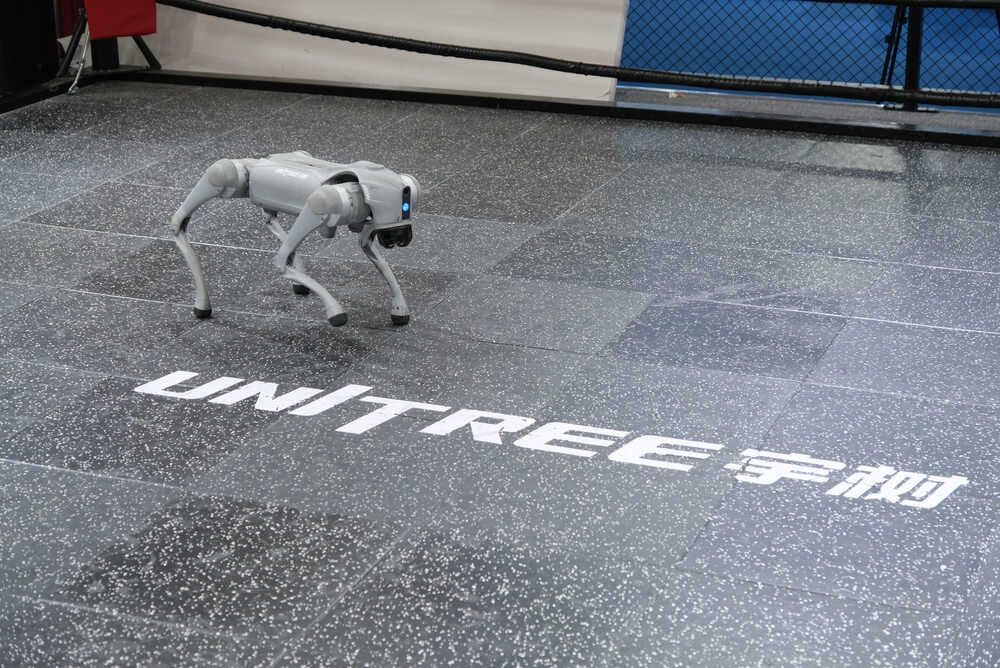 Chinese regulators are unlikely to completely block humanoid robot makers from going public, but approvals will take longer and fewer companies will meet the requirements
Regulators will then compare the requested stock market valuation with actual revenues, given that many start-ups achieved their high valuations during private financing rounds.
The value of certain companies in this sector has already fallen by between 30 and 50 per cent compared with earlier estimates.
Manufacturers without stable sales will have to find new private investors, merge with a larger company or abandon development of the entire robot and focus on producing individual parts.
Such developments reflect the industrial logic of a sector in which China can sustain a large number of motor, sensor and battery suppliers, while a significantly smaller number of companies will be able to finance the development of complete humanoid systems, their servicing and software training.
The trade dispute over humanoid robots has already begun
If Chinese factories increase capacity faster than domestic sales grow, manufacturers will have to seek more buyers abroad.
Such expansion will intensify a trade and security dispute that has already begun, as humanoid robots collect detailed data on production processes, plant layouts and employee activity through cameras and other sensors.
Government subsidies for Chinese manufacturers will further increase pressure for trade measures
US and European companies are likely to demand security checks, restrictions on data transfers to China, and clear rules on who can access the information recorded by the robots.
Government subsidies for Chinese manufacturers will further increase pressure for trade measures.
As a result, humanoid robots could become an even more prominent focus of technological and trade disputes long before they are widely deployed in factories and households.
