Tehran can no longer plausibly claim that war alone explains the country’s economic collapse. The latest inflation figures show not a temporary shock but the acceleration of a long-running monetary and fiscal failure that the regime created years before the war began.
The new evidence is devastating. Annual inflation has risen to 88 per cent, and food prices have soared 128 per cent year on year in July, according to official data.
This is not the profile of an economy suffering a temporary wartime dislocation but a state that has destroyed the currency, demolished purchasing power, and left households abandoned against a government-induced collapse.
In a previous article I showed that Iran’s economy was already broken long before the war. Iran has suffered for many years from persistent inflation above 40 per cent, chronic monetisation of deficits, a collapsing rial, institutionalised corruption, and an economic system dominated by the Revolutionary Guard and politically connected entities that have stolen the oil wealth of the nation to finance corruption and terrorism abroad.
According to the World Bank, GDP had already contracted by 0.7 per cent year on year in the first half of the 2025 Iranian year, and total GDP is estimated to have shrunk by 3 per cent in the first half of 2026.
The IMF warned in April that Iran’s economy would contract by 6.1 per cent in 2026. It has already been stagnating for the past few years.
A social demolition policy
The Statistical Centre of Iran’s figures show annual inflation above 80 per cent for three straight months, while food prices rose 130 per cent annualised over the past month and 128 per cent year-over-year in the Tir period.
Inflation in eight of the ten main food groups exceeded 100 per cent, with bread and cereals at 116.7 per cent, solid vegetable oil up 375 per cent, liquid oil 308 per cent, imported rice 209 per cent, Iranian rice 173 per cent and chicken 191 per cent.
This is how hyperinflationary dynamics destroy a society from the bottom up. Families are abandoned; there is no food, and when there is some, it is scarce and expensive. In Iran, inflation is the norm, has been so for years, and it is not just a macroeconomic statistic but a social demolition policy.
The regime uses inflation to silence discontent, keep society quiet, and force citizens into submission
One of the most striking descriptions of Iran is the emergence of the “wealthy poor” class, households that still appear middle class on paper but cannot have middle-class consumption. It shows the essence of the Iranian collapse.
The government is squandering funds and making everyone poorer despite long-term strategic support from China, Russia, and dozens of trading partners. The regime uses inflation to silence discontent, keep society quiet, and force citizens into submission, threatening them with starvation.
Shops in Tehran are promoting buy-now-pay-later schemes, including for clothing, phones, gold, and travel, despite the obvious disadvantage of receiving payment later in a currency that has lost 90% of purchasing power in the past years.
Businesses are accepting that loss because consumers have run out of cash, demand has collapsed, and producers are becoming desperate to move inventory in a monetary environment where wages vanish under the collapse of the local currency.
The regime’s economic model is the cause
The regime continues to blame sanctions, war, and foreign pressure. However, the macroeconomic reality is too clear to ignore.
The earlier collapse came from money printing, fiscal indiscipline, off-budget military financing, banking-system dependence, and the diversion of oil income away from productive use and toward regime expansion.
Iran has received massive support from China, Russia, the EU, and dozens of trading partners. Sanctions affect the regime leaders, not the economy.
Iran’s economy was already in recession with high inflation before the war, then pushed into a much deeper crisis by conflict and its own trade disruption. Iran decided to use the Strait of Hormuz as a weapon and showed its biggest weakness, as 80% of its exports depend on it.
War hit an economy that had already lost monetary credibility, fiscal discipline, and institutional legitimacy
Now, its own strategic partners reject trade because Iran has proven to be an unreliable supplier. Therefore, war hit an economy that had already lost monetary credibility, fiscal discipline, and institutional legitimacy.
What is happening in Iran is more than inflation. It is the liquidation of civil life by a predatory state. A government that destroys the value of wages, wipes out savings, and turns food into a luxury good is not just mismanaging the economy.
It is absorbing the entire productive base of the nation to preserve political control.
The Iranian regime did not simply inherit an economic emergency from war. It manufactured one over the years, and now the social cost is exploding.
An architecture of terror and repression
Washington’s promise of “unprecedented” economic isolation this week should be understood as pressure on the regime’s international financial, commercial, and oil-export network and not as collective punishment of the Iranian people.
The administration has indicated that the next phase could go beyond conventional sanctions by targeting the external networks that allow Tehran to sustain oil sales and evade previous restrictions to use the funds for terror financing.
It is designed to cut the Revolutionary Guard and its affiliates from those lines of revenue while maintaining humanitarian channels.
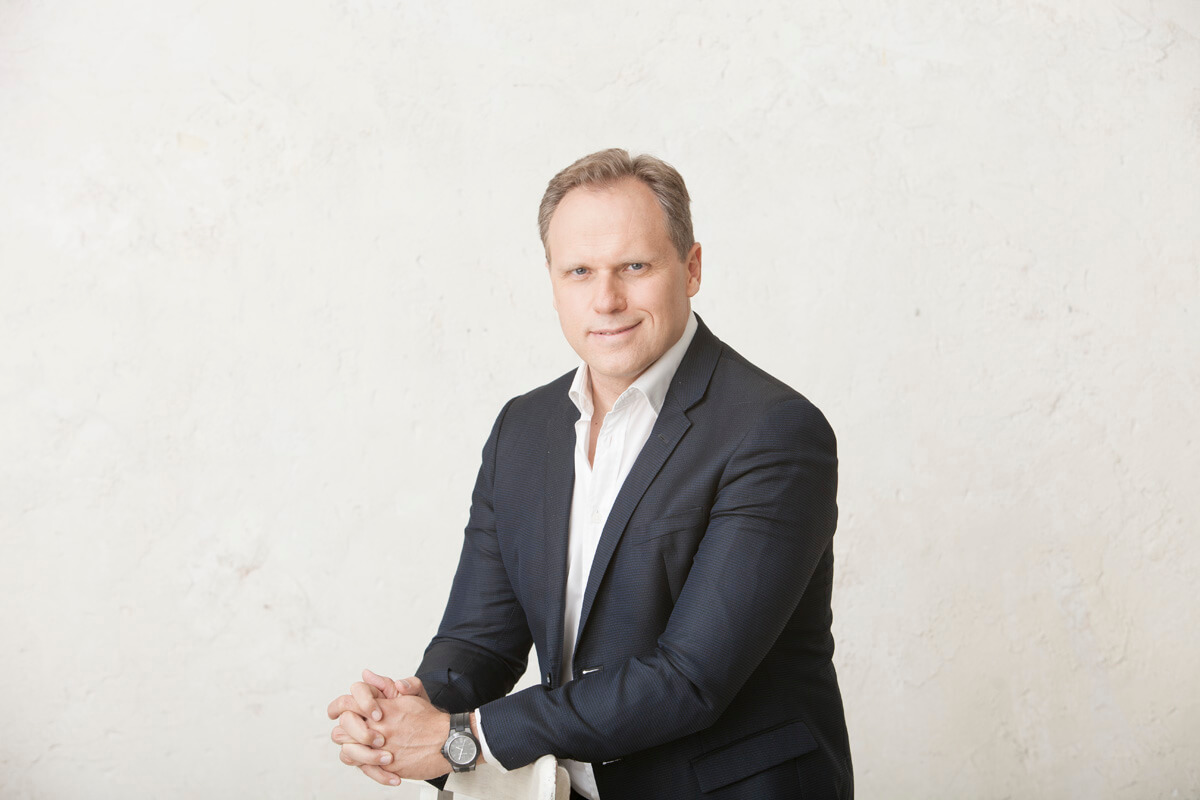 The world should stop treating Iran’s economic collapse as an unfortunate side effect of geopolitical tensions - Daniel Lacalle
This may help create the conditions for Iranians to free themselves from a totalitarian and murderous regime. This is important, because the only thing that maintains the regime in power is an architecture of terror and repression.
The regime’s recent repression killed at least 6,126 people, including 5,777 protesters, and more than 35,000 civilians in 2026, a toll far above the 1,701 civilian deaths documented during the war until the end of July.
The world should stop treating Iran’s economic collapse as an unfortunate side effect of geopolitical tensions.
It is the predictable result of an authoritarian system that murders its citizens, monetises insane deficits, destroys economic incentives, protects terrorist oligarchies, and transfers the costs to ordinary citizens.
Iran has proven to be a menace to its neighbouring countries, an unreliable supplier to its customers, and a terrible partner for OPEC.
The regime’s actions have had a disastrous impact on its main strategic ally, China, and have backfired with the shutdown of Hormuz. Twenty-five per cent of Iran’s GDP depends on Hormuz being open. The next step must be the end of a regime that has never helped the people of Iran.
