The territory of the Nakhchivan Autonomous Republic, separated from the main part of Azerbaijan by the territories of other states, was attacked by Iranian drones several days ago.
On 5 March, one Iranian drone was destroyed by the Azerbaijani air defence system, another fell on the territory of Nakhchivan Airport, and a third crashed near a secondary school. There were no fatalities; however, four people were injured.
The very occurrence of such an incident caused serious outrage in official Baku. From the outset of the current conflict, Azerbaijan has maintained a deliberately neutral position, refraining from actions that could be perceived by Tehran as unfriendly.
Moreover, Baku expressed its readiness to provide the Iranian side with free assistance in evacuating its diplomats from Lebanon and to send humanitarian aid to areas of Iran affected by the conflict.
The President of Azerbaijan, Ilham Aliyev, was one of the few heads of state who personally visited the Iranian embassy to express condolences over the death of Ali Khamenei.
Against this background, the drone attack on the territory of Nakhchivan, which occurred the day after the Azerbaijani president’s visit to the Iranian embassy, appeared particularly provocative.
Earlier, Azerbaijan opened its land border with Iran to evacuate foreign citizens from the conflict zone.
A similar humanitarian corridor operated during last year’s escalation. More than one and a half thousand foreign citizens have already left the combat zone and crossed into Azerbaijan, from where they were able to return safely to their home countries.
The situation changed dramatically after drones launched from Iranian territory attacked Azerbaijan. The country’s armed forces were placed on full combat readiness.
The reaction of the international community was almost immediate: many international organisations and senior officials from over fifty countries expressed solidarity with Azerbaijan.
This suggests that many states view the incident as a potentially dangerous precedent that could expand the geography of military confrontation around Iran.
Not only a military provocation
President Ilham Aliyev’s strong response to the attack by Iranian drones on Azerbaijani territory sent a clear signal: Baku will not tolerate threats to its security.
The strike on civilian facilities was not only a dangerous military provocation but was also carried out despite Azerbaijan’s restrained position regarding the armed confrontation between Iran, Israel, and the United States.
Baku has repeatedly stated that Azerbaijani territory will not be used against any neighbouring state.
President Ilham Aliyev strongly condemned the terrorist act, stating that those responsible must be brought to justice immediately and that Iranian officials must provide explanations and offer an apology.
This is not the first instance of provocations by Iran against Azerbaijan
This is not the first instance of provocations by Iran against Azerbaijan. On 27 January 2023, an armed attack took place at the Azerbaijani embassy in Tehran.
An armed assailant broke through the security post, killed the head of the diplomatic mission’s security service, and wounded two other guards.
Baku responded extremely harshly: Azerbaijan’s embassy was evacuated from Iran, and diplomatic relations were effectively suspended.
The Iranian side was forced to apologise and acknowledge responsibility for what had happened. The perpetrator of the terrorist attack received the harshest punishment.
Tehran’s bad faith
In response to the incident in Nakhchivan, the Azerbaijani government decided to temporarily suspend all cargo movement through border checkpoints on the Azerbaijan–Iran state border.
The Azerbaijani Ministry of Defence stated that it is preparing necessary measures to protect the country’s territorial integrity and sovereignty.
The Azerbaijani Foreign Minister reported that instructions had been given to evacuate both the Azerbaijani embassy in Tehran and the consulate general in Tabriz.
The essence of the events indicates that the attack on Azerbaijani territory should be seen not as an isolated incident but as part of a deliberate strategy that demonstrates Tehran’s bad faith.
The drone attack on Nakhchivan Airport appeared to be a carefully planned military provocation
This is further supported by persistent biased narratives and attempts at threats against Azerbaijan disseminated by Telegram channels affiliated with the Iranian regime.
The drone attack on Nakhchivan Airport appeared to be a carefully planned military provocation.
The Iranian regime is well aware that air transport is currently the only effective line of communication between mainland Azerbaijan and the Nakhchivan Autonomous Republic.
Disabling this strategic facility could have created a serious vulnerability for Azerbaijan.
Such actions only confirm that, while declaring respect for neighbours and the principles of Islamic solidarity, Tehran in practice often resorts to methods of political pressure and intimidation.
Azerbaijanis in Iran
On 8 March, the President of Iran, Masoud Pezeshkian, who is of Azerbaijani origin, thanked Ilham Aliyev for visiting the Iranian embassy in Azerbaijan and for Azerbaijan’s intention to provide humanitarian assistance to Iran.
He also stated that the shelling incident in Nakhchivan was unrelated to Iran, emphasising that the matter would be thoroughly investigated.
On 9 March, the entry and exit of all types of vehicles transporting cargo across the state border between Azerbaijan and Iran resumed. Traffic had been temporarily suspended on 6 March.
It should be noted that about 9 million Azerbaijanis live in Azerbaijan, comprising approximately 90% of the country’s population.
From a historical perspective, Azerbaijanis in Iran effectively became the second state-forming nation
More than 20 million Azerbaijanis live in Iran, making up around 25% of the population. Persians are the state-forming nation and constitute about 55% of the population.
From a historical perspective, Azerbaijanis in Iran effectively became the second state-forming nation.
Beginning in 1501, Iran was ruled by the Azerbaijani dynasty of Shah Ismail I, which remained in power until 1722. During the rule of this dynasty, Iran achieved its greatest territorial expansion.
The internationalisation of the conflict
Tehran denies Iran’s involvement in the attack on Nakhchivan. This is similar to Moscow’s actions during the first weeks of its attack on Ukraine, when the Kremlin claimed that Ukrainian cities were being shelled not by Russian forces but by certain “Ukrainian radicals,” in an attempt to attract the West’s attention.
These claims were quickly refuted. Similarly, Iran now suggests that the attack on Nakhchivan may have been carried out by a third party, implying Israel.
However, as Israel is an ally of Azerbaijan, Baku does not find such claims convincing.
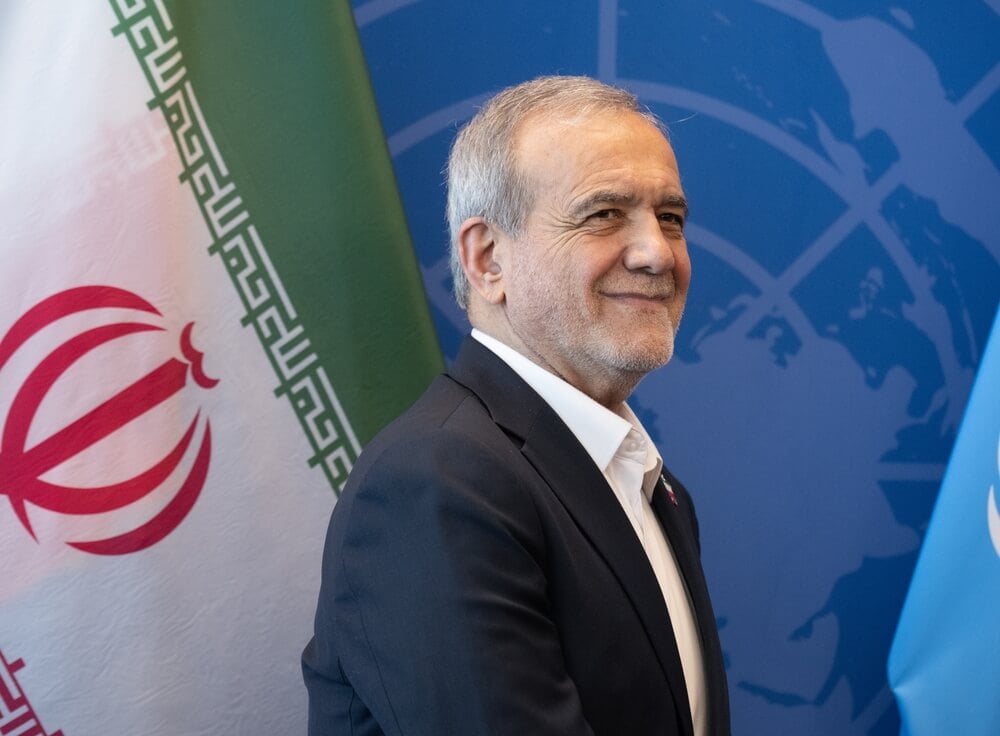 Although at first glance it would not be in Tehran’s interest to expand the anti-Iranian coalition, attempts to exert pressure on the populations of other countries cannot be ruled out - Masoud Pezeshkian
Similar concerns have also been raised by other states in the region. The Iranian Ministry of Foreign Affairs stated that it was not involved in attacks on Turkey and Cyprus.
However, two Iranian ballistic missiles were intercepted over Turkish territory, and several Iranian drones were intercepted over Cyprus.
While drones could theoretically have been launched from Lebanon by representatives of the pro-Iranian group Hezbollah, ballistic missiles could only have been in the possession of the Iranian military. In this regard, official Ankara issued a serious warning to Tehran.
The likelihood of the internationalisation of the military conflict between Israel and the United States on one side and Iran on the other is becoming increasingly evident.
Although at first glance it would not be in Tehran’s interest to expand the anti-Iranian coalition, attempts to exert pressure on the populations of other countries in order to provoke protests against the war with Iran cannot be ruled out.
Washington’s plans, which assumed that democratic forces within Iran would rise up against the regime following the start of Israel–US airstrikes, have not been realised so far.
Nor have expectations been met that many of Iran’s peoples – such as the Baloch, Lurs, and especially the Kurds – would seek independence from Tehran.
It should be noted that the country’s population is united not only by state institutions but also by religion – specifically, the Shiite form of Islam.
Additionally, many of these peoples are ethnically close to the Persians, and those who are not, in most cases, also practise Shiism, like the majority of the population in multinational Iran.
Oleksandr Levchenko, a former Ukrainian diplomat, is a professor at the State University (Kyiv) and a member of the Academy of Geopolitics and Geostrategy (Kyiv).
