Israeli Prime Minister Benjamin Netanyahu has finally gotten his war with Iran, the one regional power that Israel truly fears.
While the United States is nominally the senior partner in this illegal war of choice, it is Netanyahu who appears to be dictating the tactics and the goals, starting with the targeted assassination of Iran’s top leadership and a bombing campaign that treats the killing of scores of schoolgirls as mere collateral damage.
Israel used the same approach against Hamas, Hezbollah, and the Houthis in recent years, while also murdering Iranian physicists and engineers in what amounted to terrorist attacks orchestrated by Mossad.
But since Iran is a very large country (roughly the size of France, Germany, and Spain combined) with 93 million people, something more is required, because the US, let alone tiny Israel, cannot conceivably invade and occupy it.
That is why Israeli hawks have long lobbied to splinter Iran into ethno-religious statelets, and why its intelligence agencies have been cultivating separatists.
Having failed to devise a plan for the day after this war ends, the US has also begun to toy with this “strategy.” According to a CNN report, the “CIA is working to arm Kurdish forces with the aim of fomenting a popular uprising in Iran.”
Efforts to incite separatism
It is not difficult to see why this strategy appeals to some in Israel and the US.
Only 61% of Iranians are ethnic Persians.
The largest minority (perhaps 24%) comprises Azerbaijani Turks – the group to which the late supreme leader, Ayatollah Ali Khamenei, belonged – who are concentrated in Ardabil, in northwest Iran.
After these “Azeris” are Iranian Kurds, who number 7-14 million, residing mostly in the northwestern border provinces adjacent to autonomous Iraqi Kurdistan.
Proximity to Iraqi Kurdistan affords a relatively straightforward point of ingress and egress into Iran, making the Kurds a focus for Mossad and CIA efforts to incite separatism
Proximity to Iraqi Kurdistan affords a relatively straightforward point of ingress and egress into Iran, making the Kurds a focus for Mossad and CIA efforts to incite separatism.
Were they to assemble a large armed force capable of attacking Iran’s already beleaguered security forces, they would likely gain additional support from their Kurdish brethren across the border.
Yet another group is the Baloch minority, who live mostly in eastern Iran, along the 565-mile border with Pakistan’s volatile Balochistan province, from which Jaish al-Adl, a US-designated terrorist group, has long launched attacks against Iran’s Islamic Revolutionary Guard Corps and Basij militia.
And finally, there are some 5-7 million Ahwazi Arabs in the oil-rich western province of Khuzestan, where they lead miserably oppressed lives mirroring those of the Shia who dominate Saudi Arabia’s oil-rich eastern province.
Violent repression
All these Iranian minorities are forced to use Farsi in official communication, and all have been subject to violent repression by the Islamic Republic’s ever-active security forces.
Kurds, for example, comprise only 8-17% of the population, but they account for a disproportionately large share of those executed or imprisoned for political reasons.
The US has a very poor track record when it comes to fomenting separatist unrest
The problem, of course, is that the US has a very poor track record when it comes to fomenting separatist unrest, as the Marsh Arabs and Iraqi Kurds discovered after Operation Desert Storm in 1991.
Time and again, “plucky little peoples” have been goaded on and then abandoned – left to be shot and gassed after their Western sponsors turn their attention elsewhere.
Indeed, that is exactly what President Donald Trump has done to Syria’s Kurds, who helped the US defeat the Islamic State during his first term, but has now dropped them and cozied up to Syria’s young president, Ahmed al-Sharaa, a former al-Qaeda commander.
It may suit Israel to balkanize the entire Middle East, leaving no powers capable of challenging its regional hegemony. But does that goal serve the interests of the US or the rest of the region?
One war after another
In case Trump has forgotten, his other “tough guy” friend in the region, Turkish President Recep Tayyip Erdoğan, has spent decades fighting Kurdish separatism.
Having deployed its own military might to roll back the Syrian Kurds and crush the Kurdistan Workers' Party in his own country, Turkey, a NATO member, is not going to remain passive as the Iranian Kurdistan Free Life Party (PJAK) – an offshoot of the PKK – establishes a statelet on its border.
And if Turkey were to move against such an entity, what would Israel do about it?
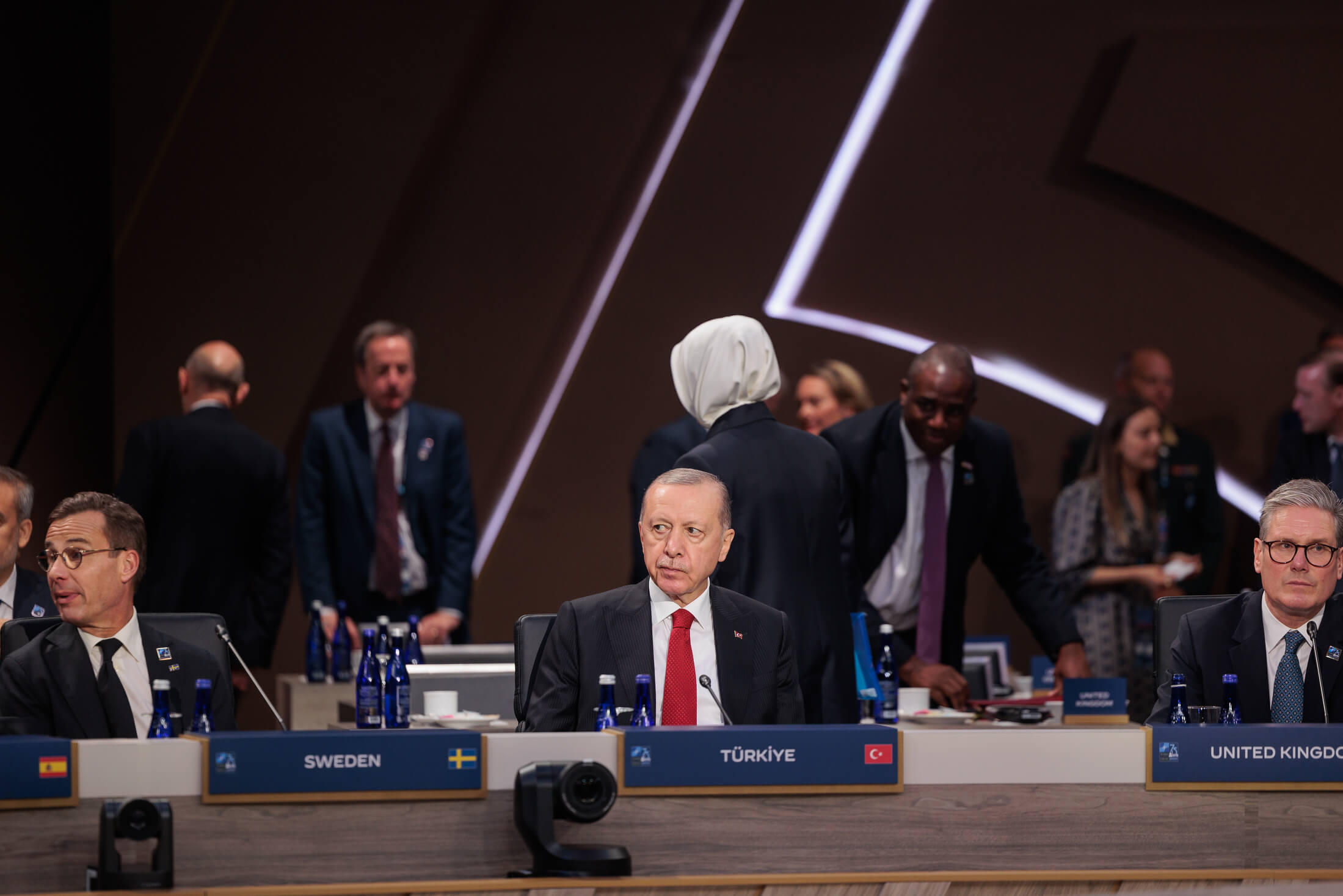 In case Trump has forgotten, his other “tough guy” friend in the region, Turkish President Recep Tayyip Erdoğan, has spent decades fighting Kurdish separatism
Here, too, it may suit the Israelis to fight another war of aggression against an unfriendly neighbor, but it certainly would not suit the US, Turkey, or the rest of NATO.
The last thing they want, in addition to the probably fatal rupture in NATO that any attack on Turkey would cause, is another wave of refugees fleeing toward Europe as a result of an entirely avoidable conflict.
These are just the most predictable problems. But there would also be unknown unknowns.
A balkanized Iran would be highly unstable, subject not just to bouts of ethnic cleansing but also to the predations of greedy or nervous neighbors.
Trump has no power to decide whether Iran regresses into a “constitutional” monarchy or autocracy under a “Shah” who has lived in the US since 1985, or whether it remains a centralized republic or a confederal one, like Canada or Australia.
Given Trump’s fixation on winning a Nobel Peace Prize, many imagined that he would heed those in his political coalition counseling restraint.
But a minority of residual neocons seems to have filled the vacuum in his knowledge of the region, aided by an Israeli prime minister whose vision of his country’s future evidently involves one war after another, regardless of lives lost and the economic damage done to the rest of us.
Michael Burleigh is a senior fellow at LSE Ideas at the London School of Economics.
