Sunday’s announcement of a memorandum of understanding between the United States and Iran is an important step forward.
After months of open hostilities that have exacted a heavy toll—in both lives and livelihoods—and inflicted significant economic damage worldwide, the memorandum provides a much-needed foundation for diplomacy that could reverse the stagflationary spillovers of the war.
Since the war has complicated an already tricky outlook for most countries and companies, the announcement is understandably being celebrated.
But as critical as it is, it’s only a first step. A true return to global economic stability still depends on whether all the parties involved can move from a framework deal to a lasting agreement.
Of course, this uncertainty has not stopped global financial markets from reacting as though normal economic activity had already been restored.
Expectations for a reopening of the Strait of Hormuz and a resumption of full-scale energy exports to international markets have triggered a sharp drop in global oil prices; and that, in turn, has boosted equity markets globally, as well as lowering borrowing costs.
Moreover, in the initial hours after the agreement’s announcement, portions of the bond market revised down their assumptions about how aggressively central banks would need to hike interest rates, having inferred that the memorandum could lead to an easing of supply-side constraints fueling inflation.
Step-by-step evaluation
But lasting relief for the global economy will depend on how the US and Iran navigate the profound operational complexities that their agreement entails.
For economists and a substantial segment of financial markets, it is too early to declare “all clear.”
The next few weeks will be dominated by a step-by-step evaluation of whether renewed diplomacy can survive contact with structural realities.
Specifically, further clarity is needed on four issues. First, can technical teams from both the US and Iran sort through what US Vice President JD Vance has described as “a lot” of yet-to-be-negotiated details?
They must not only resolve current outstanding issues but also navigate the inevitable transition from the memorandum of understanding to constructive talks on the fundamental issues that caused the war—not least Iran’s nuclear program and the broader issue of regional security.
International and regional actors’ reaction could either solidify or sabotage the fragile peace
Second, international and regional actors’ reaction could either solidify or sabotage the fragile peace.
On one side are America’s European and Middle East allies, who are eager to end the energy supply shock.
They are hoping for a broader multilateral effort to ensure an enduring peace—a push that will likely be on full display at this week’s G7 summit in France.
But then there is Israel, which has continued to strike targets in Lebanon and has already signaled its refusal to withdraw from the territory it has held since the start of the war.
The speed of normalization
Third, the speed of normalization will be critical for restoring global economic health.
Reopening a chokepoint like the Strait of Hormuz is not as simple as flipping a switch.
Adjusting shipping insurance rates, carrying out de-mining operations, and ramping up energy production all takes time
Adjusting shipping insurance rates, carrying out de-mining operations, and ramping up energy production all takes time.
Lastly, policymakers must carefully gauge the extent to which the war has left “economic scarring,” on one hand, and built additional resilience, on the other.
The ceasefire does not automatically reverse adverse effects such as the hit to global costs, some of which have yet to materialize (particularly in the food sector).
But these shocks must be weighed against the resilience-building measures that countries and companies were forced to pursue—from establishing alternative energy supply chains that bypass current chokepoints to placing a heavier logistical emphasis on precautionary inventories.
Political, technical, and physical risks
Most economists will refrain from declaring “all clear” as each of these issues could derail or prolong the process.
A sense of caution will initially dominate policymakers’ approach, as will become clear in the commentary surrounding major central banks’ policy meetings this week.
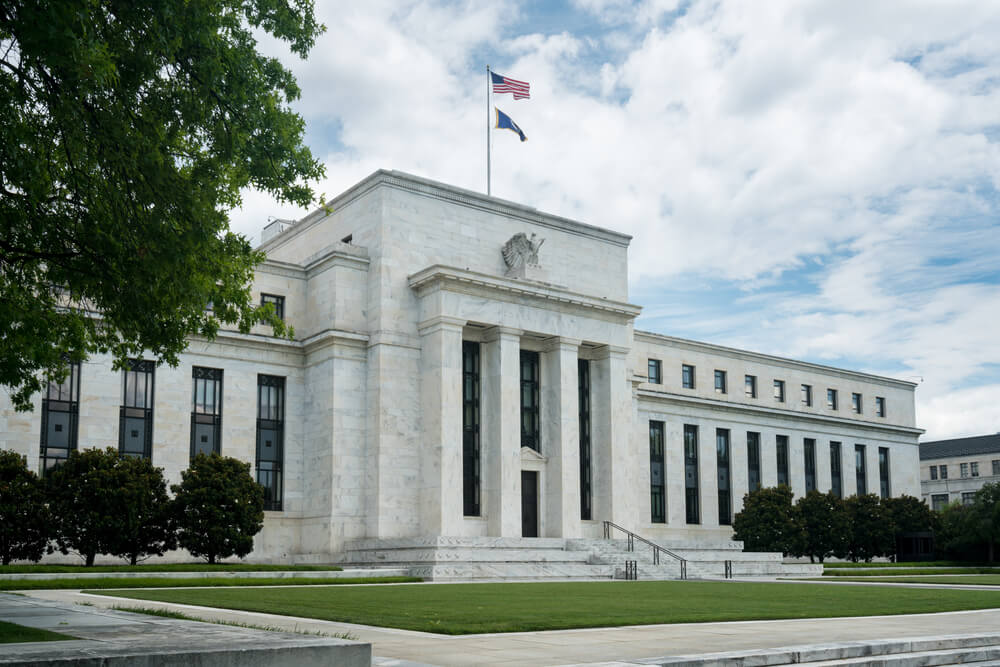 The Fed and other central banks will wait for tangible proof that the details are sorted out, that the Strait of Hormuz will remain open, and that production and shipping will in fact be restored
That includes the US Federal Reserve. It will welcome the ceasefire, but it is unlikely simply to assume that a preliminary framework agreement constitutes a complete, immediate reversion of the war’s adverse impact on inflation.
The Fed and other central banks will wait for tangible proof that the details are sorted out, that the Strait of Hormuz will remain open, and that production and shipping will in fact be restored.
While the recent announcement is certainly good news, it is not definitive. The path from a statement of diplomatic intent to a fully restored, non-inflationary energy supply chain is subject to political, technical, and physical risks.
Indeed, the coming weeks will be about how quickly the US and Iran can overcome challenges to implementation.
Until then, the global economy remains in a state of suspended hope, and not yet on a path toward definitive recovery.
Mohamed A. El-Erian, a former president of Queens’ College at the University of Cambridge, is Practice Professor at the Wharton School at the University of Pennsylvania, where he is also Senior Global Fellow at the Lauder Institute. He is Chief Economic Adviser at Allianz, and Chair of Gramercy Funds.
