Renault's entry into military drone production and Italy's approval of the Leonardo-Baykar joint venture are not two separate defence deals; they mark a new phase in the transformation of European security.
Europe is trying to address the industrial shortfall exposed by the war in Ukraine, but it is not doing so from a position of strength.
It is acting under pressure from the war in Ukraine, increasing doubts about the long-term reliability of US security guarantees, and the realisation that without its own production capacity, it cannot be a serious military power.
This is why the issue now emerging is much broader than drones. Europe seeks military autonomy, but the first concrete steps reveal how dependent this autonomy is on actors outside the European Union, on civilian industries only now entering the defence sector, and on supply chains that European states do not yet control.
This is the main paradox of current European defence policy. The continent is trying to free itself from dependence, but the path to that freedom leads through new forms of reliance on others.
The war changed the measure of military power
The greatest shock that the war in Ukraine produced in European capitals was not military but industrial. For years, European governments debated strategies, budgets and security concepts, only to face a much simpler question: how quickly can European industry produce what is needed to wage or support modern warfare?
Drones have become the clearest evidence of how far the European understanding of military power has diverged from the reality of modern warfare.
While European armies have for decades prioritised a small number of expensive and technologically complex systems, the war in Ukraine has demonstrated the value of mass production, rapid adaptation, and constant technological evolution.
This is why the issue of drones today is not primarily a military matter; it is a question of industrial capacity.
The search for greater military capacity is no longer a matter for defence companies alone
Renault's partnership with Thales should be viewed precisely in this context. The French car manufacturer is not becoming a traditional defence company.
Its value lies in industrial capacity, production organisation, supplier management, and the ability to scale complex manufacturing processes to higher-volume serial production.
Thales provides military technology and experience in developing complex defence systems. Renault contributes factories, supply chains, and production organisation that the European defence industry can hardly supply on its own in the short term.
More important than the project itself is the signal it sends. For years, European governments have viewed the defence industry as a separate sector with its own rules and a limited number of actors.
Today, that boundary is gradually being erased. The search for greater military capacity is no longer a matter for defence companies alone but is increasingly a question of the overall industrial strength of European economies.
Turkey at the threshold of European defence
The Leonardo-Baykar partnership raises another, more politically sensitive issue. While European countries discuss strategic autonomy, one of the most significant drone projects depends on cooperation with a company outside the European Union.
Baykar was not chosen by chance. The Turkish company already has years of combat experience with its systems and a significant presence in the international market, while most European manufacturers are still trying to catch up with the pace of development accelerated by the war in Ukraine.
Rome approved the Leonardo-Baykar joint venture, but with several conditions that highlight how politically sensitive the issue of drones has become.
The Italian government activated mechanisms to protect strategic interests, imposed restrictions on the transfer of certain technologies, and retained the right to supervise the company’s future expansion.
The more seriously Europe tries to reduce certain dependencies, the more often it faces the need to create new ones
This approach suggests how European countries are likely to address similar dilemmas in the future. They need external partners and their capabilities, but at the same time wish to maintain political and technological control over the most sensitive aspects of cooperation.
This is the essence of the European dilemma. Without Baykar, Europe is slower to enter the drone economy. With Baykar, it acknowledges that its own industry cannot keep pace with change alone.
The Italian model attempts to reconcile both by harnessing Turkish speed while placing it under European regulatory and political oversight.
This also reveals the basic paradox of the European strategy. The more seriously it tries to reduce certain dependencies, the more often Europe faces the need to create new ones. The only difference is that it now wants to manage them on its own terms.
Civilian factories as part of the new war economy
The problem Europe faces today did not begin in 2022. For years, most European manufacturers operated according to orders designed for long-term peace. The war in Ukraine has created a completely different demand.
Instead of limited series and multi-year deadlines, the industry is now expected to produce rapidly and on a much larger scale.
The involvement of civilian companies in defence projects also suggests something else. European governments have concluded that the existing defence industry cannot respond quickly enough to new demands.
Therefore, the group of companies involved in the development and production of military systems is gradually expanding beyond the traditional defence sector.
Money can accelerate the process, but it cannot recover the years lost in developing capacity
Renault-Thales is not only discussing changes in the defence industry; it also reflects how much the European understanding of security has changed in just a few years.
The European Commission is working to translate this problem into concrete policy. Defence readiness plans for 2030 focus on areas where European capacities currently fall short of member states' needs.
Drones, air defences, munitions, missile systems, and space technologies are priorities because the war in Ukraine and rising security tensions have revealed how limited existing capabilities are.
Money can accelerate the process, but it cannot recover the years lost in developing capacity. Today, European countries are trying to achieve in a few years what they did not build over decades.
Autonomy with external support
The main weakness of the European approach is that nearly every aspect of autonomy exposes a new dependency. For drones, Europe depends on Turkey. In artificial intelligence, it relies on US technology companies, cloud infrastructure, and the most advanced chips.
For critical minerals, it relies on supply chains dominated by China. In intelligence, satellite, and strategic capacities, reliance on the US remains strong, despite increasingly vocal European demands for greater independence.
European autonomy will not eliminate dependencies but will transform them. The aim is not complete independence in every area, but to reduce reliance on external actors where such dependence could pose a security risk.
Partnerships with external actors will remain an integral part of the European strategy
This is why European efforts are not evenly distributed. The focus is on areas that have been the weakest points of European security and industrial policy in recent years, from drones and ammunition to critical raw materials and digital infrastructure. These are precisely where European governments now see the greatest risk of external dependence.
Partnerships with external actors will remain an integral part of the European strategy. Only the conditions under which such cooperation is acceptable will change.
The approach Italy took with Baykar could serve as a model for similar projects in the future. European countries seek access to technologies and capabilities they do not yet possess, while also striving to maintain control over their use, production, and further development.
US uncertainty accelerates European decisions
The shift in US policy further reinforces this process. Europe can no longer rely on the permanent stability of the US security approach.
Even as Washington remains formally committed to NATO, European governments know that US priorities can quickly shift towards the Indo-Pacific, domestic politics, or a more selective alliance model.
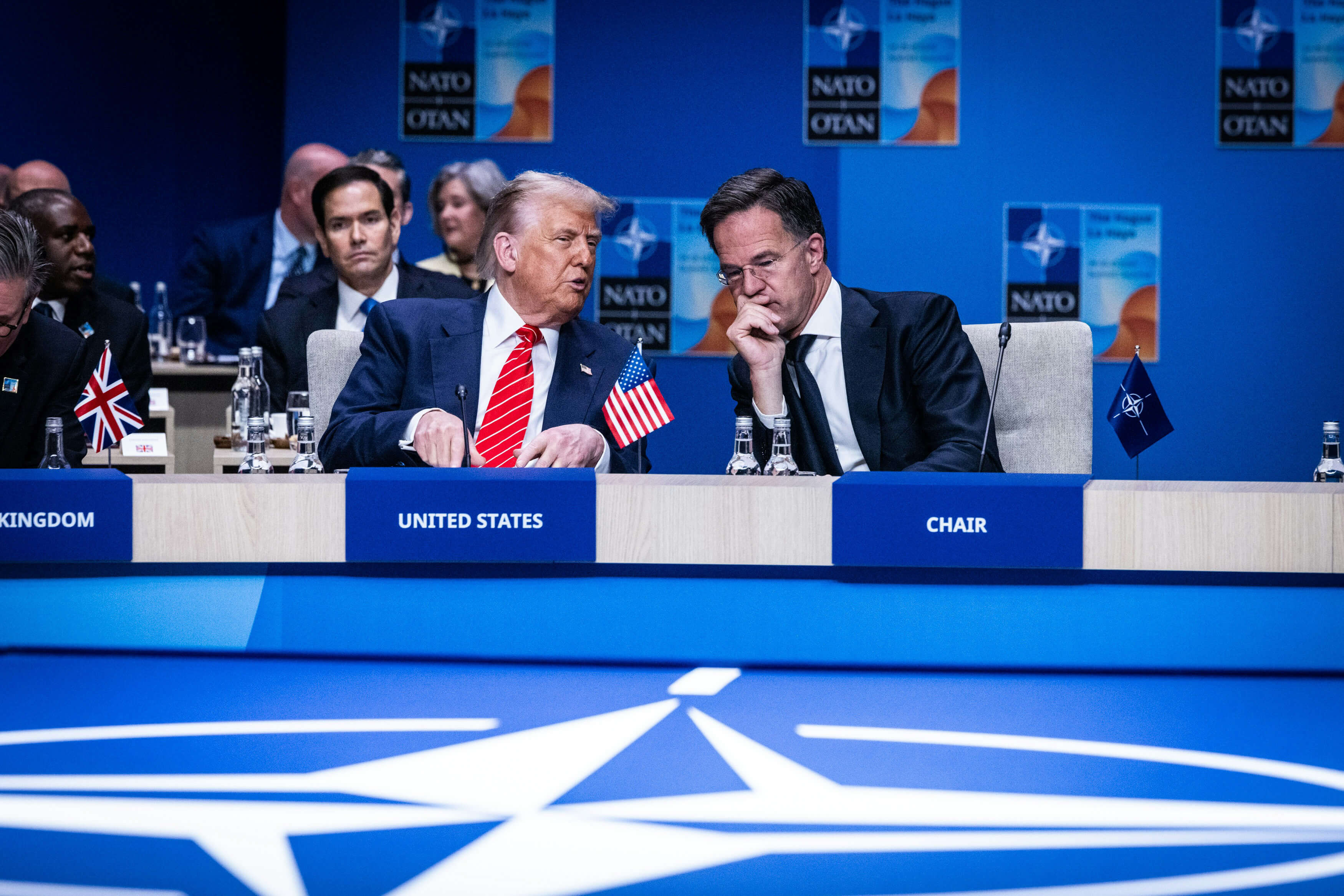 Even as Washington remains formally committed to NATO, European governments know that US priorities can quickly shift towards the Indo-Pacific, domestic politics, or a more selective alliance model
European countries are therefore trying to increase their role within NATO. Such ambition will not be measured by new strategies, but by the amount of equipment they can produce, the supplies they can provide, and the capacity they can maintain independently.
Europe is now trying to make up for the backlog that was hidden by US military supremacy for years. It is no longer a gradual process of adjustment but a race against time, as the war in Ukraine depletes supplies, Russia remains a long-term threat, China controls key resources, and US policy no longer offers the security to which Europe has become accustomed.
That is why European military autonomy will be expensive, slow, and inconsistent. France, Italy, Germany, Poland, the Nordic countries, and the Baltic states will not share the same priorities.
Defence companies will not always share technology. Governments will seek to protect national industries. The European Commission will push for common instruments, but key decisions will remain with the states.
The biggest change may not be happening in drone factories or through new defence company partnerships. It is occurring in the way Europe understands its own security.
After decades during which military power was largely viewed as a matter of alliances, it is once again returning to the realm of industry, technology, and manufacturing.
A continent that has been purchasing security for decades is now attempting to produce it again. In this, the true extent of European autonomy will be measured.
