On paper, the 2026 World Cup—jointly hosted by the United States, Canada, and Mexico—is set to be not only the largest tournament in FIFA’s history but also the biggest event the global sports industry has ever seen.
For the United States, however, this massive spectacle is increasingly turning into something far more fragile than a celebration of football. It is becoming a stress test of the country’s domestic politics, security doctrine, and international reputation.
Washington’s hardening immigration policies, fatal incidents during ICE operations, and the mass protests that have followed raise a question far more consequential than ticket sales or television ratings: will those coming for the World Cup actually feel safe in the United States?
Official projections estimate that the U.S. could generate between $15 and $20 billion in direct and indirect economic benefits from the tournament.
These figures are built on the assumption that millions of international visitors will travel to the country, fill hotels for weeks, and spend heavily across restaurants, retail stores, transportation networks, and entertainment venues.
The average foreign visitor is expected to spend between $3,000 and $4,500 during the World Cup, excluding airfare. Crucially, this money does not flow only to major corporations; it sustains small businesses, temporary workers, and local economies in host cities.
With each match expected to generate tens of thousands of short-term jobs, the World Cup represents not just a sporting event for the U.S., but a massive economic lifeline.
The cost of being branded an “unsafe host”
Yet this optimistic picture is far more fragile than it appears. It can unravel quickly with even a small crack in the perception of security.
Fatal incidents during ICE operations, the use of firearms by federal agents in civilian spaces, and the global circulation of these images have steadily eroded America’s image as a welcoming host nation.
When combined with the return of Trump-era hardline immigration policies and protests spilling into city streets, travelling to the United States begins to look not just expensive but risky for many foreign fans.
Even the scenario experts describe as “moderate” paints a troubling picture. If just 10 per cent of international spectators—roughly half a million people—decide not to travel to the U.S., the country would face an estimated $1.75 billion loss in direct tourism revenue.
When indirect losses in dining, transportation, and retail are factored in, the total damage approaches $3 billion.
The darkest scenario involves a full-blown reputational crisis and security shock
While such a figure may seem absorbable at the federal level, for small businesses in host cities, workers living paycheck to paycheck, and local governments relying on event-driven income, this loss would be anything but manageable.
The truly devastating consequences emerge as risk perception grows. If deaths linked to ICE operations, aggressive policing, and large-scale protests become a recurring feature in international media coverage, it is entirely plausible that one in four spectators would cancel the U.S. leg of their World Cup plans. That would mean roughly 1.3 million visitors never arriving.
Under this scenario, direct tourism losses exceed $4.5 billion, while total economic damage, amplified by multiplier effects, nears $7 billion. Tens of thousands of temporary jobs would either never materialise or be reduced to a matter of days.
At that point, the World Cup ceases to be an economic opportunity for the U.S. and instead becomes an expensive showcase of the cost of political choices.
The darkest scenario involves a full-blown reputational crisis and security shock. Should another fatal incident occur before or during the tournament—whether involving ICE, mass protests, or heavy-handed federal intervention—the United States could quickly be branded an “unsafe host.”
In such a case, more than 40 per cent of international spectators, nearly 2 million people, could stay away. The result would be approximately $7 billion in direct tourism losses and a total economic hit ranging from $10 to $12 billion.
Worse still, this damage would not be confined to the present. It would undermine the U.S.’s credibility as a host for future mega-events such as the Olympics, World Expos, and other global showcases, triggering a long-term erosion of soft power and trust.
The political price of hosting the World Cup
Ironically, Canada and Mexico may emerge as relative winners from this imbalance. Many fans who choose not to travel to the United States are unlikely to abandon the tournament altogether.
Instead, they are expected to redirect their plans towards matches in Canada and Mexico, countries perceived as less tense and less militarised.
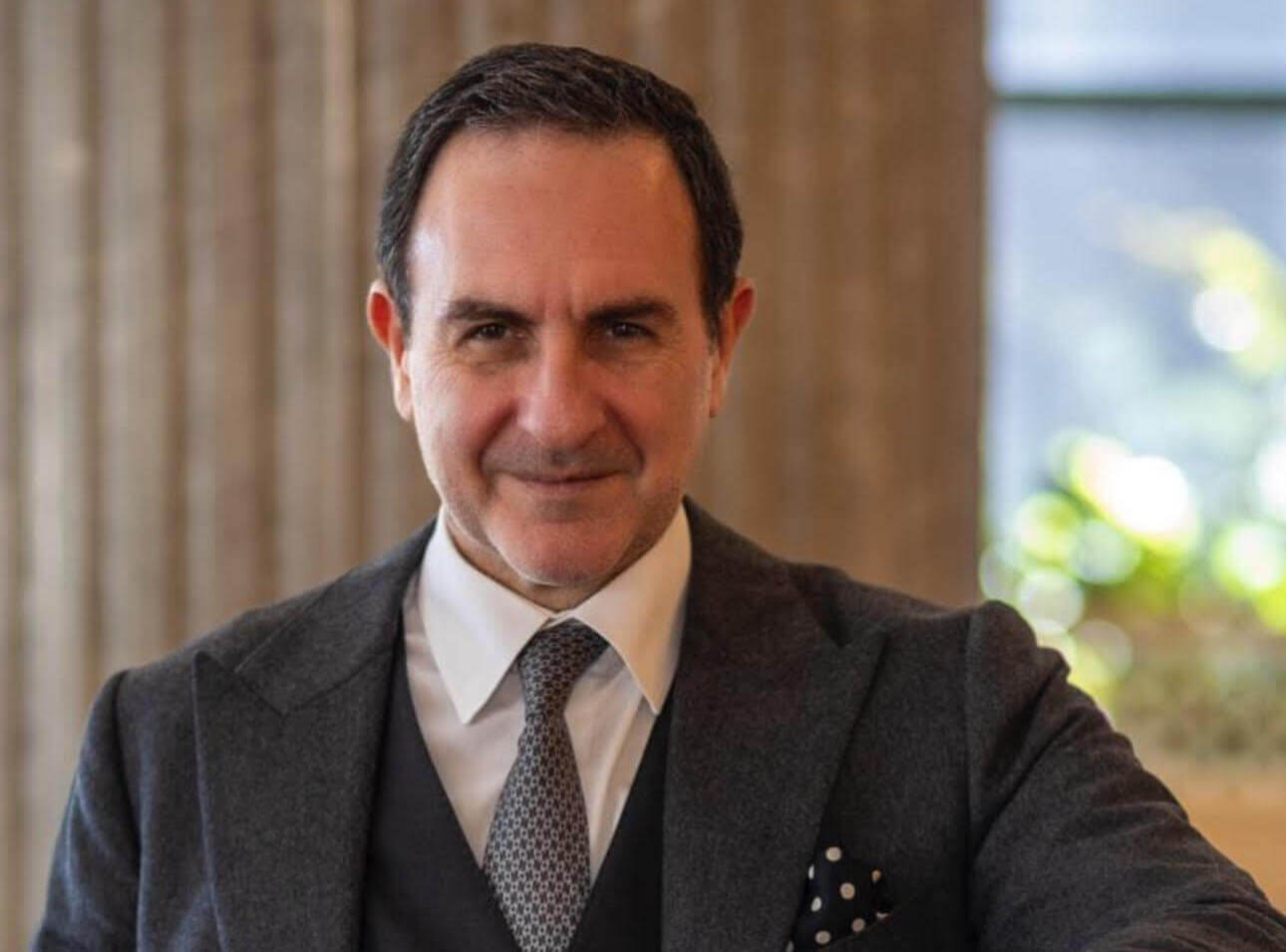 For the U.S., the 2026 World Cup is shaping up to be less a global celebration and more a defining moment - Emre Alkin
In effect, the shared hosting model risks becoming a mechanism through which the costs of U.S. domestic policies are paid by U.S. cities themselves.
Ultimately, the World Cup is no longer just about football for the United States. Fatal incidents involving ICE agents, hardline immigration policies, and widespread social unrest have turned the tournament into a referendum on how the country presents itself to the world.
Even if stadiums are full, empty hotel rooms, cancelled flights, and a pervasive sense of insecurity on the streets will determine the true balance sheet of the event.
For the U.S., the 2026 World Cup is shaping up to be less a global celebration and more a defining moment—one in which political decisions and security practices are tested with a price tag measured in billions of dollars.
