Nearly two weeks after US special forces invaded Venezuela to capture and extract Nicolás Maduro, many people believe that President Donald Trump was motivated to act by a desire to control the country’s vast oil reserves.
But to what end? Does Trump want to boost profits for the US Gulf Coast refineries equipped to process Venezuela’s heavy crude? Or is the aim to flood the global market, lower oil prices for American consumers, and, as a bonus, break up OPEC?
Whatever the goal of commandeering Venezuela’s oil, achieving it depends on whether the country can significantly increase output.
Venezuela has the world’s largest proven oil reserves, at an estimated 300 billion barrels, and has long been at the center of global energy geopolitics.
Its heavy crude, especially from the Orinoco Belt, has historically played a critical role in supplying refineries optimized for such feedstock, including those along the US Gulf Coast.
As a result, many US administrations have regarded Venezuela as a strategic interest.
But after Hugo Chávez, Maduro’s predecessor, began a second wave of nationalization in 2007, seizing hundreds of private businesses and foreign-owned assets in Venezuela, the US came to rely more on crude from Canada – a politically stable ally.
These long-life, low-decline reserves arrive through an intricate web of pipelines and are sold at a discount.
Last year, the US imported an average of 6.2 million barrels per day of crude (mostly medium and heavy sour), of which more than 60% came from Canada.
Trump is not looking to satisfy Gulf Coast refineries’ thirst
By contrast, US refineries did not import any Venezuelan crude in the first few months of 2025, and started buying small amounts only after the Trump administration allowed Chevron to re-enter Venezuela for oil production and export under relatively strict conditions.
Before Maduro’s arrest, US refiners imported only about 150,000 barrels per day from Venezuela.
Two trading houses are already in talks about selling this oil to Chinese and Indian refiners
Moreover, Trump has announced that the 30-50 million barrels of sanctioned oil that Venezuela will “turn over” to the US will be sold on Venezuela’s behalf, with the administration controlling how the proceeds are spent.
Two trading houses are already in talks about selling this oil to Chinese and Indian refiners.
Taken together, these realities demonstrate that Trump is not looking to satisfy Gulf Coast refineries’ thirst.
The US strategic petroleum reserves
Some have speculated that Trump may use Venezuelan crude to fill the US strategic petroleum reserves.
But it has become an unwritten rule since the 1990s that only domestic oil will be used for this purpose – a policy from which Trump is unlikely to deviate, not least because Venezuelan crude is too sour to meet the specifications required for SPR purchases.
Instead, based on Trump’s comments and actions, he seems to be after money.
Venezuela agreed to compensate US oil companies for their nationalized assets, but did not pay, even after these firms went to arbitration and won their cases.
Why would energy companies spend tens of billions of dollars reviving Venezuela’s dilapidated oil industry
Trump wants to collect that money, but Venezuela is bankrupt, and oil is its most valuable resource.
These moves belie the claims that Trump is pursuing lower oil prices and taking aim at OPEC.
Why would energy companies spend tens of billions of dollars reviving Venezuela’s dilapidated oil industry, which is what Trump is asking of them, only to slash their own profits by flooding the market with crude and driving down prices?
The effects of increasing production in Venezuela will be limited
In any case, Venezuela will not be able to increase production meaningfully any time soon.
To increase production by one million barrels per day requires roughly $20 billion in investment and will take about three years.
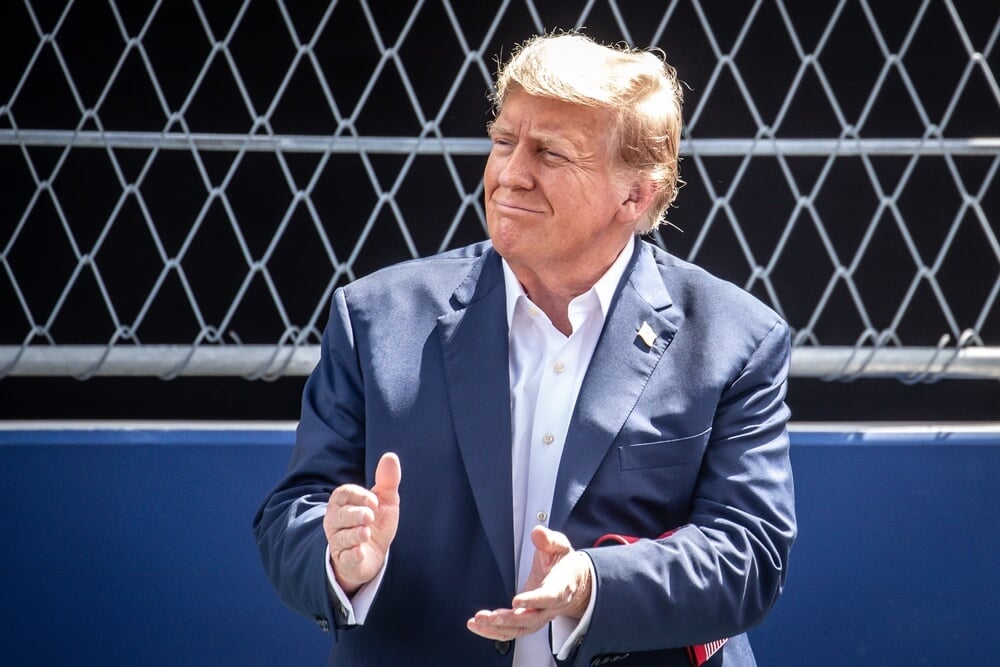 The oil, and the money it brings in, are clearly driving Trump’s interest in Venezuela
By that point, some forecasters project that global oil demand will have grown between 2-3 million barrels per day, while depletion will have reduced production by 12-15 million barrels per day, meaning that the world will need around 15 million barrels per day of new oil.
Thus, any increase in Venezuelan production will not flood the market, nor will it lower prices. In fact, it would be a welcome addition to global supplies.
As for where this $20 billion will come from, history suggests that most of it will be redirected from future projects in other countries, rather than additional spending above these firms’ annual investment budget.
The effects of increasing production in Venezuela will therefore be limited because it comes at the expense of increased production elsewhere in the world. The idea that such a shift would cause problems within OPEC is absurd.
The oil, and the money it brings in, are clearly driving Trump’s interest in Venezuela.
But broader political issues are also at play. In recent years, Venezuela has developed deep economic ties with China, which purchased most of its sanctioned oil.
As the economic rivalry between China and the US intensifies, particularly in the race for AI dominance, reliable access to abundant energy while controlling energy flow to competitors will be indispensable.
Anas Alhajji is an energy economist and the former chief economist at NGP Energy Capital Management.
