By threatening to seize Greenland by force, US President Donald Trump has exposed the childlike illusions of his European admirers.
Having spent years cultivating their bromances with him, the continent’s right-wing populists – the United Kingdom’s Nigel Farage, Jordan Bardella in France, Alice Weidel in Germany, Italy’s Matteo Salvini, Robert Fico in Slovakia, Hungary’s Viktor Orbán, and Mateusz Morawiecki in Poland – imagined themselves fellow travelers in a revolt against liberal internationalism.
Now their idol and patron has been threatening to swallow whole or in part (if the supposed “deal” he has announced comes about) the sovereign territory of a European ally.
Their response has been silence, stammering deflections, or transparent discomfort, revealing the cynicism that always defined their relationship with Trump. They were never junior partners, only disposable playthings.
What none of them can admit is what they must have privately believed: that their ideological solidarity with Trump entitled them to consideration, that their years of support would be reciprocated with some solicitude for their interests.
Like supplicants throughout history, they have discovered that the powerful figure who smiled upon them when it cost him nothing will summon them only when his interests or whims require their public abasement.
Trump does not want willing cooperation
But the populists are not alone in their miscalculation. Mainstream European leaders have made a parallel error.
Imagining that Trump could be appeased, they have signaled their willingness to cooperate, to adjust, to accommodate.
They have misunderstood who they are dealing with. Trump does not want willing cooperation. He wants painfully extracted submission.
Some commentators now claim that Europe “stood up” at Davos and forced Trump to “back down.” Wishful thinking
Some commentators now claim that Europe “stood up” at Davos and forced Trump to “back down.” Wishful thinking.
His vague “concept of a deal” is less a concession than another piece of chaff tossed out to befuddle and distract while his plot to seize control of Greenland – de facto or de jure – plays out.
Not only does he continue to demand “right, title, and ownership,” but he succeeded in forcing European leaders to respond to his mad provocations by supposedly conceding to the US sovereignty of the land where there is a US military base – a victory in itself.
The dim notion that Europeans have successfully manipulated him into retreat, while it may satisfy their desperate hope to exert “agency” in a world careening out of control, vastly underestimates both Trump’s emotional instability and his inveterate duplicity.
Coerced acquiescence
For Trump, coerced acquiescence is not a means to an end but an emotional culmination.
The pleasure lies in the coercion itself – in watching others bend and break under the power of his will. Voluntary compliance denies him this satisfaction.
When someone offers cooperation freely, they retain their dignity; when submission is extracted by force, that dignity is forfeited. This is why appeasement fails: it offers Trump something he does not want.
A thought experiment recently mapped how Trump might acquire Greenland through gradual absorption – exploiting dependencies, funding proxies, and manufacturing consent. Add to that now the idea of a jigsaw sovereignty of Greenland’s territory.
The strategy is plausible precisely because it requires no confrontation. Indeed, when Denmark offered him in the week before the Davos meeting everything short of sovereignty, Trump rejected it.
Europe’s bended knee may mean more to him than the island itself
Europe’s bended knee may mean more to him than the island itself.
Something similar can be said of his treatment of the Americans who supported him most fervently.
The administration is slashing public health funding in Republican-controlled states, cutting programs that serve the very voters who delivered his victories.
There is no gratitude for past favors, nor solicitude toward loyal supporters. Why should there be?
Gratitude is an attitude that makes sense if you plan to interact repeatedly with others, if you believe that today’s beneficiaries might become tomorrow’s benefactors, if you inhabit a world of ongoing relationships.
Trump, like a compulsive strip miner, inhabits a world of one-off extraction.
The need to dominate
The Greenland episode illuminates a distinction that runs deeper than any policy dispute.
Submission is extracted in the moment through punitive threats. Loyalty is cultivated over time through the exchange of commitments.
Submission requires only that the stronger party be stronger now. Loyalty requires that both parties believe in a future where today’s forbearance will be reciprocated.
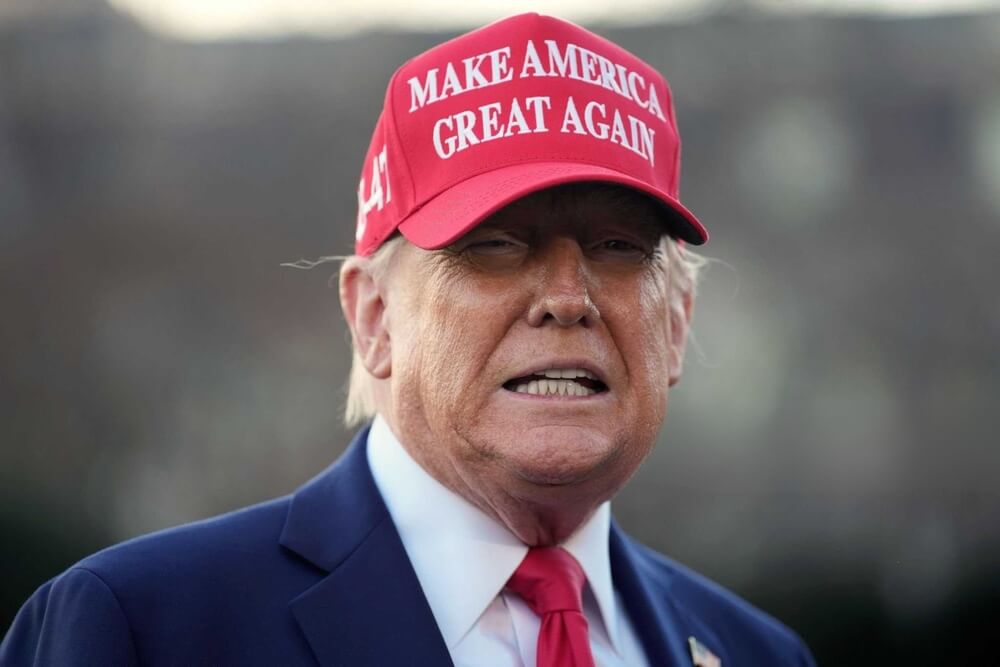 Trump cannot comprehend the logic of voluntary partnership because he does not believe in a future that depends on it
Trump cannot comprehend the logic of voluntary partnership because he does not believe in a future that depends on it.
Why invest in cultivating allies when tomorrow is either unreal or someone else’s problem? Why honor others’ commitments to you if you have no intention of honoring your own?
The transactional mind can understand simultaneous exchange: I give, you give, deal closed. But to call Trump’s abusive behavior “transactional” is to miss the deeper pathology.
He is animated less by the prospect of deal-making than by the need to dominate, less by the spirit of exchange than by the perverse pleasure of belittling others and exalting himself. His cabinet of self-abasing sycophants is the tell.
This need is not only a character flaw. It is the logical consequence of a particular temporal orientation, or what we might call temporal nihilism.
Trump’s tariff threats against allies
NATO is the clarifying case. Its collective-defense commitment (Article 5) is nothing but a promise about future behavior, a vow to act when the moment of crisis arrives, potentially decades hence.
It is loyalty institutionalized. The entire edifice rests on the assumption that parties will honor their commitments even when defection might be advantageous.
Trump treats NATO contributions as tribute owed for protection, viewing the alliance as a shakedown, not a mutual defense pact.
But even a protection racket depends on a credible promise: pay, and you won’t be harmed.
A mafia boss who pockets the money and torches the business anyway has no racket; his only project is predation.
He got what he wanted: the televised theater of a scrambling alliance and a NATO secretary-general racing to kiss the ring
Trump’s tariff threats against allies already meeting their NATO commitments are the torch. No payment purchases security, because security is not for sale.
What purchasers buy is the fleeting privilege of debasing themselves before the man NATO Secretary-General Mark Rutte fawningly called “Daddy” – and getting repaid with a kick in the teeth.
It changes nothing that Trump withdrew his tariff threats after meeting Rutte at Davos, declaring “the framework of a future deal” while offering no details.
Some call this pattern TACO – Trump Always Chickens Out – but bluffing and switching while keeping everyone frantically focused on him is hardly a climb down.
He got what he wanted: the televised theater of a scrambling alliance and a NATO secretary-general racing to kiss the ring.
Loyalty to Trump purchases nothing
What Trump’s effort to seize Greenland exposes is not his hostility to Europe, but his hostility to the very concept of mutual relations.
Power for Trump is not a means to achieve cooperation but a substitute for it. Why persuade when you can compel? Why cultivate when you can coerce?
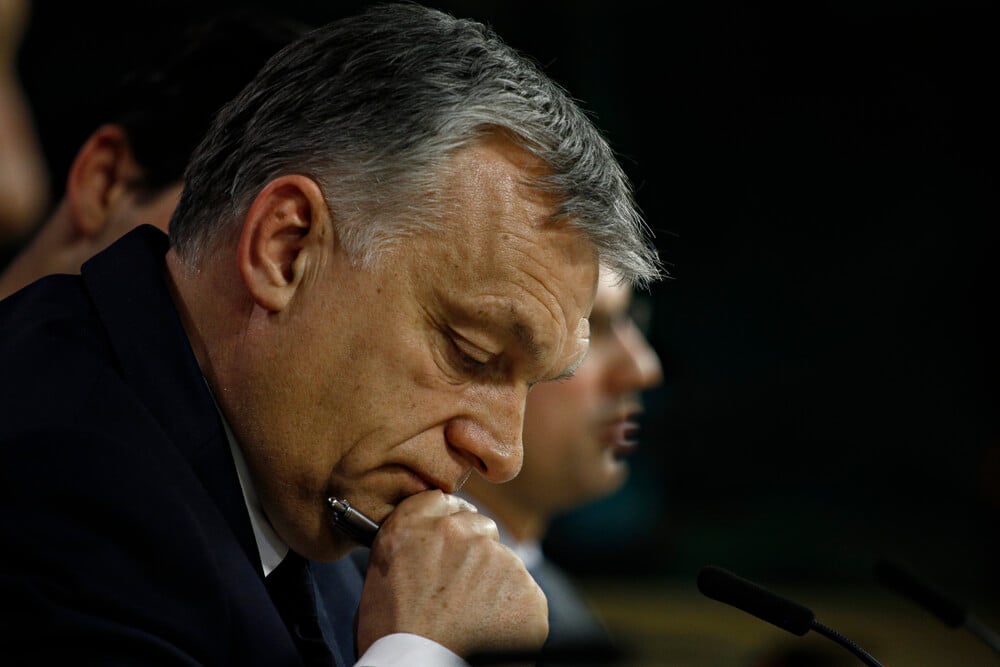 Ideological affinity buys Farage, Fico, Orbán, and the rest nothing
The European populists who imagined themselves fellow travelers are learning that there is no such thing, only the dominator and the squelched.
Ideological affinity buys Farage, Fico, Orbán, and the rest nothing. Affinity entails the kind of mutual relationship that Trump rejects because reciprocity makes him feel dethroned.
Loyalty is a temporal phenomenon. To be loyal is to make a commitment that extends into tomorrow, to incur debts now that will be honored later, to invest in relationships that yield returns over time.
Reciprocal loyalty, therefore, has no place in Trump’s world. Having declared war on a future where he will not be present, he offers something else: the bogus solidarity of shared grievance, the tribal comfort of common enemies, the ephemeral pleasure of watching old structures burn.
What he cannot and will not offer is a promise to honor tomorrow those who kneel before him today.
The European populists who have been courting Trump believed they were building a relationship.
From Trump’s perspective, there was nothing to build. There was only the savoring of submission.
The European far right is discovering what his own base has yet to grasp: loyalty to Trump purchases nothing, because he has nothing to sell but the spectacle of his own domination.
Stephen Holmes is a Professor of Law at New York University School of Law and a Berlin Prize Fellow at the American Academy in Berlin.
