It is possible that US forces carried out the first attack on the Venezuelan mainland in December, sharply increasing the likelihood of a direct ground operation.
President Donald Trump, without providing details, effectively confirmed unofficial reports about a US drone attack on a port facility on the Venezuelan coast.
"We hit them very hard," said Trump regarding the action, which CNN later confirmed was carried out by the CIA to prevent drug cartels from setting sail with their cargo to America.
This action could be a prelude to a more aggressive and direct American operation against the regime of Nicolás Maduro in 2026, possibly with the aim of overthrowing him, which many believe is the real purpose of the American naval blockade of illegal oil shipments and strikes on drug transport vessels.
US military intervention in Venezuela, of any scale or intensity, could easily become the world's no. 1 hotspot in the coming year. What would this mean for developments in other crisis zones around the world, and especially for the main actors in those crises?
The escalation of American intervention in Venezuela comes at a time when the chances of success in peace talks on Ukraine are increasing.
The President of Ukraine, Volodymyr Zelenskyy, left Florida last Sunday more satisfied than after some previous talks with Donald Trump.
He received one of the most important American guarantees, previously lacking: 15-year American security guarantees against possible renewed Russian aggression.
Who does the imminent peace in Ukraine benefit?
If Trump confirms and further details this promise, it will be a significant step towards achieving peace.
Security guarantees have been one of the most uncertain aspects of the peace framework so far and, alongside the preservation of territorial integrity, remain the most important issue for Kyiv.
It is particularly significant that America is returning to Europe as a security guarantor with this, largely offsetting Washington's previous suggestions of reducing its security presence in Europe.
American guarantees to Ukraine will also provide considerable relief for European planners, for whom ensuring Ukraine's security is a major challenge in the post-war period.
America is interested in achieving peace as soon as possible
Overall, at the end of 2025, this suggests a quicker move towards peace in Ukraine.
America is interested in achieving peace as soon as possible, not only to satisfy Trump's peace-oriented ego, who has struggled for a year with the unfulfilled promise of ending the war within 24 hours.
The United States seeks to pacify the Ukrainian conflict zone even more so that it can focus (diplomatically, militarily, and economically) on other areas prioritised in its new National Security Strategy.
These areas include Latin America, which is considered the US's backyard, with Venezuela being the most prominent crisis within that region.
Russia's alliance with Venezuela
That is why American aggressiveness towards the regime in Caracas increases in proportion to the growing chances for peace in Ukraine, making these two processes appear connected from the perspective of American strategies.
Other global players are also aware of the American "withdrawal" from the European crisis scene and the shift of their resources to Venezuela and Latin America – most notably Russia, which does not welcome this development.
The Kremlin does not want to rush peace talks on Ukraine, especially not in a way that would prevent it from achieving its main objectives in the aggression, namely the annexation of eastern Ukrainian territories.
Moscow would prefer America to abstain from direct participation in Ukraine's post-war period, especially as a security guarantor
Moscow would prefer America to abstain from direct participation in Ukraine's post-war period, especially as a security guarantor.
Russia wants to leave that role to the Europeans, whom it believes are not united and who, under the pressure of unfavourable economic trends, may leave Ukraine without an effective security umbrella.
American plans in Venezuela are not particularly significant for the Russian leadership, even though Venezuela is a nominally important ally of Russia.
In addition to its remoteness, in the event of an American escalation, Venezuela would represent a much greater diplomatic burden for Russia than it does as an oil-rich ally in the immediate American neighbourhood.
The Middle East and China in the context of the crisis in Venezuela
If the overthrow of Maduro meant that Washington would be less involved in other hotspots, it could be a positive development for Israel, particularly regarding the implementation of the ceasefire in Gaza.
With more extensive action in Venezuela, Washington would reduce its focus on the Middle East and leave the pacification of the area around Gaza to its regional partners, especially Israel.
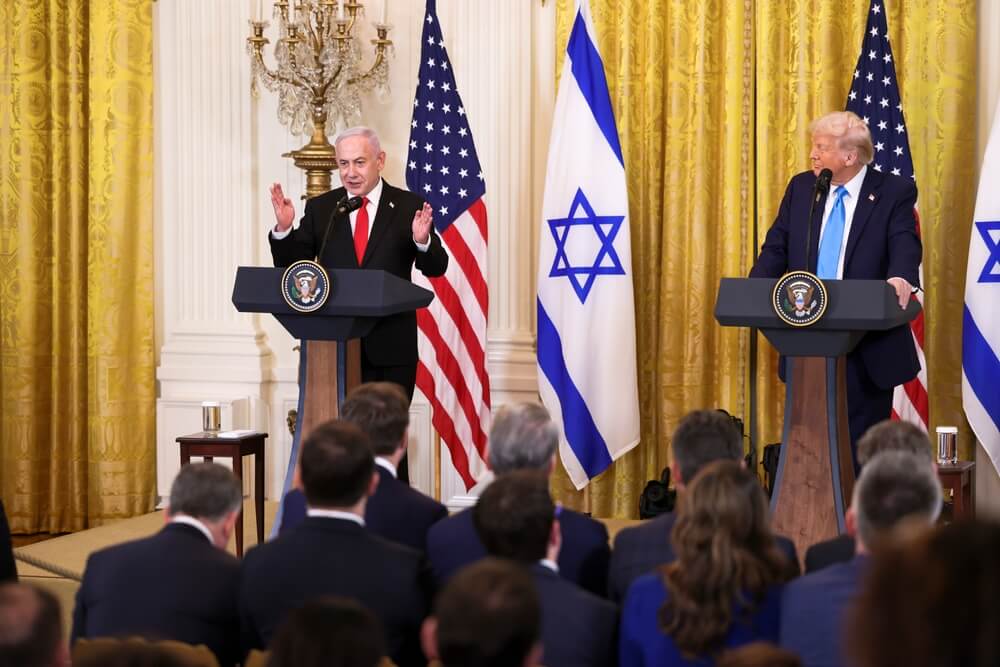 With more extensive action in Venezuela, Washington would reduce its focus on the Middle East
American diplomacy would certainly remain present in the region, but not with the same intensity as before. Trump himself is quite satisfied with the title of architect of the Gaza ceasefire, and the fact that it still does not function properly will not be his concern.
While the Europeans have limited influence over the development of tensions in the Middle East, Israel will position itself as a key player in the implementation of peace agreements, although it is under pressure from the US to cooperate with major Arab partners, primarily Saudi Arabia.
Beijing will have to interpret any possible American escalation towards Venezuela as a loss in Latin America, where it has been very aggressive economically and in terms of security for years.
In addition to being an important political ally of China in international forums, Venezuela under Maduro is a key Chinese ally in the immediate US neighbourhood.
Furthermore, a potential US military escalation would signal to China that Trump does not hesitate to act militarily where US interests require it, and China will inevitably have to consider such events in the context of Taiwan.
America's military engagement in Venezuela would therefore have to be interpreted in Beijing as proof of Washington's readiness to provide assistance to Taiwan, independently or through its own allies, if it is exposed to a Chinese offensive.
