As the New Year loomed, Britain’s defence establishment stepped up its campaign to persuade the public that it must prepare itself for war.
Caught between an aggressive Russia and an unreliable US, the British people and their European neighbours are being urged to confront the previously unthinkable and ready themselves for wider conflict in the years ahead.
With agreement on securing a peace deal between Russia and Ukraine still unresolved, military chiefs and politicians are facing the prospect that it could all go horribly wrong, and a bad deal might even hasten the conflict’s spread.
One rallying cry came this month from Sir Richard Knighton, the chief of the UK defence staff, who said in a lecture at the Royal United Services Institute:
“Sons and daughters. Colleagues. Veterans. …will all have a part to play. To build. To serve. And if necessary, to fight.”
Stirring words. But are they getting through to the public at large, which might be contemplating 2026 with other more immediately pressing domestic concerns on its mind?
The price of preparing for war
The defence minister, John Healey, suggested somewhat fancifully that, as families gathered for the holiday season, they might choose to discuss the “outstanding opportunities” that a career in the armed forces could offer their younger members.
He was heralding the introduction of a two-year paid placement scheme for under-25s to sign up for a taste of military life. Volunteers would not be engaged in active operations but could gain workplace skills if they chose not to pursue careers in the military.
The modest programme is hardly designed to keep the Russian bear at bay, but it does offer the government another card to play in its strategy of trying to persuade the electorate that the whole of society must be involved in the nation’s defence.
“We are Russia's next target” - NATO Secretary-General Mark Rutte
It reflects trends elsewhere in Europe, where blood-curdling predictions about the threat of World War III proliferated in 2025.
NATO Secretary-General Mark Rutte warned this month that member states had to do more to prepare for the possibility of large-scale war.
“We are Russia's next target,” he told an audience in Berlin: “Russia has brought war back to Europe, and we must be prepared for the scale of war our grandparents and great grandparents endured.”
His warning came in the same week that the UK armed forces minister, former special forces officer Al Carns, said: “The shadow of war is knocking on Europe's door once more. That's the reality. We've got to be prepared to deter it.”
Amid all the public rhetoric about the need for everyone to pull together to confront the looming threat, it might seem churlish to ask (as no doubt many voters will) how much it will all cost.
Can Britain afford its defence ambitions?
Given the very real threats the UK faces, confirmed in the latest figures showing a 50 per cent rise in hostile spying, hacking and physical threats against the armed forces in the past year, those responsible for its security need to spell out more clearly the level of sacrifice required.
The government has brought forward a commitment to spend 2.5 per cent of GDP on defence to 2027, while Prime Minister Keir Starmer has assured fellow NATO leaders that he is committed to spending 5 per cent of GDP on defence and security by 2035.
However, a new consultancy report suggests there is a potential £800 billion funding gap for defence and other infrastructure projects to meet the NATO target. The Financial Times this week quoted consultants EY Parthenon as reporting that much of the funding for the next decade had yet to be allocated.
Senior military figures had called on Starmer to harden his ambitions to raise defence spending
The paper said senior military figures had called on Starmer to harden his ambitions to raise defence spending, amid concerns that tough choices were being deferred.
The PM may have other things on his mind as the new year dawns, not least the prospects of his own survival as leader after a troubled year. One item near the top of his agenda should nevertheless be to give further clarity on defence spending while calmly spelling out the level and nature of the threat the country faces.
Chief of Staff Knighton reflected this month that the fear of war was less acutely felt in the UK than in other European countries closer to the Ukraine frontline.
“Unless we are able to raise awareness and stimulate the conversation with society about the risks, we can’t expect the rest of government, society and industry to act or bear the costs,” he said.
Tell it like it is
The best advice for politicians and the defence establishment is to trust the public and tell it like it is.
The UK does indeed face a growing threat from international instability and the new hybrid warfare of Russia and other hostile powers. Equally, a war in Europe is far from inevitable.
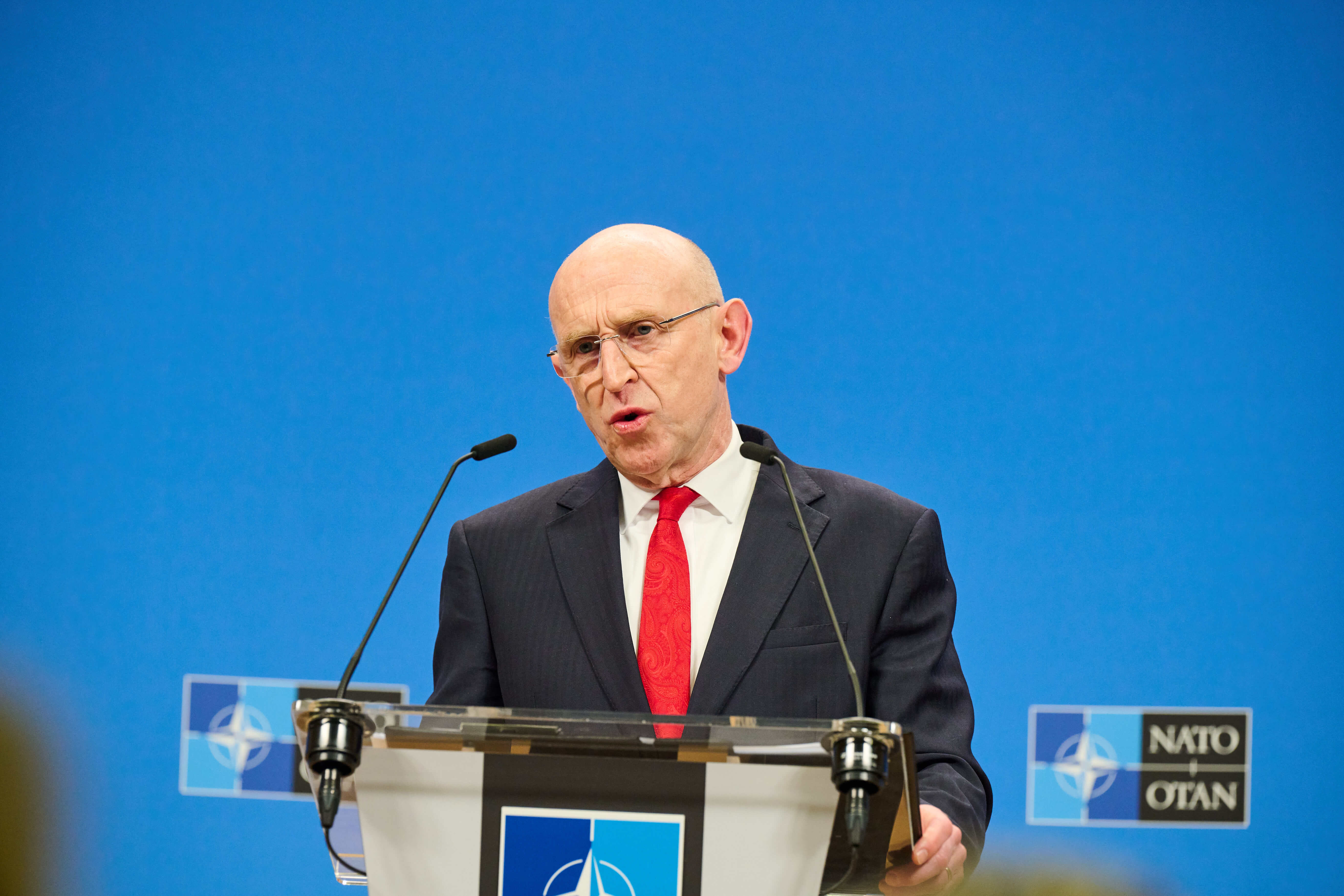 The British, despite a so far low-key response to the war rhetoric, have mostly been ahead of the rest of Europe in accepting the seriousness of the Russian threat - John Healey
Knighton quoted the prediction aggregator Metaculus as suggesting a 16% probability that Russia and any NATO member state would be in direct conflict before 2027. Other analysts put the chances of a UK-Russia conflict at 5 per cent.
However, a lack of preparedness and a reluctance to spend significantly more on defence might well persuade Vladimir Putin and others that the UK and Europe are soft targets for hybrid assaults, making open warfare ever more likely.
The British, despite a so far low-key response to the war rhetoric, have mostly been ahead of the rest of Europe in accepting the seriousness of the Russian threat since the invasion of Ukraine almost four years ago.
The latest European poll by YouGov shows Britain outnumbers other countries in wanting to see Ukraine win the war and is where the largest number of those surveyed - 48 per cent - would help it fight on until Russia is forced to withdraw.
It is a signal that, with the right facts to hand, the British would be even more committed to their own defence.
