Europeans have long lamented the continent’s lack of globally competitive tech companies.
But since Donald Trump’s return to the White House, the goal of ending Europe’s reliance on US-based tech giants has taken on new urgency.
With US tech oligarchs interfering in European elections and the Trump administration seeking to sabotage European digital regulation, this dependency is no longer just an economic problem; it poses a grave threat to security, sovereignty, and democracy in Europe.
Europeans are well aware of this, but are of two views on how best to respond.
One camp argues that, far from bowing to Trumpian pressure, the European Union should double down on efforts to regulate Big Tech, pursuing an even more ambitious approach that would break the tech giants’ market dominance and mitigate their products’ social harms.
The other camp calls for a massive increase in public and private investment in tech infrastructure, both to limit Europe’s vulnerability to foreign coercion and to strengthen its economic competitiveness.
These positions are not as far apart as they might seem. Robust, well-designed, and vigorously enforced regulation could neutralize the advantages of incumbent tech firms, create breathing room for challengers, and entrench the shared standards and norms that underpin both democracy and open, decentralized markets.
At the same time, the existence of credible European social-media platforms, AI models, and cloud-computing capabilities would greatly strengthen EU competitiveness and sovereignty.
Push for deregulation
Unfortunately, the complementary nature of these positions is rarely acknowledged.
Instead, the “competitiveness first” camp tends either to dismiss regulation as a waste of time, noting that past efforts to rein in Big Tech have always fallen short, or to condemn it for supposedly thwarting Europe’s tech ambitions.
The latter view, on display at last month’s Digital Sovereignty Summit in Berlin, helps to explain why the European Commission is now rushing to water down landmark digital legislation, including the AI Act and the General Data Protection Regulation (GDPR), through its so-called “Omnibus” package.
Push for deregulation is based on faulty logic
This push for deregulation is based on faulty logic. The tech gap with the US emerged several decades ago – long before the GDPR and the AI Act were a twinkle in Eurocrats’ eyes.
While there is evidence that small businesses have struggled to comply with the GDPR, blaming it for the EU tech sector’s shortcomings requires a large leap of logic.
Other flagship EU digital laws, such as the Digital Services Act and the AI Act, are too recent to judge their impact.
Weak enforcement
Europe’s failure to produce globally competitive tech firms should not be attributed to excessive regulation, but rather to weak enforcement.
Despite having the authority to break up monopolies and block killer acquisitions, the European Commission has rarely used it, fearing that it would impede innovation or invite retaliation by the United States.
To be sure, where enforcement has created openings for new entrants, US firms have proven far better equipped to take advantage of them than their European counterparts have.
But, as scholars like Anu Bradford have observed, this probably reflects factors like regulatory divergences among member states, shallow capital markets, punitive bankruptcy laws, a risk-averse culture, and difficulties attracting foreign talent.
EU officials’ failure to enforce legislation, especially competition law, has compounded the problem, by allowing Big Tech either to crush promising European startups (like the Portuguese app store Aptoide) or acquire them (as with Sweden’s iZettle, Estonia’s Skype, and Britain’s DeepMind).
Amazon, Google, and Microsoft remain as dominant as ever, thanks to a panoply of well-documented unfair practices
One could thus argue that determined regulatory enforcement, including robust control of mergers, is a prerequisite for Europe to develop a strong tech industry.
Without it, efforts to build European alternatives will continue to be thwarted by Big Tech’s anti-competitive tactics, including its exploitation of market power to collect huge amounts of user data and close off a growing array of markets to smaller rivals.
Consider cloud services. Demand for sovereign cloud solutions is growing in the EU, and capable European providers exist.
Yet Amazon, Google, and Microsoft remain as dominant as ever, thanks to a panoply of well-documented unfair practices, including unjustified interoperability restrictions, disproportionate data-transfer fees, and discriminatory pricing.
A coordinated approach
The European Commission is coming to recognize this: last month, it opened several investigations into Amazon and Microsoft’s cloud-market dominance under the Digital Markets Act.
But this is only the first step toward reining these firms in, which will require Europe to stand firm in the face of stiff resistance from the Trump administration and the tech giants.
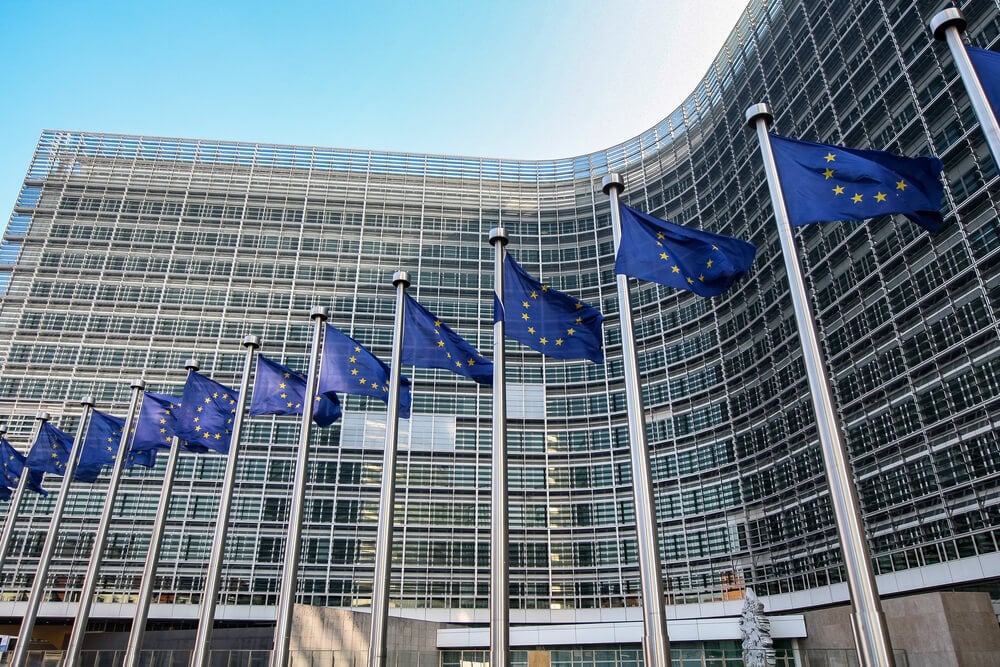 Rather than choosing between stronger tech regulation and increased incentives and support for the tech sector, Europe must embrace a coordinated approach that squeezes today’s US tech giants from both sides
Meanwhile, the same giants are rapidly entrenching their dominance over the nascent AI market.
As the former CEO of Aleph Alpha – a once-leading German AI firm that effectively gave up – observed last year, the “big players” are able to “use one monopoly to endlessly fund the fight for dominance in a new area.”
Rather than choosing between stronger tech regulation and increased incentives and support for the tech sector, Europe must embrace a coordinated approach that squeezes today’s US tech giants from both sides.
Without credible local alternatives, regulators will struggle to govern tech monopolies that are “too big to care.”
And without strong enforcement to break tech monopolies, cash thrown at European businesses and technologies is likely to end up wasted or, worse, in the vaults of the US giants.
Max von Thun is Director of Europe and Transatlantic Partnerships at the Open Markets Institute.
