As the US and Iran jostle over the Strait of Hormuz, there is little global attention on another attempted blockade, this one by Islamist militants and Tuareg separatists in the Malian capital, Bamako.
A co-ordinated offensive on Bamako and other cities by al-Qaeda-linked JNIM fighters and the separatist FLA in late April marked a dramatic escalation in Mali’s conflict that sent shockwaves across the region.
The offensive spanned thousands of kilometres across Mali and saw the shock withdrawal of Russian mercenaries from the northern city of Kidal. It took several days for Mali’s military leader Assimi Goïta, whose residence was attacked, to make a public appearance. Sadio Camara, defence minister and a key interlocutor with Moscow, was killed by a JNIM suicide car bomber.
In the short-term, the junta is likely to cling to power, but Russia has been humiliated, and Mali’s leaders may look for closer ties with other countries such as Turkey, which already supports the army with equipment and training.
But the power struggle in Bamako will continue, raising the possibility of another coup by different military officers or even a JNIM-FLA takeover.
Military governments, Russian contractors, and a fragile alliance
The longer-term outlook is highly uncertain for the Russian-aligned Alliance of Sahel States (AES) of Mali, Burkina Faso and Niger, whose military governments broke away from the regional ECOWAS bloc in January 2025.
The AES created a joint armed force with a declared troop strength of 15,000 but it failed to intervene to help Bamako.
Mali has struggled with jihadis since the 2000s. Goïta seized power in a coup in August 2020, promising stability, and expelled UN peacekeepers and forces from France, the former colonial power, in 2022 and 2023, replacing them with Russian contractors.
JNIM – whose name means the Group for the Support of Islam and Muslims – called in a statement for a common front to unite Malian society to “bring down the junta” and pave the way for what it described as a “peaceful and inclusive transition”.
The JNIM-FLA alliance is fragile, although they did engage in months of planning for their offensive
Despite its humiliation, Moscow has insisted its forces from the Africa Corps, successor to the Wagner Group, will stay in Mali “to fight against extremism, terrorism and other negative manifestations,” a Kremlin spokesman said.
Much may hinge on relations between the Islamist JNIM and FLA – Azawad Liberation Front – whose ideology is more nationalist in character.
Analysts have suggested the JNIM may continue its development away from open jihadist rhetoric and evolve into something like the Hayat Tahrir al-Sham, a former al-Qaeda affiliate that now leads the Syrian government.
Iyad Ag Ghali, head of JNIM, was once a leading figure in Tuareg rebellions. He was also a musician, is 72, and, like Syrian President Ahmed al-Sharaa, was designated a terrorist by Washington.
The JNIM-FLA alliance is fragile, although they did engage in months of planning for their offensive. A previous alliance in the 2010s saw them take control of much of the north of Mali, but their advance prompted France to intervene militarily in 2013 to restore state control.
No durable peace soon
The FLA is focused on the recreation of Azawad, which was a short-lived, unrecognised state in 2012-2013 in northern Mali, while JNIM has set its sights on national government.
Mali’s government claims it has broken the blockade of Bamako to bring it under its “total control”, while Goïta has taken on the role of defence minister while remaining president.
The government is also investigating soldiers thought to have taken part in the attacks while policemen and even lawyers are being detained amid criticism by the UN.
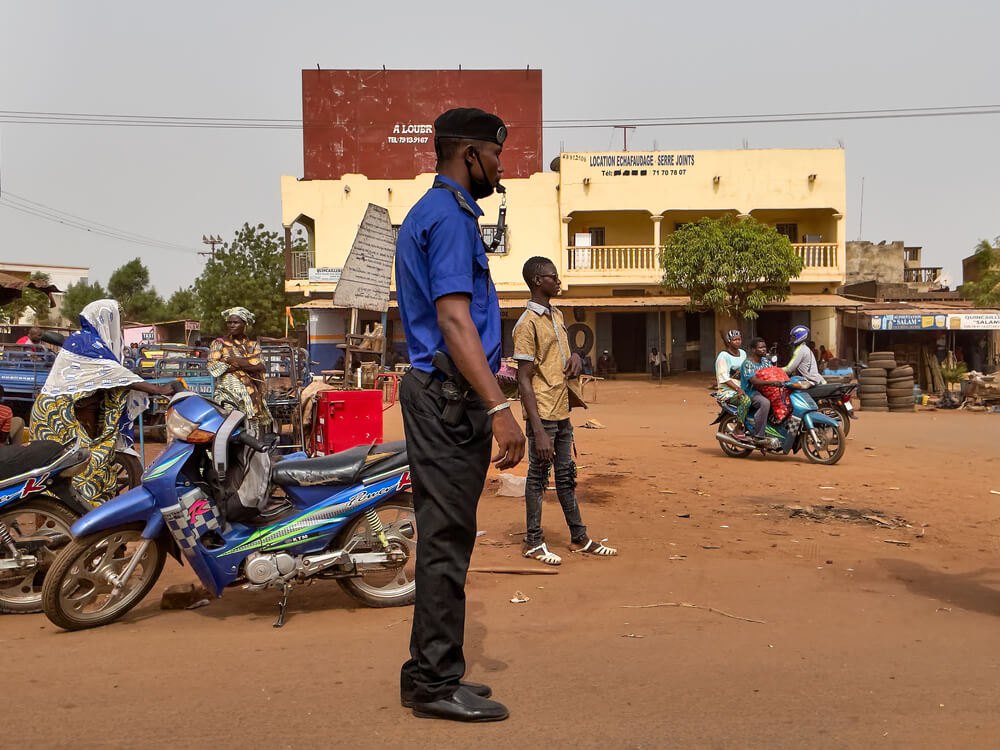 Mali’s 24 million people are unlikely to see any durable peace soon
This all means Mali’s 24 million people are unlikely to see any durable peace soon. JNIM controls territory in the north and central regions, and with the FLA controls Kidal.
The separatists have ambitions to take Gao, the largest city in the north, as well as Menaka and Timbuktu to make the self-declared state of Azawad.
Algeria, which has a long border with Mali, is particularly concerned about any spillover of conflict. Algiers had brokered a 2015 peace accord between Bamako and the Tuaregs, but this agreement collapsed with Goïta’s withdrawal from it in 2024.
After Algiers shot down a Malian drone last year, diplomatic ties between Algeria and the three AES states were broken.
Washington and the west, meanwhile, have slashed aid to the region and may only wake up should the Islamists make more significant gains and push more people to migrate towards Europe and the richer world.
Radicalism is spreading across the region, not just in the Sahelian countries of Burkina Faso and Niger but also from the north of Nigeria, where the Islamist Boko Haram group operates, to other West African countries, including Ghana, Benin and Ivory Coast.
With Washington or Europe unlikely to soon install any sustained military or economic support to the region to replace Moscow, insecurity and its accompanying humanitarian costs will prevail.
