Javier Milei took the chainsaw to useless, clientelist political spending. Pedro Sánchez has taken it to family budgets, access to housing and the savings of ordinary Spaniards, while political spending kept growing.
Spain goes to the polls on 29 November, and Pedro Sánchez has found his campaign villain. Taking advantage of Javier Milei's visit to Madrid, the Socialist prime minister lumped the Argentine president together with Alberto Núñez Feijóo, leader of the centre-right Popular Party, and Santiago Abascal of Vox, calling them “the same gang of cuts, slashes and chainsaws” and promising to send them all “to the sawmill” on election day.
The line is childish and ridiculous, and serves an obvious purpose: it keeps voters from talking about the other chainsaw, the one Sánchez has spent eight years running through Spaniards' wages, homes and savings.
If Sánchez wants to talk about Milei's chainsaw, he should remember why Argentina needed one in the first place.
The adjustment is the bill for decades of impoverishing socialist Peronist policies, and Sánchez openly campaigned for more of the same.
In November 2023 he recorded a video endorsing Sergio Massa, the Peronist economy minister who had driven annual inflation above 140% and told the Spanish Parliament he hoped “Massa wins and Milei does not”.
The Argentine data destroy the caricature. Milei inherited monthly inflation that reached 25.5% in December 2023. In September 2026 it was 1.9%.
He cut primary spending by 27% in real terms compared with 2023, lowered taxes by more than 2.5 percentage points of GDP and still delivered two consecutive years of fiscal surplus, something Argentina had not seen since 2008.
He did so while raising direct support to the most vulnerable families, the universal child allowance and the food card, by 43% in real terms and removing the political intermediaries who used to skim from it.
Poverty, which peaked at 52.9% in the first half of 2024 after the inflationary explosion he inherited, fell to 28.2% by the end of 2025, which means almost 12 million Argentines escaped it. Poverty remains almost ten points below the 41.7% left behind by Kirchnerism.
That chainsaw cut political spending, privileges and the money-printing machine, precisely the things Sánchez has inflated while impoverishing Spaniards.
Sánchez's chainsaw: salaries, homes, savings, and daily life
Now look at Spain. Sánchez has enjoyed the largest fiscal and monetary stimulus in the country's modern history.
A recovery plan that foresaw up to 163 billion euros in European funds, around 80 billion of them in non-repayable grants, negative real interest rates, the suspension of the EU's fiscal rules and massive purchases of Spanish government bonds by the European Central Bank.
With such a tailwind any government should have left a more prosperous country, with less debt and wealthier families. The outcome has been exactly the opposite.
The first victim is Spanish citizens’ salaries. According to the Instituto Juan de Mariana, between 2018 and 2026 the personal income tax and social security bill of a worker on the average wage rose by 17.6% in real terms, while their take-home pay lost 3.8% of its purchasing power.
The state now keeps close to 41% of the total labour cost of the average worker, an all-time high. By refusing to index income tax brackets to inflation, the government has turned rising prices into a stealth tax hike.
A salary of 18,000 euros now pays 624 euros in income tax, compared with the 157 euros paid in 2019 by a salary with the same purchasing power.
More than 140 increases in taxes and social contributions pushed revenue to a record 641.7 billion euros in 2025, and the combined burden of direct and indirect taxation is the heaviest in Spain's history.
That is Sánchez's chainsaw, and it always cuts on the same side, ordinary citizens. The middle class has been hit hardest.
Savers are punished twice, first by inflation and then by tax
The second victim is people’s homes. Since Sánchez took office in June 2018, house prices have risen by close to 70%, according to the National Statistics Institute. Rents have soared by 45% over the same period.
The government's response has been to punish supply and reward non-payment. When the state turns private landlords into providers of a social policy that belongs in the public sector, the result is fewer homes to rent, tougher conditions and higher prices for anyone looking for a place to live.
Meanwhile, complaints of illegal occupation of homes run at around 15,000 a year, 22% more than in 2018.
The third victim is your savings. The top tax rate on savings income, 23% in 2018, has been raised step by step to 30%, and tax relief on contributions to private pension plans has been cut to an almost symbolic level.
None of this is adjusted for inflation, so the tax office treats as profit what is often just a loss in the value of the currency. Savers are punished twice, first by inflation and then by tax.
The fourth victim is your daily life. Spain's harmonised inflation rate stood at 5% in September, against 3.8% in the eurozone, the highest of the four largest euro-area economies.
Severe material and social deprivation, the share of people who cannot afford necessities, now affects 8.1% of the population, above the pre-pandemic level of 7.7%, while it has fallen across the European Union.
The rate of people at risk of poverty or social exclusion has fallen by barely half a point since 2019, to 25.7%, almost five points above the EU average. All of this happened while tens of billions of euros in European grants were squandered.
The difference between the two chainsaws
With record revenue, one would at least expect healthy public finances. Not even that. Public debt hit an all-time high of 1.763 trillion euros in June, close to 100% of GDP and almost 600 billion euros more than when Sánchez came to power, while the deficit closed 2025 at 2.4% of GDP and the independent fiscal watchdog, AIReF, expects 2.7% this year.
More taxes, more debt and more deficit. The state collects more than ever and still spends even more.
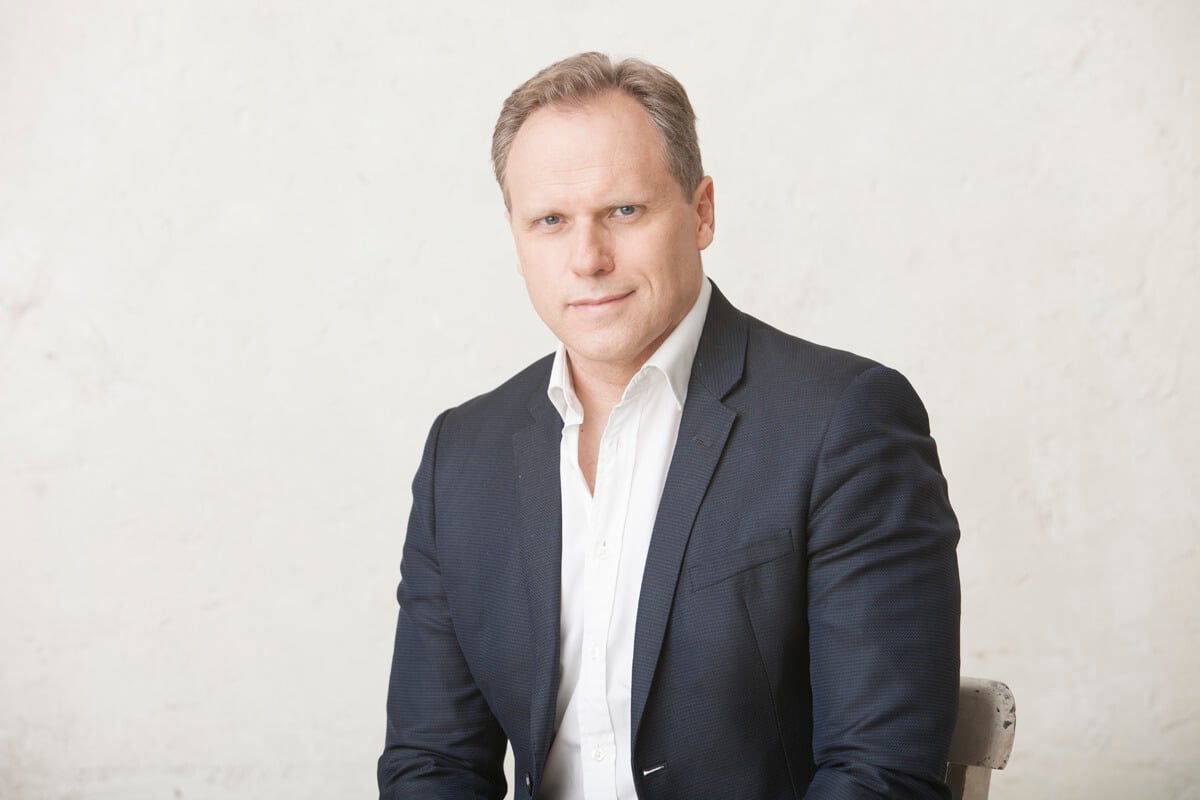 Sánchez's chainsaw has destroyed the purchasing power of an entire generation - Daniel Lacalle
This is the difference between the two chainsaws. Milei took his to political spending, to the privileges of the political caste and to the inflation that was impoverishing Argentines.
Sánchez has taken his to Spaniards’ payslips, their homes and their savings, while political spending keeps rising.
When the Spanish prime minister says that chainsaws “build nothing, they only destroy”, he is right about one thing. His chainsaw has destroyed the purchasing power of an entire generation.
Spaniards do not need to be frightened by what is happening in Argentina today. They need to remember that Argentina was sunk by the same socialist policies Sánchez defends.
Spain needs lower taxes, annual indexation of income tax brackets, legal certainty for property owners so that housing supply returns, and real cuts where the waste truly lies, in political and unproductive spending. Sánchez cheered on and backed the policies that devastated Argentina under the Kirchners and Alberto Fernández. Spain is not an economic miracle, but a statistical mirage.
If Sánchez talks so much about Milei's chainsaw, it is because he wants to bring to Spain the Kirchnerist socialism that devastated Argentina, the same model he cheered on and backed when he campaigned for Sergio Massa against Milei. That is why he must go.
