While the rationale for US President Donald Trump’s Iran war is difficult to decipher, its main beneficiary is far easier to identify: Russian President Vladimir Putin.
In making the case for military action against the Islamic Republic, Trump and his advisers have leaned heavily on moral outrage, portraying its leaders as “wicked,” citing the regime’s “brutal oppression of its own people,” and insisting that the United States must play a direct role in determining who governs the country.
None of this withstands scrutiny. Many leaders around the world oppress their own people without prompting US regime-change wars.
Putin is notorious for murdering his political opponents at home and abroad, yet Trump has consistently gone out of his way to appease him.
If “wickedness” alone were grounds for war, the geopolitical landscape would look very different.
Moreover, the Islamic Republic has been oppressing its own people for decades.
Just two months before the war, the regime killed thousands of protesters, yet the US did nothing. Whatever Trump’s motives, concern for the Iranian people is not among them.
The nuclear risk
What, then, of the nuclear risk? Could the threat of Iran developing and launching nuclear weapons against the US be urgent enough to justify all-out war now? That, too, seems unconvincing.
Steve Witkoff, the US special envoy to the Middle East, has claimed that Iran was a “week away” from acquiring nuclear-weapons capability, but that contradicts Trump’s own claims that America had “obliterated” Iran’s nuclear facilities.
A more plausible explanation came from Secretary of State Marco Rubio. Earlier this month, Rubio told reporters that the US launched preemptive strikes against Iran because intelligence showed that Israel was about to act, which would have triggered an Iranian retaliation against American forces.
US foreign policy is no longer determined solely by its elected president but also by Israeli Prime Minister Benjamin Netanyahu
That raises the troubling possibility that US foreign policy is no longer determined solely by its elected president but also by Israeli Prime Minister Benjamin Netanyahu.
For history buffs, the idea that the Israeli tail might wag the American dog may bring to mind the way Serbian nationalism helped draw Germany and Austria-Hungary into what later became World War I.
Deterioration in relations between Iran and the US
To understand how relations between the West and Iran have become so hostile, one must go back to 1953, when the US and the United Kingdom orchestrated the overthrow of Iran’s democratically elected prime minister, Mohammad Mossadegh, and restored the rule of Shah Mohammad Reza Pahlavi.
The motive, though obscured at the time, was straightforward: Mossadegh’s government had moved to nationalize the country’s oil industry, which was dominated by the British-controlled Anglo-Iranian Oil Company.
The Shah’s increasingly brutal and corrupt rule made him deeply unpopular, with the opposition including Islamist movements whose leaders, most notably the future Supreme Leader Ruhollah Khomeini, had spent years in exile.
By 1979, mass demonstrations and nationwide strikes had grown to include millions of Iranians, forcing Pahlavi to flee and paving the way for the Islamic Revolution, when Khomeini’s forces murdered, imprisoned, or drove into exile the liberals and leftists who had helped topple the Shah.
What followed was a swift and bitter deterioration in relations between Iran and the US, triggered by the seizure of the US embassy in Tehran and the hostage crisis that came to define Jimmy Carter’s presidency.
Yet in the decades that followed, there were moments of cautious rapprochement, as more moderate Iranian leaders like former President Mohammad Khatami sought greater engagement with the West.
The US and other Western powers have repeatedly squandered opportunities for a negotiated compromise
These efforts, however, did not elicit the kind of favorable Western response that moderate Iranian leaders had hoped for.
Demonstrable progress would have strengthened their hand, enabling them to show hardliners that limiting Iran’s nuclear ambitions could yield tangible benefits.
Instead, the US and other Western powers have repeatedly squandered opportunities for a negotiated compromise.
The 2015 Joint Comprehensive Plan of Action (JCPOA), which placed limits on Iran’s nuclear program in exchange for sanctions relief, represented the best chance to do that, but Trump withdrew from it in 2018.
As a result, the US now finds itself trying to bomb Iran into accepting terms that it secured through negotiation more than a decade ago.
It is already clear who’s winning
Whatever the reasoning behind the war, it is already clear who’s winning.
Russia’s economy, severely weakened by years of sanctions and the costs of its war in Ukraine, is now poised to reap a windfall from the surge in oil prices.
With global supply disrupted by Iran’s closure of the Strait of Hormuz, the Trump administration has also temporarily lifted sanctions on Russian oil shipments, strengthening Putin’s regime.
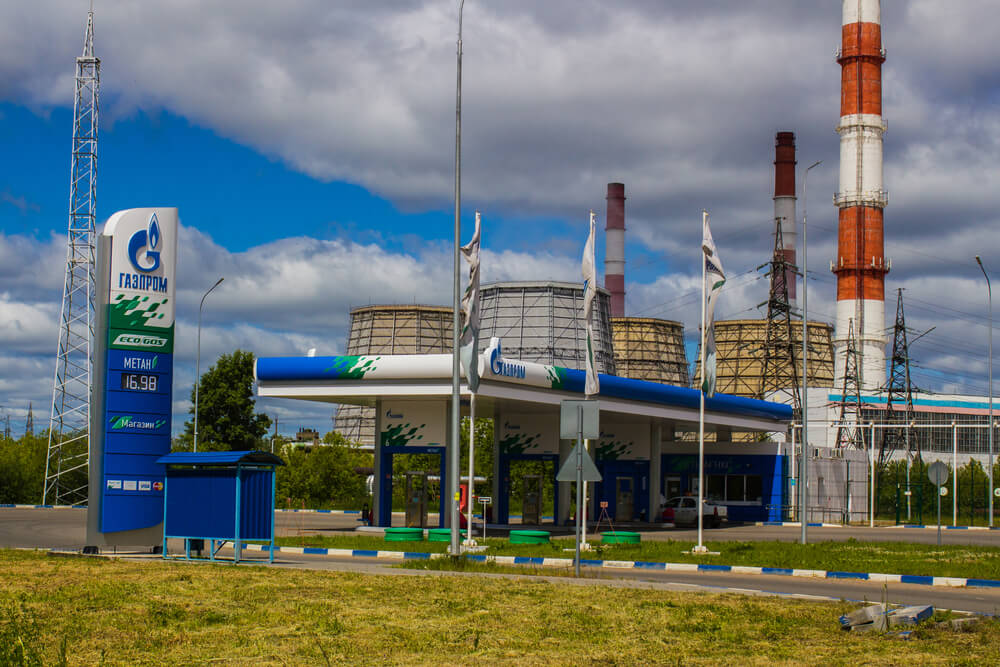 With global supply disrupted by Iran’s closure of the Strait of Hormuz, the Trump administration has also temporarily lifted sanctions on Russian oil shipments, strengthening Putin’s regime
At the same time, Russia is reportedly advising Iran on drone tactics, drawing on its battlefield experience in Ukraine.
This closer coordination may enhance Russia’s broader capabilities, including its ability to destabilize European NATO countries through cyberattacks and carry out covert operations by using proxy forces.
While Trump’s ill-advised war is strengthening Putin’s hand, the European Union’s efforts to support Ukraine are being undermined from within.
Most recently, Hungarian Prime Minister Viktor Orbán has threatened to block a new package of financial aid to Ukraine.
The lack of unified Western support for the US-Israeli war against Iran has also deepened strains within NATO, further eroding the alliance’s cohesion.
Given Trump’s distaste for diplomacy, it is difficult to see how this downward spiral can be reversed while he is in office.
For those of us outside the US, November’s midterm elections may offer the only realistic hope of change.
Chris Patten, the last British governor of Hong Kong and a former EU commissioner for external affairs, is a former chancellor of the University of Oxford.
