US President Donald Trump’s new National Security Strategy warns that Europe faces “civilizational erasure.”
While the language is deliberately forceful, the underlying concern is not misplaced. Europe does, in fact, risk becoming a continent shaped by the decisions of others rather than an actor controlling its own destiny.
The problem lies not in the diagnosis but in the proposed remedy.
In Trump’s worldview, the solution is more nationalism: weakening the European Union and restoring primacy to individual member states.
In reality, Europe’s problem is not too much integration, but too little. To endure as an economic, political, and military force in a world increasingly dominated by continental powers, Europe must complete its common institutions. That project requires a distinctly European form of nationalism.
For all its flaws, Trump’s critique points to a fundamental truth: a viable state requires a political community.
Without a collective “we,” taxation feels like extortion, laws are perceived as an imposition by outsiders, and military service becomes difficult to justify. Why contribute, comply, or sacrifice if the beneficiaries are not “us”?
As Benedict Anderson famously argued, nation-states are socially constructed “imagined communities”: large enough that most members will never meet, yet real enough to sustain mutual obligations.
This sense of “us” is not a rhetorical flourish; it is the intangible social scaffolding that supports collective action. Any political project – liberal or illiberal, democratic or authoritarian – depends on it.
Continuous collective decision-making
For much of history, states did not require a deep sense of shared identity, because their core functions were limited to maintaining domestic peace and deterring external threats.
You bent the knee to the strongest power in the vicinity, paid for protection, and otherwise retained considerable local autonomy.
Multiethnic empires, from antiquity through the Habsburgs and Ottomans, survived because they asked little of their subjects beyond obedience and tribute.
Governing became a matter of continuous collective decision-making
The Industrial Revolution shattered this equilibrium. As production, transportation, finance, and markets scaled up, so did the scope of what states were expected to do.
Governments now had to build infrastructure, standardize language and measures, educate populations, regulate industries, provide social insurance, and steer economic development.
Consequently, governing became a matter of continuous collective decision-making.
This transformation introduced a structural tension. Larger markets and military deterrence favor scale, but size also brings greater internal diversity of language, culture, history, and economic conditions.
A shared sense of “us” is easier to sustain in smaller, more homogeneous societies; larger, more diverse polities must develop it deliberately.
Modern nationalism
Modern nationalism emerged as a response to that tension. In the 19th century, German and Italian nationalists sought to unite populations living under different states, with distinct laws, institutions, histories, and languages, into a single political entity.
In doing so, nationalism reproduced the very tension it was meant to resolve, as unification expanded both scale and heterogeneity.
Early German nationalism, especially in the 1840s, was largely liberal and aimed at unifying Bavaria, Württemberg, Baden, Hesse, Saxony, Prussia, and others under a constitutional framework.
But political integration required more than legal consolidation. It demanded the construction of a new German identity – a broader understanding of “we” capable of sustaining common institutions.
EU has failed to develop a commensurate political identity
Italy followed a similar path. As statesman Massimo d’Azeglio remarked after the Risorgimento: “We have made Italy; now we must make Italians.” The state existed, but national identity lagged behind.
Europe today faces the same problem. The EU has already created a vast internal market and an elaborate – arguably cumbersome – regulatory system. But it has failed to develop a commensurate political identity.
The result is a polity that is economically integrated yet politically thin: strong enough to regulate, too weak to command loyalty when real sacrifices are required.
Vulnerabilities are not theoretical
Trump’s prescription – abandoning the European project in favor of national sovereignty – would push Europe in the wrong direction.
It would shrink markets, dampen innovation and investment, and diminish the EU’s bargaining power in a world where size increasingly determines outcomes.
It would also mean smaller and weaker militaries, crippled by fragmented procurement, incompatible systems, and chronic coordination problems.
Trump’s “America First” agenda – explicitly designed to subordinate others’ interests to those of the US – is hardly a viable basis for a durable alliance
These vulnerabilities are not theoretical. Russian President Vladimir Putin has made no secret of his desire to bring much of Europe into Russia’s sphere of influence, and the Trump administration has shown a willingness to monetize Europe’s dependence on the American security umbrella.
The recent US-EU trade deal, under which the bloc accepted a 15% tariff on its exports to the United States while imposing no tariffs on American goods, underscored the power asymmetries at play.
That outcome should be sobering, especially for Europe’s far right. Many nationalist parties assume that rhetorical alignment implies shared interests, but Trump’s “America First” agenda – explicitly designed to subordinate others’ interests to those of the US – is hardly a viable basis for a durable alliance.
As Italian Prime Minister Giorgia Meloni has already discovered, ideological affinity does not translate into favorable treatment when strategic interests diverge.
Political identity
The lesson for the EU is clear: Europe cannot achieve strategic autonomy without a central authority able to act on its behalf, and such an authority cannot survive without a well-defined political identity.
Effective deterrence requires integrated command, joint procurement, a unified industrial base, and the ability to tax and spend.
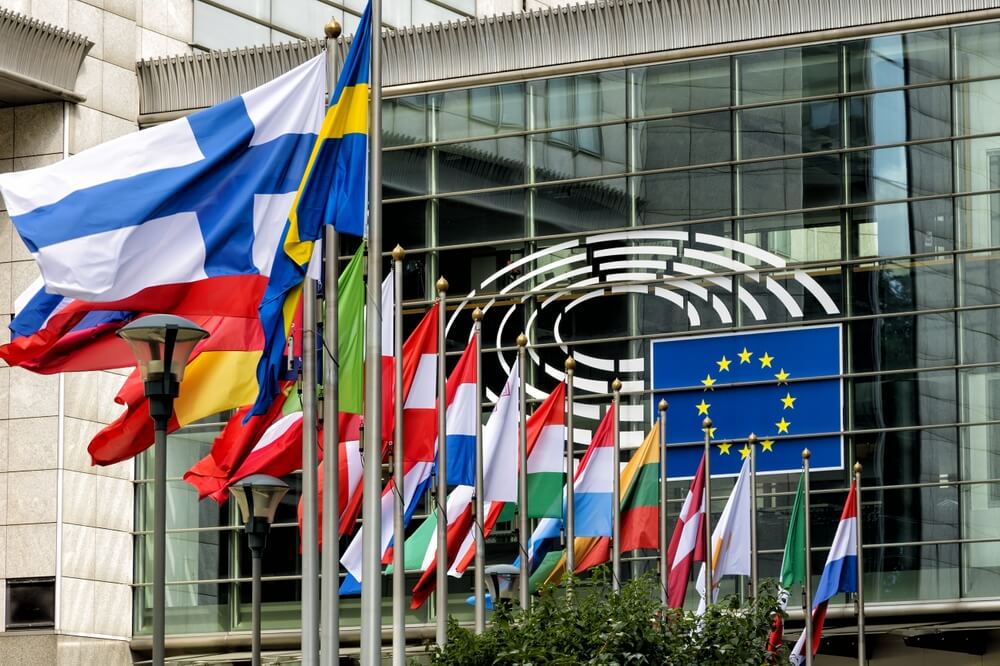 Europe cannot achieve strategic autonomy without a central authority able to act on its behalf, and such an authority cannot survive without a well-defined political identity
An army funded through EU-level taxes, in turn, presupposes a government with real power and democratic accountability, both rooted in a European sense of “us.”
To be sure, building European nationalism will not be easy. Historically, this has been made easier by the need to confront an aggressive “them,” which Europe now has. It will require imagination, leadership, political will, and institutional reform.
The alternative increasingly resembles what Trump himself calls erasure: economic marginalization, military dependence, and political irrelevance in a world shaped by others.
Europe exists. Earlier generations of political leaders created it by establishing common markets, treaties, and institutions.
The task now is to create Europeans. Without a shared sense of “us,” the collective action Europe now urgently needs will be impossible to achieve.
The continent will remain formally integrated but functionally powerless.
Ricardo Hausmann, a former minister of planning of Venezuela and former chief economist at the Inter-American Development Bank, is a professor at Harvard Kennedy School and Director of the Harvard Growth Lab.
