For this article, published on 1 January 2026, I had intended to look at how the previous year has normalised extremism. But it’s also a good time to look at the part that we, the media, play in this.
First though: Far-right extremist parties now lead the polls in all major European countries, including the UK. And Donald Trump’s endless barrage of nastiness has become the new normal in the US.
The scope of this normalisation and the influence of Trump’s equally vile vice-authoritarian, J.D. Vance, can be seen in the recent decision by the world’s most pre-eminent annual get-together of geopolitical and security thinkers and practitioners, the Munich Security Conference.
This august gathering has decided to reinvite the far-right extremist AfD after a two-year ban. Germany’s security services consider the party a threat to the country’s democracy, and there’s widespread dismay, also among conservative politicians, at the prospect of AfD politicians getting their hands on sensitive information.
The conference’s organisers have therefore decided that AfD representatives can only attend the more public plenary sessions but not the more delicate closed gatherings.
Still, the message to the wider public is that another part of the firewall that distances the AfD from having its hands on or near the levers of power has crumbled.
Vance caused a storm at last year’s Munich Conference not only by harshly attacking America’s European allies over so-called freedom of speech violations and migration but also by condemning the AfD ban and meeting the party’s leader.
The decision to reinvite the AfD must be seen mostly in this light; the US administration’s drive to support extremism around the world and undermine the international order.
What mess? Extremism, radicalisation and polarisation
Yet, it’s also legitimate by now to wonder at the meaning of the whole idea of normalisation of extremism when, as noted above, extremist parties have garnered at least a third of voter support in opinion polls in major countries.
Supporters of these parties would argue that they’re not the extremists and deflect by blaming woke elites, deracinated global liberals or some other made-up ‘cosmopolitan’ threat to the national ethos.
They and the people they seek to fool should really do what they like best: look back half a century or more.
In those supposedly golden, pre-woke, white-only years, the kind of language they’re spouting now and the tactics they employ would have been ruled inadmissible, and nobody in their right mind would have given them the time of day.
The biggest mess we’re in is the growth of extremism, radicalisation and polarisation
I see another argument that extremists and their fellow travellers might deploy – that the wilful blindness to the approaching danger in this bygone era is exactly what got us into this mess.
The answer here is, of course: What mess? While the West, if that concept still exists, faces several challenges, the biggest mess we’re in is the growth of extremism, radicalisation and polarisation.
Times might be tough for many, change might disrupt and dislocate established professions, even whole societies, and the political leadership has clearly not caught up yet.
But as a whole most Western democracies, certainly in Europe, are enjoying remarkable prosperity and stability.
In 2025 economies were stable, if not hugely buoyant. Crime is down almost everywhere compared to several decades ago. And we’re not, yet, directly at war with anybody.
Apart from the threat of war, which is rising due to exactly the kind of extremist nationalism espoused by the far-right, 2026 looks to be very similar.
Speaking truth to power—and representing a balanced view of the world
Here’s where the media and journalism might take a moment to assess the impact of very justifiable – even necessary – criticism of policies and politicians.
There appears to be a growing dissonance between our mission to speak truth to power and hold institutions and corporations to account on the one hand and represent a balanced view of the world on the other.
When we criticise extremists and the mainstream in equal measure, as might be expected from committed truth-tellers, we risk conveying the mistaken idea that the political landscape is flat, while it’s rather obviously not.
Take the European Union. Its trajectory over the past year can be sketched as nothing short of disastrous: Squabbling over basic common interests, such as funding Ukraine. Caving in to Trump on trade and regulation. Failing to step up on conflicts in Gaza and elsewhere.
We take the many things that the EU is getting right for granted
Yet, this is only part of the story. We take the many things that the EU is getting right for granted. Its failings deserve criticism, but this should not overshadow the huge positive role it plays in the lives of almost all Europeans on a daily basis.
The same can be said of mainstream politics and politicians in many European countries. Whether Starmer, Macron or Merz, they’ve all become the target of virulent attacks, also in the media.
It’s true, they disappoint in many ways and deserve every bit of censure thrown at them. But at the same time, they are serious and decent politicians, among the best their countries have to offer, far better than any of their far-right challengers.
Can we blame them for not living up to the moment, for not recognising the magnitude of the crisis the West is facing? Or is there very little they could do differently, and are they largely right to project an attitude of ‘keep calm and carry on’?
Nuance does not sell
Journalists are rightly focused on finding signs of trouble, rooting out what goes wrong, describing the dangers and downsides. Yet, in this age of amplification by social media and manipulation by authoritarian geopolitical rivals, this crisis-thinking can carry risk too.
We might not really have a choice, but the constant crisis narrative, accurate though it might be, helps the far-right and other extremists fan the flames of fear and discontent and normalise their discourse.
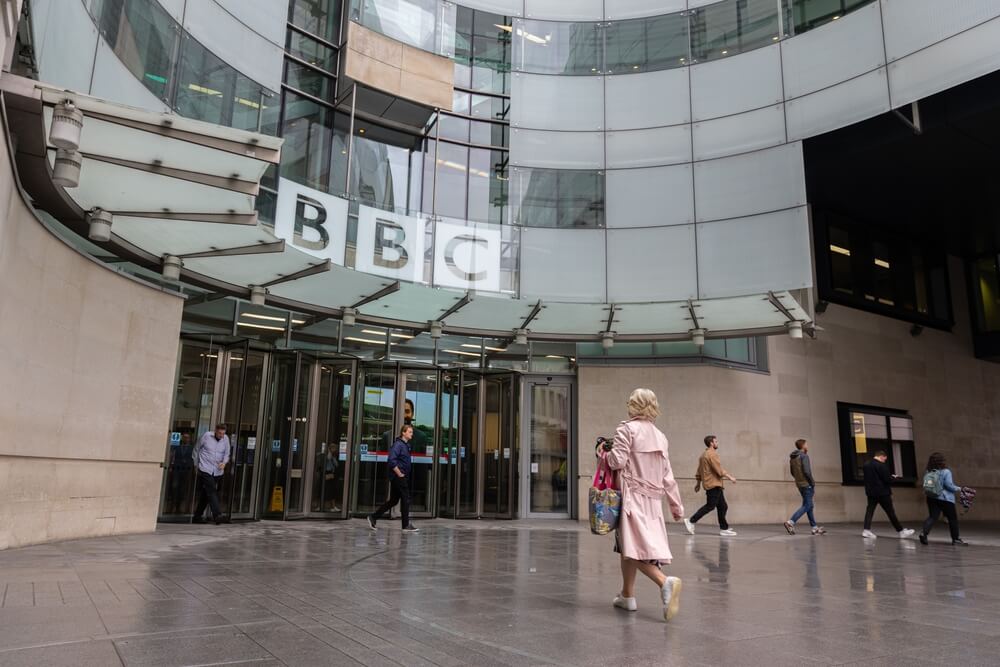 Even hallowed news institutions such as the BBC, CBS’s 60 Minutes or France’s public broadcasters are increasingly prone to outside pressure and manipulation
When we criticise mainstream politicians for their glaring lack of vision, decisiveness and backbone, or for their hubris and wrong-headedness, we might do well to add some caveats that previously might have been regarded as redundant.
Yet, nuance does not sell, now less so than ever. Many news stories are getting shorter, with no room for complexity. Longer-form journalism is often like preaching to the converted within the now infamous echo chamber.
We should, especially nowadays, not overestimate the impact of our work. But, where possible, we journalists might have tried harder to tell nuanced stories and pressure, or shame colleagues and news organisations into doing so as well.
The truth is, however, that most journalists are also low- to average-paid corporate factotums or gig workers who have a shrinking voice in ever more predatory media organisations that themselves operate in an increasingly hostile context.
Even hallowed news institutions such as the BBC, CBS’s 60 Minutes or France’s public broadcasters are increasingly prone to outside pressure and manipulation.
If there is a systemic crisis in the West, an idea that populists and extremists seek to exploit, then media and journalism are definitely part of it.
And being part of it, it’s no wonder that we’re unable to square this vicious circle of legitimate journalistic coverage and contributing to the normalisation of crisis narratives and extremism.
While journalistic focus on and criticism of ‘the establishment’ should never flag, we might, for 2026, also try to think of ways that we can mutually support the saner elements of our societies.
For this, the onus is on politicians and institutions to not further undermine journalistic freedoms and organisations. To back up public broadcasters, for example, and to provide access and show transparency.
From our side we might have to occasionally pause and acknowledge that however terrible mainstream politicians and institutions often are, they are still the ‘normal’ ones, rather than the extremes.
