Few ideas are more fundamental to US President Donald Trump’s political brand than his consistent claim that the American left steals elections at his expense.
If we don’t stop them, he warns his followers, we won’t have a country anymore.
When he (fairly) defeated Hillary Clinton in 2016, but without winning a majority of votes, he insisted that millions had voted against him illegally, and that the Democratic Party had “rigged the election at polling booths.”
When he lost to Joe Biden in 2020, he made these and other charges, then encouraged a riot at the Capitol to try to halt the election’s certification.
In 2024, he said Democrats had recognized his victory over Kamala Harris only because the margin had been “too big to rig.”
Now Trump faces his final popular vote. His name won’t appear on the ballot this November, but the results of the midterm elections for Congress are nearly always considered a referendum on the incumbent president and his performance, and that’s especially true when his party holds majorities in both legislative houses.
This election also comes at a moment of deep unpopularity for Trump. His poll numbers are lower at this point in his tenure than those of any second-term US president in the past 80 years, with the sole exception of Richard Nixon on the eve of his disgraced resignation in 1974.
But this time, judging by his actions, Trump doesn’t seem to care about the election’s outcome.
To be sure, earlier this summer, he used a televised speech to rehash unsubstantiated charges about previous elections, including accusations that China has created an “unprecedented election security nightmare” by hacking millions of voter registration files and manipulating social media (though he did not suggest any action against China in response).
Trump’s various conspiracies
He also accused Democrats of hiding the evidence, and he persists in pushing the Republican-controlled Congress to pass new laws that would require all voters to present identification at their polling place—a measure many of his fellow Republicans oppose.
But none of this rhetoric is new, and most of the Republicans now facing midterm challenges have done little to boost Trump’s various conspiracies.
The president also seems bent on sabotaging his party’s best re-election candidates more directly.
Trump has devoted much attention to issues he cares about personally while all but ignoring more immediate problems
In state after state, he has driven strong, if independently minded, Republican lawmakers into retirement, favoring candidates who pledge loyalty to him over incumbents with a better chance of turning back popular Democratic challengers.
He has repeatedly inflicted harm on the Republican leaders of the House and Senate by trying to force them to adopt deeply unpopular positions or pass legislation that has no chance of success.
And he has pressed GOP lawmakers to cancel their August recess, despite this being a crucial time for campaigning back in their states and districts.
Most importantly, Trump has devoted much attention to issues he cares about personally—a new ballroom for the White House, new monuments in Washington, and political revenge against his enemies—while all but ignoring more immediate problems like consumer price inflation, which his war of choice on Iran and tariff policies are exacerbating.
Has Trump lost interest in protecting Republican majorities?
What’s going on? Has Trump lost interest in protecting Republican majorities?
Democrats will almost certainly win control of the House of Representatives, giving the opposition some power over government spending and an opportunity to launch official investigations into the president and his administration. They could even impeach him a third time.
The Senate is a much closer call, but the opposition might still win a majority there, too, undermining Trump’s ability to confirm senior officials, judges, and new Supreme Court justices.
But it is these odds that explain why Trump seems to be shrugging at his party’s endangered majorities: he knows he has little chance of success.
Once the November votes are counted, the president will refuse to accept the outcome.
Regardless of what Trump says and does in the days, weeks, and years that follow, US courts will reject his challenges
He will send immigration police to man the polls. He will contest the close races, challenge the integrity of voting machines and election workers (particularly in majority Democratic states), and claim that shadowy foreign agents helped the opposition win.
He will also claim that Republicans would have won big had they simply done all that he demanded.
This inevitable response will further damage public confidence in the institutions of American democracy, but it will not affect the final election outcome.
As in all Trump elections—the 2016, 2020, and 2024 presidential races, as well as the 2018 and 2022 midterms—ballots will be counted by local authorities, and the legitimate winners will claim their seats.
Trump cannot change that because the US federal government has no constitutional role in the administration of American elections. The outcomes will be decided in the states.
Once again, the country’s institutional guardrails will hold. Regardless of what Trump says and does in the days, weeks, and years that follow, US courts will reject his challenges.
Even his fellow Republicans, whatever they say when pressed for personal opinions on Trump’s claims, will move forward to prepare for the many post-Trump political and legislative battles to come.
Decaying orbit of Trump’s political star
In the process, we will begin to turn the page from the Trump chapters of American presidential history.
US Vice President JD Vance, Secretary of State Marco Rubio, and many others will carefully open their bids to break free from the decaying orbit of Trump’s political star.
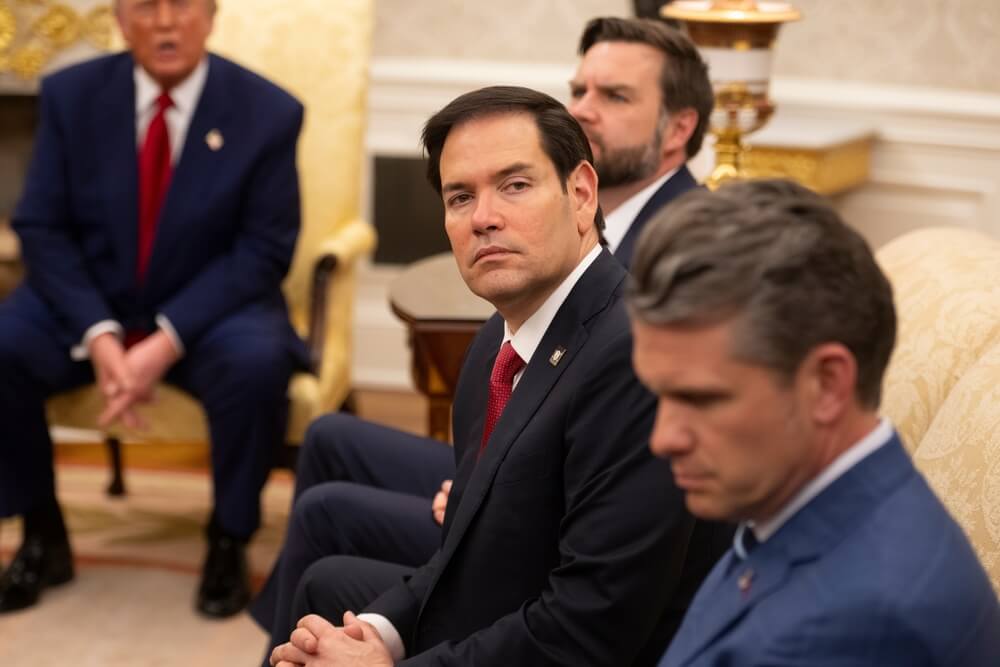 JD Vance, Marco Rubio, and many others will carefully open their bids to break free from the decaying orbit of Trump’s political star
Without this president to unite them, Democrats will soon wage their own internecine battles.
US allies and rivals will begin to consider how the next US president, Republican or Democrat, might change America’s political and policy trajectory.
Yes, in geopolitics, two years is a long time. New Trump stories remain to be written, and this president will continue to shape America’s politics and its role in a fast-changing and fragmented world.
But this November’s midterm elections, however colorful the dramas that surround them, will mark a turning point in the country’s recent history.
Trump’s ability to redefine what is possible inside the United States and vis-à-vis its friends and foes has reached its peak.
Ian Bremmer, Founder and President of Eurasia Group and GZERO Media, is a member of the Executive Committee of the UN High-level Advisory Body on Artificial Intelligence.
