The US-Israeli war against Iran has shattered the Gulf’s old security order. As governments search for alternatives, debate has focused largely on military strategy, diplomatic realignments, and the role of outside powers. Missing are the economic foundations of a lasting peace.
Recent moves to expand Omani-Iranian trade and revive the Hejaz Railway linking Turkey to Saudi Arabia suggest that economic integration, once dismissed as politically impossible, is becoming conceivable.
Whatever order emerges from the current crisis, its durability will depend not only on deterrence but also on economic incentives that make conflict costly.
In an influential 2015 essay, the Nobel laureate economist Douglass North and the Stanford social scientists Gary Cox and Barry Weingast described what they called the “violence trap.”
As trade, investment, infrastructure, and production become interconnected, economic complexity raises the cost of violence.
Restraint becomes economically rational, because states, firms, and citizens have more to lose.
Security is generated from within
The Gulf remains trapped in the opposite equilibrium. Violence persists not because regional actors are irrational, but because the incentive structure keeps the expected returns of conflict relatively high.
In many respects, the Gulf is a single economic space with a common stake in energy infrastructure, shipping routes, financial markets, and shared environmental challenges.
Dense commercial ties act as a commitment device, making disruption prohibitively expensive
But political fragmentation into competing blocs allows proxy warfare, infrastructure sabotage, and asymmetric attacks to impose enormous regional costs while imposing only limited costs on those who initiate them.
A more economically integrated Gulf would overturn this calculus. Dense commercial ties act as a commitment device, making disruption prohibitively expensive and embedding stability within the region’s economic architecture.
Security is generated from within, through organic economic linkages.
This perspective helps explain the paradox that one of the world’s wealthiest regions has failed to achieve durable peace.
External security guarantees
The rivalry between Iran and Gulf Cooperation Council (GCC) members divides what is naturally a shared regional system connected by geography, energy resources, and complementary markets.
For decades, external security guarantees, primarily by the United States, managed this rivalry without removing its underlying incentives.
Security effectively became a traded commodity, with hydrocarbons and capital exchanged for military protection. States overinvested in deterrence and underinvested in regional economic integration.
This model’s weaknesses are becoming increasingly visible. The Gulf is among the world’s most heavily militarized regions yet remains structurally vulnerable.
Drone warfare has transformed the strategic landscape. Relatively inexpensive weapons can now disable infrastructure worth billions of dollars.
Even forward-deployed American military bases have become vulnerable targets rather than bulwarks of stability.
More hardware does not solve the problem of asymmetric vulnerability
Most Gulf observers agree that the old security order is dying. But none of the most commonly proposed options—buying more advanced weapons, seeking protection from new partners in the Global South, or building stronger national militaries—is adequate to achieve a stable peace.
More hardware does not solve the problem of asymmetric vulnerability. Turning to partners such as Pakistan or Turkey may lower the cost of protection, but it would expose them to the same regional conflicts and domestic political constraints that limit reliability.
Building capable national militaries is even less viable. Smaller GCC states lack the population needed, while for the larger states—especially Saudi Arabia—strong professional armed forces create a political dilemma.
A military strong enough to defend the state may also be strong enough to challenge it.
Cooperation gradually creates trust
So, if stability cannot be purchased through arms alone, it must be built by changing the economic incentives that sustain conflict.
Critics will argue that economic integration is unrealistic given decades of mistrust between Iran and its Gulf neighbors.
But trust does not necessarily precede cooperation; often, cooperation gradually creates trust by making predictable interaction more valuable than confrontation.
Postwar Europe transformed centuries of rivalry by integrating strategic industries and creating common markets that made conflict increasingly irrational.
Economic interdependence altered incentives long before political disagreements disappeared.
The GCC states are relatively small economies whose prosperity depends on trade, capital mobility, and open networks
The Gulf itself has a long history of commercial integration. For centuries, Iranian and Arabian ports were connected by trade, migration, finance, and family networks that crossed the Gulf with remarkable ease.
Dubai’s emergence as a regional commercial hub partly reflects these longstanding cross-Gulf connections. The current equilibrium of sustained hostility is relatively recent.
Nor is cooperation merely theoretical. Qatar shares the South Pars gas field with Iran and has maintained functional bilateral economic relations.
Oman has long served as a trusted diplomatic and commercial bridge between Iran and its Arab neighbors. Selective engagement is possible even without comprehensive political reconciliation.
There is also a broader structural argument for integration. The GCC states are relatively small economies whose prosperity depends on trade, capital mobility, and open networks.
Long-term stability for such states is rarely compatible with rigid geopolitical alignment.
Pragmatic strategy for reducing risk
Just as prudent investors diversify portfolios to reduce risk, Gulf states should diversify the foundations of their security, beginning modestly.
Gulf states and Iran could revive dormant dialogues on maritime safety, environmental protection, disaster response, and infrastructure resilience, issues where mutual interests are obvious and political costs are relatively limited.
A second stage could introduce selective economic openings, including logistics cooperation, investment guarantees in non-strategic sectors such as agriculture and pharmaceuticals, and coordination on shared energy infrastructure.
These measures would increase the economic costs of disruption without requiring comprehensive political normalization.
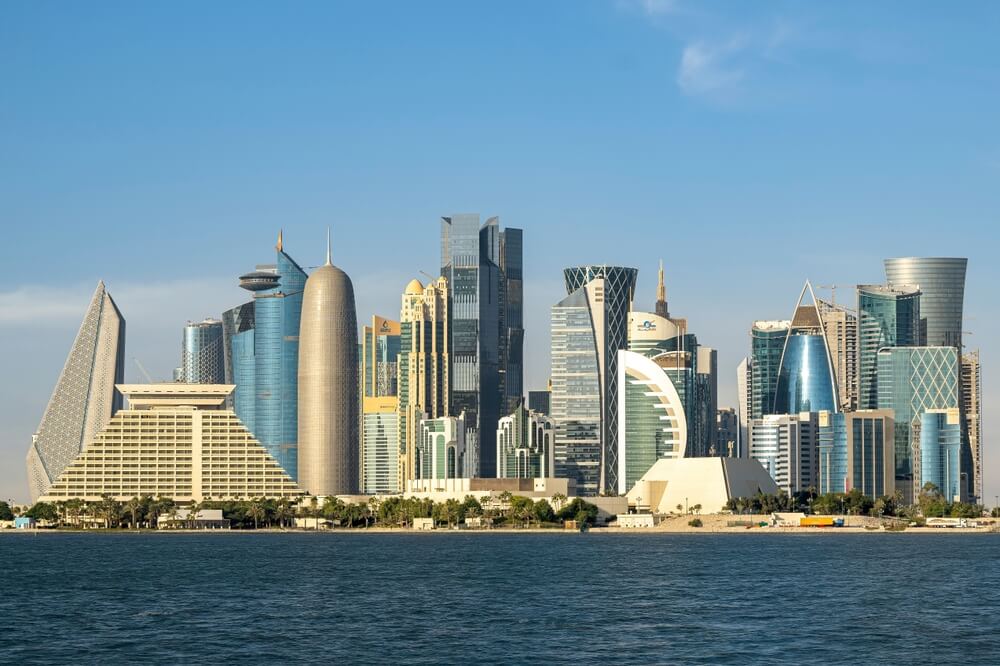 The Gulf’s next security order will depend not only on weapons or alliances, but on the economic ties it chooses to build - Doha
Over time, such initiatives could evolve into a permanent regional forum linking economic cooperation with security restraint and creating mechanisms to manage disputes before they escalate into crises.
External partners, including the US, could reinforce existing security commitments by recognizing that regional economic integration complements rather than undermines military deterrence.
Without greater economic cooperation, the Gulf will continue spending vast sums on a defense architecture now vulnerable to inexpensive asymmetric disruption, while security itself remains elusive.
Economic cooperation should therefore be understood not as a concession to Iran but as a form of strategic insurance.
The Gulf does not need to trust Iran, resolve every ideological dispute, or abandon existing alliances.
It simply needs to create an economic environment in which instability becomes progressively more expensive than coexistence.
This is not a utopian vision. It is a pragmatic strategy for reducing risk in an era when military superiority alone can no longer guarantee security.
The Gulf’s next security order will depend not only on weapons or alliances, but on the economic ties it chooses to build.
Adeel Malik is Associate Professor of Development Economics and Globe Fellow in the Economies of Muslim Societies at the University of Oxford.
Jamal Ibrahim Haidar is Assistant Professor and Chairperson of the Department of Economics at the Lebanese American University.
