When new channels of communication between Washington and Tehran opened in recent weeks, most international attention focused on issues that have recurred for years.
Will Iran agree to limits on its nuclear programme, what role will Israel play, will there be an easing of sanctions, and can a new destabilisation of the Persian Gulf be avoided?
However, behind these immediate issues lies a process that could have far longer-term consequences than the actual outcome of the negotiations.
For the first time in decades, the largest regional powers in the Middle East are not acting as observers waiting for a decision from Washington, but as participants seeking to influence the content of future solutions before they are made.
Saudi Arabia, Qatar, the United Arab Emirates, Türkiye, Egypt, Jordan, and even Pakistan, although it does not belong to the Arab political sphere, are seeking to ensure their own role in the process that will define the new regional balance.
Such developments do not represent the end of US influence in the Middle East, nor do they signal the withdrawal of the United States from the region. US military bases, naval forces, security agreements, and political influence remain unmatched by any other power.
What is changing is Washington's ability to independently determine the political framework of the major regional crises without seriously considering the interests of the states that will directly bear the consequences of those decisions.
However, it would be equally wrong to ignore that US strategic priorities are changing. Competition with China, the war in Ukraine, fiscal constraints, and internal political polarisation significantly affect Washington's willingness to assume the long-term burden of managing any regional crisis.
This is precisely why the present moment holds much greater significance than another round of negotiations with Iran.
At stake is not only the future of Iran's nuclear programme, but also whether a new model of crisis management is emerging in the Middle East, in which regional powers, for the first time in several generations, reject the role of passive recipients of decisions made outside the region.
Regional powers reject the role of observers
For most of the past seven decades, the security architecture of the Middle East has assumed that key decisions originate outside the region. During the Cold War, the region served as a training ground for great power rivalry.
After the collapse of the Soviet Union, the United States assumed a dominant position, at various times determining the rules of regional security, forming alliances, and managing major crises.
The war in Iraq, the Arab Spring, the nuclear negotiations with Iran, and the fight against the Islamic State all occurred within a political framework where regional actors largely responded to decisions made in Washington.
Türkiye aims to be an indispensable participant in all crises from Syria to the Eastern Mediterranean
Today, the situation is markedly different. Saudi Arabia no longer wishes to base its security solely on US guarantees. Qatar has established a network of political contacts that enables it to communicate with actors with whom most countries do not have direct ties.
The United Arab Emirates is developing its own security and economic policies, often extending beyond traditional regional frameworks. Türkiye aims to be an indispensable participant in all crises from Syria to the Eastern Mediterranean. Egypt is seeking to maintain its political importance despite serious economic problems.
These countries do not have a common strategy and do not form a new political bloc. Their interests are often different and sometimes conflicting. However, they increasingly share the view that the political future of the region could be shaped without their real influence if they are not present at the negotiating table.
This change represents the most important development in the current Middle East crisis.
Saudi Arabia and the new logic of stability
The most significant change has taken place in Saudi Arabia. In previous decades, Riyadh relied almost entirely on the US military presence and its strategic partnership with Washington for security.
Today, Saudi Arabia is pursuing a more complex policy, maintaining its alliance with the US, repairing relations with Iran, and developing its own regional initiatives.
For the Saudi leadership, the Iran issue is no longer merely a security challenge
The reasons for this change are not purely political. The country’s economic transformation, outlined in the Vision 2030 programme, requires long-term regional stability, predictable energy flows, and an investment environment that is not constantly threatened by the possibility of a major regional conflict.
For the Saudi leadership, the Iran issue is no longer merely a security challenge. It has become part of a broader assessment of the political and economic environment in the Gulf over the next decade. From this perspective, neither full confrontation with Tehran nor uncontrolled escalation is an acceptable option.
That is why Saudi Arabia now seeks to influence regional processes much earlier than in previous crises. Its ambition is not to replace the American role, but to prevent a situation in which the future of the region is decided solely by Washington and Tehran.
Qatar, Türkiye and the expansion of regional diplomacy
Qatar’s role is one of the most striking examples of the changed political reality. Over the past decade, Doha has systematically developed diplomatic channels with various actors, including Iran, Hamas, the Taliban, and numerous regional mediators, which now allows it to serve as a communication point between parties that often have no direct contact.
Its importance arises not from military strength or territorial size, but from its ability to maintain open channels of communication even when formal diplomatic relations are blocked.
Türkiye, by contrast, views regional crises through a much broader strategic prism. Syria, the Eastern Mediterranean, the Caucasus, the Black Sea, Palestine, and relations with Iran are interconnected elements of a single security space in which Ankara seeks to play a significant role.
Turkish policy in recent years clearly shows that Ankara no longer accepts the role of a state that merely reacts to the decisions of other powers. Despite occasional tensions with Washington or European partners, Türkiye seeks to secure a place in every important regional process.
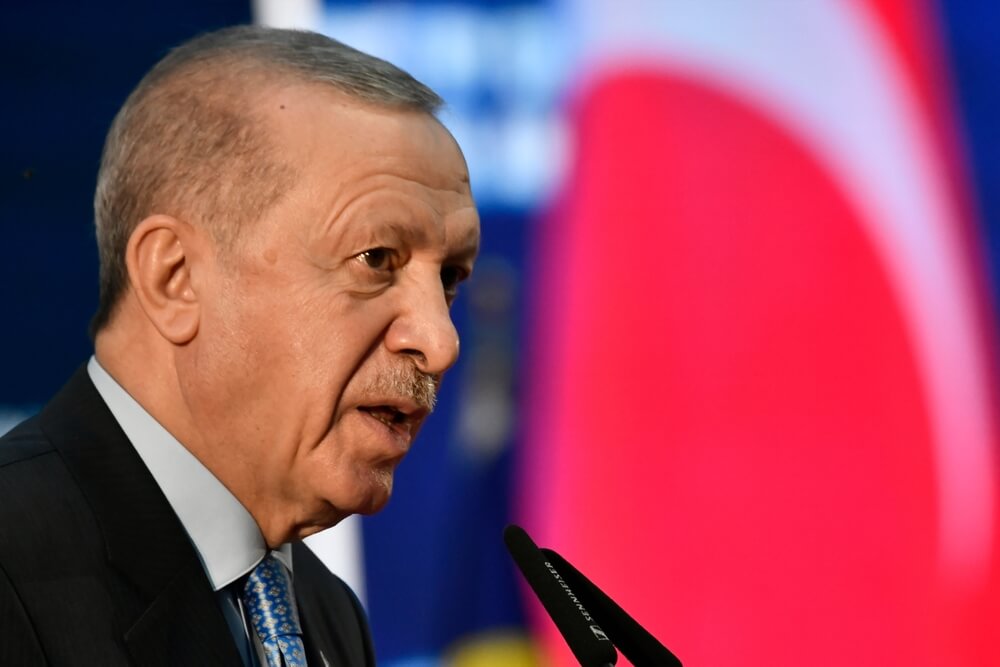 Despite occasional tensions with Washington or European partners, Türkiye seeks to secure a place in every important regional process - Recep Tayyip Erdogan
Egypt, although economically weakened, remains an important factor due to its geographical position, control of the Suez Canal, and influence on the Palestinian issue.
Cairo no longer has the capacity to independently shape regional developments, but it still possesses tools that allow it to influence key issues in the Eastern Mediterranean and Gaza.
It is possible that the current negotiations with Iran will not result in a lasting agreement. There may be another escalation, the issue of Hormuz may remain unresolved, or Israel and Iran may continue their indirect confrontation through regional allies.
However, even if negotiations fail, one change will not be reversed. In recent years, regional states have reached the common conclusion that they pay the highest price for the biggest Middle Eastern crises.
Therefore, in the coming years, they will increasingly demand participation in the processes that determine the region’s future.
Crises will become more difficult to resolve
If the new distribution of influence in the Middle East continues, the main consequence will not be the weakening of US power or the emergence of a new dominant regional power, but that future crises will become much more difficult to resolve politically than in previous decades.
During the period of US dominance, most regional allies, even when they disagreed with Washington’s decisions, ultimately accepted the political framework set by the United States.
Today, such a hierarchy no longer exists. No regional state is strong enough to shape the order alone, but none is willing to accept solutions in which it did not participate.
This will inevitably prolong negotiations, complicate diplomatic processes, and increase the number of actors whose interests must be considered.
Future crises in the Middle East will not have clear winners, quick diplomatic solutions, or a political arbitrator capable of imposing a final outcome
Issues that were previously resolved within the relationship between Washington and its allies are now the subject of negotiations between multiple regional power centres, each possessing certain political, economic or security instruments, but also different interests.
The consequence of this development will not necessarily be greater instability, but it will almost certainly result in slower decision-making and much greater difficulty in reaching sustainable compromises.
This is precisely why future crises in the Middle East will probably not have clear winners, quick diplomatic solutions, or a political arbitrator capable of imposing a final outcome.
