Unlike Europe, China can be satisfied with the changes in the US security and foreign policy orientation, as outlined in the new National Security Strategy of President Donald Trump's administration.
The measured response from Beijing to the recently published 30-page document signals that China does not anticipate a strategic tightening with the US, at least during the remaining three years of Trump's term.
To understand future Chinese positioning towards the US, it is important to note that the bureaucratic DNA of the Chinese administration places much greater emphasis on official, written documents, such as the new Trump strategy, than on verbal statements.
In this context, Trump's unpredictability and inconsistency in his daily communications will be less significant for Beijing. For China, what is written in the National Security Strategy will be the primary parameter by which it formulates its policy and decisions regarding America.
Furthermore, China will base its negotiating platform with the US on Trump's new foreign policy strategy, regardless of the specific issue.
"Beijing treats every written American commitment as a negotiating floor. The national-security strategy establishes the baseline from which Beijing negotiates, and the baseline just moved," said Ryan Fedasiuk of the American Enterprise Institute, a conservative think tank.
This means that diplomats in Beijing already know what is needed to build a platform for the talks between Xi Jinping and Trump, expected in April. The question is whether diplomats in Washington are equally prepared.
Toning down the rhetoric
From the new American strategy, Beijing was able to draw conclusions that directly and indirectly affect its positioning not only towards the US, but also towards many other global actors.
The main message directly concerning Trump's policy towards China is the softening of the previously almost hostile rhetoric that prevailed in the earlier similar document adopted by the Joe Biden administration in 2022.
While Biden's strategy presented China as the primary foreign policy challenge, for the Trump administration it is viewed through the framework of "strategic competition."
Beijing seeks to assert itself on the global stage primarily at the economic level and much less through hard diplomacy and military force
This shift aligns with the main tone of Trump's strategy, which prioritises economic relations with the world, from which it indirectly derives political and security implications.
Beijing and its strategies welcome this shift, as it seeks to assert itself on the global stage primarily at the economic level and much less through hard diplomacy and military force.
"China always believes that China and the US stand to gain from cooperation and lose from confrontation. The principle of mutual respect, peaceful coexistence, and win-win cooperation is the right way for the two countries to get along and is the only realistic choice," said Guo Jiakun, spokesperson for the Chinese Ministry of Foreign Affairs, regarding the American strategy.
Human rights – a thing of the past
China can be satisfied with the absence of the ideological lens through which the US has traditionally viewed bilateral relations. Trump does not possess this perspective, and the few references to China in the strategic document are always framed in terms of economic rivalry, not ideology.
This effectively means that Beijing can take a break from the long-standing Western pressure it has faced regarding the poor state of human rights, the oppression of dissidents and minorities, and the lack of political and civil liberties.
In Beijing’s view, Trump’s approach will signal that the foreign policies of American allies towards China may also shift in the same direction
Furthermore, in Beijing’s view, Trump’s approach will signal that the foreign policies of American allies towards China may also shift in the same direction, lacking the ideological dimension.
An important indirect benefit of the new American strategy for China is the declared Trump isolationism and, instead of multilateral mechanisms, the preference for sovereign nation-states as the main actors in international relations.
This will be a very important signal for Beijing regarding its positioning towards Europe, for example.
The benefits of American isolationism
When the US seeks to weaken intra-European ties, China sees an opportunity to enter European markets and potentially the national policies of European governments more deeply than before.
If, over time, European countries follow Trump's strategy of dissolving the current Union, China will use it to pursue its economic and political interests more easily than before, as it will negotiate with individual European actors rather than with the Union as a supranational entity.
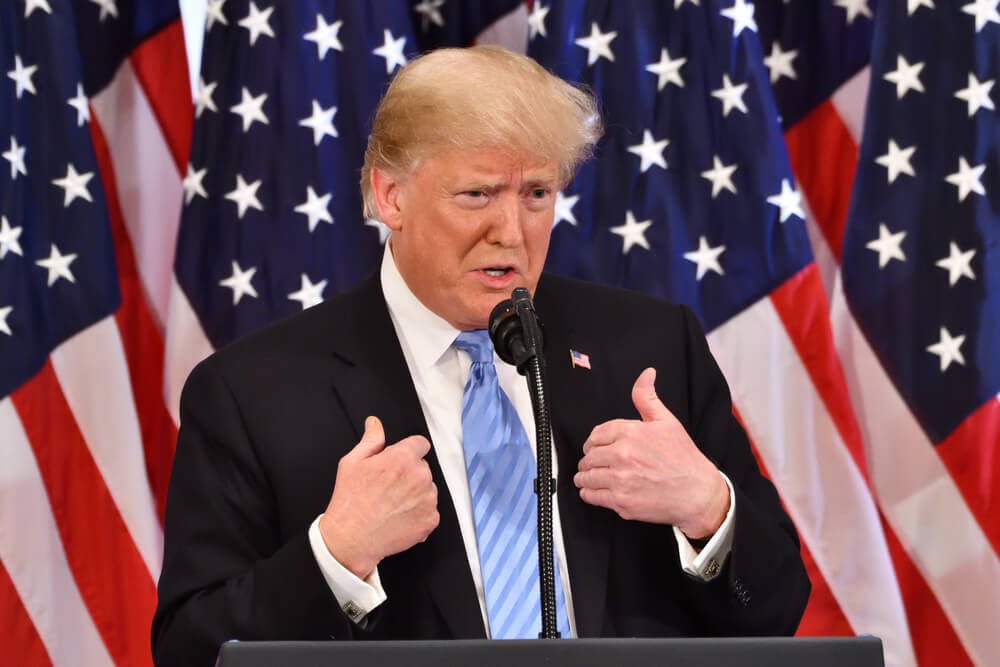 Trump aims to establish relationships with China in the same manner as he does with others: through bilateral deals, tit-for-tat agreements, and a combination of pressure and concessions
Trump's support for European right-wing and far-right forces, reflected in the strategy, is undoubtedly advantageous for Beijing. Their Eurosceptic, populist, and sovereigntist policies lead to the very outcome Beijing desires: the fragmentation of shared European policy, and especially the fragmentation of the shared market.
Beijing sees a similar advantage in Trump's pronounced avoidance of interventionism worldwide. With America's withdrawal from addressing global crises, as clearly highlighted in the strategy, China can expect significantly less American influence in its own backyard, particularly in Southeast Asia.
Although Trump's strategy emphasises cooperation with regional allies, especially regarding Taiwan, the US's strategic withdrawal as a factor in resolving global crises gives Beijing a green light to continue its aggressive actions towards its neighbours in Southeast Asia.
For this reason, Beijing will gladly accept the offer from Trump's strategy to compete with the largest rival, primarily in the economic sphere.
Although a year ago, at the start of Trump's term, it appeared that the many China hawks in the administration would create an increasingly harsh American policy towards China, the reality is now quite different.
Trump aims to establish relationships with China in the same manner as he does with others: through bilateral deals, tit-for-tat agreements, and a combination of pressure and concessions.
This is a game Beijing accepts far more readily than a long-term, comprehensive, and principled strategy, which Washington has failed to develop this time.
