Lithuania’s government on Tuesday declared a national emergency over security risks posed by meteorological balloons sent from Russia-allied Belarus that have violated its airspace in recent weeks, while the Belarusian leader called for negotiations on border tensions and said his country “does not need war.”
The balloons forced Lithuania to repeatedly shut down its main airport, stranding thousands of people, as Europe remains on alert over previous intrusions into NATO airspace during the war in Ukraine.
“In combating the Belarusian hybrid attack, we must take the strictest measures and defend the areas most affected by this attack," Prime Minister Inga Ruginienė said.
The announcement followed a Cabinet meeting of the Baltic state, which is a NATO member and strong backer of Ukraine in its fight against Russian forces who launched a full-scale invasion in February 2022.
The national emergency means the army will be able to patrol the border area together with other uniformed services and receive extra rights from parliament, such as to conduct searches or detain people.
The government said the impact on civilians would be limited.
While the balloons are used to smuggle cigarettes into Lithuania, officials in Vilnius see their numbers and trajectories as deliberate acts of disruption orchestrated by Belarus.
According to the Lithuanian government, the Vilnius international airport has been closed for more than 60 hours since October due to the threat posed to civil aviation, affecting over 350 flights and approximately 51,000 passengers.
Interior Minister Vladislav Kondratovič said Lithuanian prosecutors launched an investigation into the balloons and the secret services would provide information about the connection with the Minsk regime.
“I have no information that the Belarusian side is trying to curb the senders of the balloons,” the minister said. “And this is one of the proofs that this is a hybrid attack.”
In October, Lithuanian authorities closed two border crossings in response to the airspace violations.
Belarus’ authoritarian President Alexander Lukashenko denounced Lithuania’s move to close the border as a “mad scam” and part of a “hybrid war” against his country. He suggested that Vilnius needs to combat smuggling of contraband.
Belarus wants talks
On Tuesday, Lukashenko denied accusations that Minsk was carrying out hybrid attacks on Lithuania and said the balloons could not harm civil aviation. Instead, the Belarusian leader accused Vilnius of “politicizing” the problem.
He called for negotiations between Minsk and Vilnius. “If you want normal relations, sit down at the table and discuss these issues. We are ready to do that,” he said during a session of Belarus’ security council.
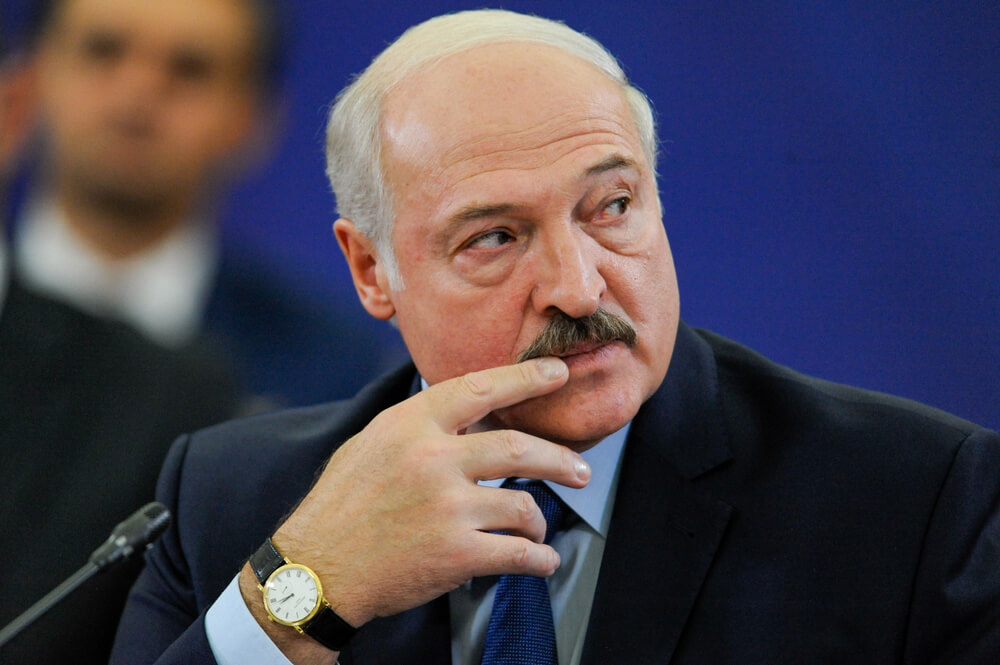 If you want normal relations, sit down at the table and discuss these issues. We are ready to do that - Alexander Lukashenko
Belarus’ deputy foreign minister Igor Sekreta also urged Vilnius to meet Minsk at the negotiating table. “For some reason, Lithuania perceives any contact at a political level with the Belarusian side as a defeat,” Sekreta said.
Lithuania, Poland and other European Union countries in the region in recent years have accused Belarus of other activity aimed at triggering instability, including with cyberattacks.
They also accuse Minsk of directing a large influx of migrants from the Middle East and Africa to their borders to create a migration crisis.
“Belarus is signalling to Lithuania that it can raise the price at any moment," Linas Kojala, head of the Geopolitics and Security Studies Center in Vilnius, told The Associated Press. “Yesterday with weaponized migration, today with balloons that are hardly separable from regime control.”
“These steps are not only about pressure on Vilnius, they are also about breaking the regime’s international isolation, which Lukashenko sees as a strategic priority,” Kojala added.
Seeking wider engagement
Experts said Belarus likely hopes that the issue will force Vilnius and the wider EU to engage with Minsk.
“We see the reluctance of both the EU and Lithuania to talk to Lukashenko and start softening European sanctions that are painful for Belarus,” Belarusian political analyst Valery Karbalevich told the AP. “This is an attempt to force European partners to sit down at the table through threats and hybrid attacks.”
Lukashenko wants the EU to lift or soften sanctions - Valery Karbalevich
Karbalevich also said the timing was significant, noting that the balloon issue escalated soon after Lukashenko was able to secure the end of U.S. sanctions against national airline Belavia.
“Lukashenko wants the EU to lift or soften sanctions and he hopes to initiate negotiations by blackmailing Lithuania,” Karabalevich said.
