US President Donald Trump campaigned on a promise to end inflation “starting on day one.” He even pledged to lower the price level, which would require holding inflation below zero.
Instead, he has acted as if he were going out of his way to drive up inflation in the United States.
Political leaders generally find it difficult to deal with inflation. Voters complain bitterly about rising prices, even when their incomes are rising faster, and they blame their domestic leaders, even when inflation is increasing globally. Yet these leaders have few good options for reining in price growth.
While putting inflation hawks in charge of an independent central bank would deliver results eventually, it is far from a quick fix, and it carries high costs for output and employment.
US President Joe Biden experienced this in 2022, when inflation soared to 9.1% that June, as the post-pandemic recovery ran into supply constraints everywhere in the world.
But during the Biden years, wages at least kept up with prices, growing by about 5.0% annually in 2021–25, while the consumer price index (CPI) rose at an average rate of 4.9%.
Under Trump, by contrast, real wages have fallen. In April 2025–April 2026, prices rose by 3.9%, but average hourly earnings increased by only 3.7% in dollar terms, implying a 0.2% decline in real wages.
And inflation is not slowing. The 12-month CPI inflation rate jumped to 3.8% last month, from 3.3% in March.
If it were to continue at the rate of the last two months for an entire year, annual CPI inflation would reach 9%. (This extrapolation is admittedly hypothetical, as oil prices are unlikely to continue to rise at the rate seen in March–April.)
Platform of specific anti-inflation measures
The result is an escalating affordability crisis, which Democrats hope to leverage to make gains in the November midterm elections.
To this end, the Democratic Party should embrace an honest platform of specific anti-inflation measures: rolling back Trump’s tariffs; bringing energy prices down; defending the Federal Reserve’s independence; reining in fiscal profligacy; and restoring sanity to immigration policy.
Outside of Trump and his sycophants, pretty much everyone knew that Trump’s tariffs would increase the prices American consumers pay for imports.
The Democrats can reverse the tariffs as soon as they retake control of Congress, putting an immediate dent in inflation
Importers and households experienced about 90% of the costs from the 2025 tariffs, while foreign exporters paid just 4%.
Though businesses have so far absorbed more of the cost than consumers, the tariffs added about 0.7 percentage points to the consumer price index, just by September 2025.
The Democrats can reverse these tariffs as soon as they retake control of Congress, putting an immediate dent in inflation.
With many of Trump’s tariffs having already been ruled unconstitutional—most recently, a federal trade court struck down his 10% worldwide tariff—this might be as simple as suspending his administration’s search for ways to keep them in place.
Bringing energy prices down
Bringing energy prices down will be more difficult. Trump’s foolish war on Iran has caused the biggest oil-price shock since at least 1979, with energy costs surging nearly 18% over the last 12 months. The damage—political, fiscal, and human—cannot simply be undone.
But while it may be a while before we see a $60 barrel of oil again, there is another way to lower energy costs in the US: stop Trump’s crusade against low-cost solar and wind energy.
Trump’s unprecedented attacks on the Fed’s independence were a surefire way to drive up inflation, as economists have long warned.
Fortunately, the Fed has so far stood firm. Fed Governor Lisa Cook did not surrender to the administration’s flagrantly illegal attempt to remove her.
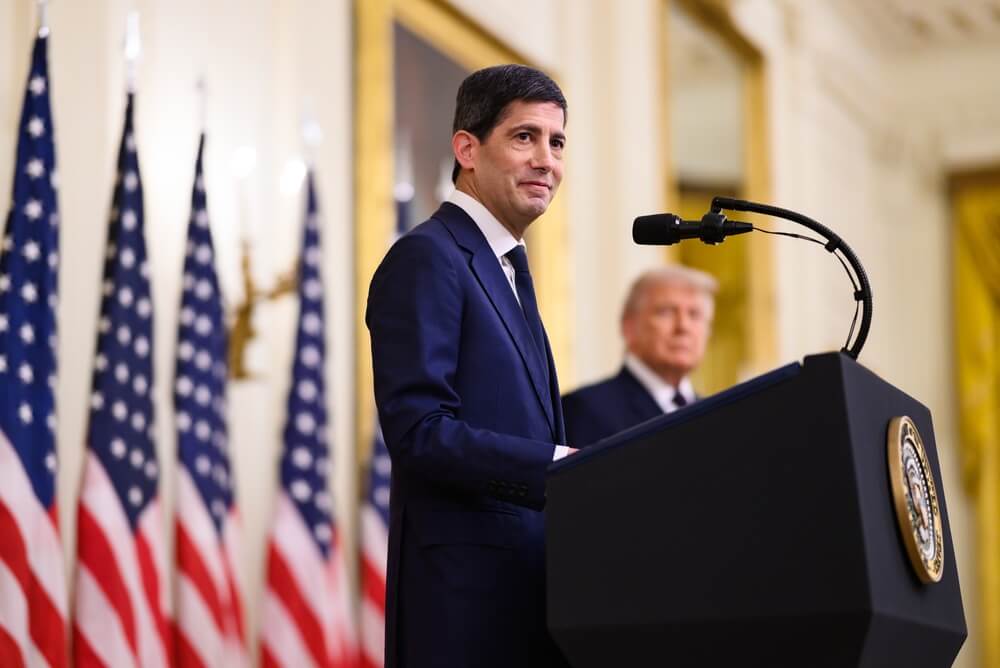 It is an open question whether the Fed’s new chair, Kevin Warsh, will uphold the tradition of Fed independence
And the Fed’s former chair, Jerome Powell, showed great integrity and courage in the face of Trump’s intimidation tactics and will be staying on as a voting governor.
It is an open question whether the Fed’s new chair, Kevin Warsh, will uphold the tradition of Fed independence.
As Nobel laureate economist Paul Krugman observed, when Warsh had an opportunity at his Senate confirmation hearing to demonstrate integrity by affirming that Biden won the 2020 presidential election, he evaded the question.
Krugman does not mince words, describing Warsh as a “partisan hack.”
Like Trump, Warsh has attacked the Fed for pursuing monetary easing when Democrats were in the White House, even when unemployment reached 10%.
When Republicans were in the White House, however, he attacked the Fed for tightening monetary policy, even with unemployment at 3.5%.
Of course, Warsh could decide that safeguarding the institution he now leads is more important than pleasing the president, much like Thomas à Becket, appointed by King Henry II as Archbishop of Canterbury in 1162, became loyal to the Church once he was responsible for it. But I would not hold my breath.
Immigration policy
Then there is Trump’s fiscal profligacy, which has exceeded that of even the most reckless of his predecessors.
Linda Bilmes estimates that the war with Iran is costing $2 billion per day, likely to add up to over $1 trillion.
The simultaneous pursuit of tax cuts and sharply higher government spending is inflationary.
While US politicians will not restore fiscal sustainability any time soon, Democrats should invoke the 1990s, when judicious federal budgets eliminated an unprecedented deficit, and eventually try a similar approach.
A sensible US immigration policy would help to alleviate such inflationary pressures, which are affecting even health care
This brings us to immigration policy. Trump’s mass-deportation initiative has contributed to worker shortages in critical sectors, such as construction, where immigrants account for nearly one-third of the labor force.
This puts upward pressure on housing prices, just as worker shortages in the agriculture industry raise the prices of meat and produce.
A sensible US immigration policy would help to alleviate such inflationary pressures, which are affecting even health care.
For the Democrats, such a concrete affordability platform could go a long way toward winning over voters in the midterm elections, as some tire of taking politicians’ anti-inflation promises at face value.
But put aside the game of scoring political points. Americans cannot afford two more years of Trump’s policies.
Jeffrey Frankel, Professor of Capital Formation and Growth at Harvard University, served as a member of President Bill Clinton’s Council of Economic Advisers. He is a research associate at the US National Bureau of Economic Research.
