If predictions of a “super El Niño” ocean warming event are realised later this year, the global economy could be hit hard by yet more disruption to food supplies just as it grapples with the impact of the US war against Iran on energy and fertilisers.
In a worst-case scenario, El Niño combined with the Iran war and climate change may lead to food shortages, particularly in low-income and conflict-affected countries, and yet more rises in inflation. Are policy-makers prepared?
Forecasters warn that a super El Niño may form within the next couple of months, leading to increased drought, flood and fire around the world.
This super-charged global weather pattern may extend its effects into early next year, with record-breaking weather events hitting supplies of food and fuel.
Furthermore, projections by the UN World Meteorological Organisation and the UK's Meteorological Office released on 28 May say there is a 75% per cent chance that the average global temperature between 2026 and 2030 will exceed 1.5°C since pre-industrial times.
This threshold is the agreed-upon limit of warming, averaged over 20 years, set in 2015 by the Paris climate agreement.
The chance of an El Niño kicking off in July is at 82%, and there is a 96% likelihood of it lasting through to next year, said the US National Weather Service, part of the National Oceanic and Atmospheric Administration (NOAA), on 21 May.
The agency raised the chance of a super El Niño occurring between November and next January to 37% from 25% last month. The European Centre for Medium-Range Weather Forecasts is absolutely certain and puts it at 100%.
A natural climate cycle
El Niño means Christ Child and was named by Peruvian fishermen because they noticed warmer water and tropical fish near Christmas-time.
It is a natural climate cycle that occurs every few years driven by warmer surface waters in the tropical Pacific. Trade winds that usually push warm water westward instead weaken or reverse and heat spreads eastward along the equator.
There have been only three super El Niños in recorded history: in 1982-1983, 1997-1998 and 2015-2016. The effects of another one would again be felt around the world with changes in typical weather, such as less monsoon rains in India and more rain in the US Midwest.
Scientists worry that some changes may endure in what are called “climate change shifts”
“In modern human history, we've never experienced a strong or very strong El Niño event amid pre-existing conditions that were this warm globally; therefore, it would not be surprising to see some unprecedented global impacts by later in 2026 into 2027 in terms of flood, drought, and wildfire-related extremes,” Daniel Swain, climate scientist at the University of California Agriculture and Natural Resources, said in a statement.
Even when a super El Niño has faded and the Pacific has cooled again, scientists worry that some changes may endure in what are called “climate change shifts” with greater warming in regions including the central North Pacific, Gulf of Mexico, East Africa, Amazon, central Australia, and Indonesia.
Will governments listen?
What is clear is that the current crisis in food and fuel supplies caused by war could be amplified, says Máximo Torero Cullen, chief economist of the United Nations Food and Agriculture Organisation (FAO).
“By late 2026, when climate impacts intensify, the system will be even more constrained. Higher input costs, reduced planting, and tighter trade flows will converge with climate-driven production shocks. What might have been a difficult adjustment risks becoming a broader food crisis,” he wrote for the Devex web site.
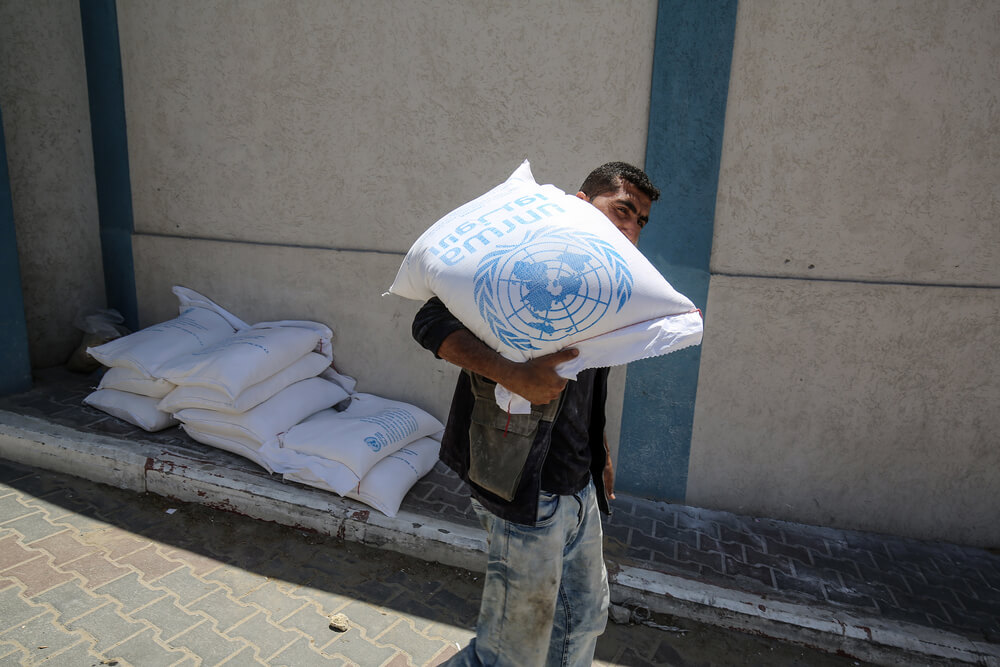 Higher input costs, reduced planting, and tighter trade flows will converge with climate-driven production shocks
He pointed out that logistics costs are rising and reducing the volume of humanitarian assistance while the ability of governments to stabilise and subsidise food security is eroding. Fertiliser prices are still above pre-Iran war levels, while rising energy costs have hit stages all along the supply chain from irrigation to transport, threatening planting and productivity.
“The closure of the Strait of Hormuz is not a temporary shipping disruption but the beginning of a systemic agri-food shock that could trigger a severe global food price crisis within six to 12 months. Avoiding such an outcome will require alternative trade routes, restraint on export restrictions, protection of humanitarian flows, and buffers to absorb higher transport costs,” warned FAO on 20 May.
FAO issued a series of recommendations, ranging from the avoidance of export restrictions, especially on fertilisers, to not boosting biofuel demand. But will governments listen?
A briefing note issued by JP Morgan on 21 May also raised the alarm over food security. It said the last time a strong El Niño coincided with a fertiliser price spike was during the 2023-2024 El Niño, and this year’s planting of corn, wheat and rice may be affected. “Even if the conflict ends today, there will be lasting residual impacts if shocks cascade,” it said.
The next round of forecasts are expected in June from agencies including NOAA, and they will be closely watched. By July, the unleashing of El Niño may start. Governments need to take note now.
