On 8 August, Volodymyr Zelenskyy completed his first official visit to Serbia since becoming President of Ukraine in 2019. In Belgrade, Serbian President Aleksandar Vučić reiterated his support for Ukraine’s territorial integrity and its European path.
The two sides set the end of 2026 as the deadline for concluding a free trade agreement, and also discussed energy, infrastructure and the reconstruction of the war-torn country.
At the same time, Serbia has not changed its policy towards Russia, sanctions remain outside Serbian foreign policy, and Vučić said that military cooperation was not on the agenda.
Belgrade has maintained multilateral relations for years, while the novelty of this visit is that Kyiv has found a way to develop relations with Serbia without first demanding that Vučić do what he has refused to do for years. Kosovo has become one of the reasons why such cooperation can work politically.
During the war, Ukraine had good reasons to view Serbia with reservations. Belgrade did not impose sanctions on Moscow, remained dependent on Russian gas, and refused to join measures that the Kremlin would regard as open hostility.
At the same time, since the beginning of the Russian invasion, Serbia has supported Ukraine’s internationally recognised borders, voted for key United Nations resolutions, sent humanitarian and financial aid, and maintained political contact with Kyiv.
Zelenskyy’s visit shows that the Ukrainian leadership has decided to use that space, instead of reducing the entire relationship to the issue of Serbian sanctions against Russia.
Territorial integrity in both directions
Ukraine does not recognise Kosovo, and Serbia does not recognise Russia’s annexation of Crimea or other changes to Ukraine’s borders made by force.
The history and legal framework of these two issues are not the same, and a mechanical comparison leads in the wrong direction, but there is a clear political point of contact in relations between Belgrade and Kyiv.
Serbia can support Ukraine’s territorial integrity by invoking the principle it applies in its own case, while Kyiv, by maintaining its non-recognition of Kosovo, removes one of the biggest obstacles to developing relations with Belgrade.
Ukrainian policy towards Kosovo has not remained confined to official statements. When Kyiv organised the Ukraine–Southeast Europe summit in Odesa in June 2025, Pristina was not among the participants. The same occurred at the summit in Kyiv on 15 July this year, even though both countries in the region that recognise Kosovo and those that do not were at the table.
Ukraine’s non-recognition of Kosovo gives relations between Belgrade and Kyiv an important political foundation
In May, the Serbian Minister of Foreign Affairs, Marko Đurić, during a conversation with the Ukrainian Deputy Prime Minister, Taras Kachka, publicly thanked Kyiv for its stance on Kosovo.
This continuity is important to Belgrade, because a closer relationship with Ukraine does not require the Serbian government to reopen an issue it regards as one of its basic state interests.
Russia still carries much more weight than Ukraine in relation to Kosovo. As a permanent member of the UN Security Council, it can influence any attempt to change Kosovo’s status through that body, whereas Kyiv cannot play such a role.
Nevertheless, Ukraine’s non-recognition of Kosovo gives relations between Belgrade and Kyiv an important political foundation, because Serbia can deepen its cooperation with Ukraine without disputes over what it regards as its most important national interest.
Vučić can therefore present the rapprochement with Kyiv as fully consistent with Serbian policy on territorial integrity, rather than as alignment against Russia.
Kyiv accepted the limits of Serbian policy
The limits of Serbian policy towards the war were clear on 15 July. On that day, Vučić was in Kyiv at the fifth Ukraine–South-Eastern Europe summit and refused to sign a joint declaration calling for continued security support for Ukraine and stronger sanctions on Russia. At the same time, he reiterated his support for Ukraine’s territorial integrity and announced additional financial, medical, energy and humanitarian aid.
Kyiv then received a clear answer on how far Belgrade is prepared to go, as aid to Ukraine and support for its European path are acceptable, while Vučić continues to avoid steps that Moscow would interpret as yielding to Western pressure.
Despite this, Zelenskyy arrived in Belgrade just over three weeks later, with Kyiv clearly demonstrating that Vučić’s rejection of the Kyiv declaration would not obstruct the development of bilateral relations.
A stable relationship with Belgrade would show that Kyiv can work with countries whose support for Ukraine has clear limits
The Ukrainian side acknowledged serious disagreements with Serbia regarding sanctions and relations with Moscow, but chose not to close off opportunities for trade, energy cooperation, the reconstruction of Ukraine and mutual support on the European path because of them.
Ukraine could have regarded Vučić’s rejection of the July declaration as evidence that there was little scope for a more serious relationship, but it chose a more pragmatic approach. Where there is no agreement, above all on sanctions against Russia, the differences remain unresolved. Where interests can converge, negotiations continue.
Ukrainian interest in this kind of policy extends beyond relations with Serbia. The longer the war lasts, the more important it becomes to maintain cooperation with countries that support Ukraine’s borders but are not prepared to accept every measure against Russia.
Serbia is a particularly demanding case because of the depth of its historical, political and energy ties with Moscow, so a stable relationship with Belgrade would show that Kyiv can work with countries whose support for Ukraine has clear limits, but still carries real political and economic value.
Ukraine holds one of the keys to Serbia’s WTO membership
The trade agreement gives Zelenskyy’s visit to Serbia its most concrete substance. Serbia has been negotiating membership of the World Trade Organization since 2005, and its bilateral trade relationship with Ukraine has remained one of the unresolved issues in that process. For years, market access, customs duties, quotas and sensitive agricultural products have been problematic.
Talks resumed in May, when Zelenskyy and Vučić raised the possibility of a free trade agreement, and Taras Kachka came to Belgrade soon afterwards.
The Ukrainian president’s visit has now elevated that work to the presidential level and set a deadline for the text to be completed by the end of the year.
For Serbia, such an agreement would be far more valuable than a routine increase in bilateral trade. Resolving the dispute with Ukraine would remove one of the obstacles that has hindered Serbia’s accession to the WTO for more than two decades and facilitate the country’s further integration into the trading system to which it wishes to belong as a future member of the European Union.
Russia remains an important supplier of gas, holds a strong position among a large part of the Serbian public and wields a veto in the Security Council
For Ukraine, the agreement would mean better access to the Serbian market, as well as a lasting economic relationship with a country that rejects sanctions against Russia.
If the trade agreement, infrastructure projects and other practical forms of cooperation take shape, relations between Serbia and Ukraine will no longer depend solely on Vučić and Zelenskyy, or on the current course of the war. They will gain their own economic and institutional foundation that can endure even after them.
Moscow’s offer and Kyiv’s offer to Serbia rest on completely different interests. Russia remains an important supplier of gas, holds a strong position among a large part of the Serbian public and wields a veto in the Security Council, while Ukraine can help Belgrade resolve the long-standing trade problem, involve Serbian companies in reconstruction and infrastructure work, and do all this without changing Ukraine’s policy towards Kosovo.
Russia retains influence but loses exclusivity
After Zelenskyy’s visit, Serbia remains a country that rejects sanctions against Russia, relies on Russian gas and very carefully weighs every move that Moscow could interpret as direct alignment.
Vučić showed the limits of such a policy in Kyiv less than a month ago, so Russia will retain ways to influence Serbian decisions for a long time to come.
At the same time, Belgrade is expanding cooperation with Ukraine even when this does not coincide with Moscow’s interests, without changing its basic policy towards Russia.
Tension has already arisen over Moscow’s claims that Serbian ammunition reaches Ukraine through intermediaries. Belgrade maintains that it does not sell weapons and ammunition directly to Kyiv and that, once they are sold to other customers, it no longer has full control over their final destination.
Open pressure on Belgrade would also come at a cost for Moscow
For the Kremlin, this is far more sensitive than a trade agreement or humanitarian aid, as it directly concerns Ukraine’s warfighting capability. Despite this, the dispute did not prevent Vučić’s visit to Kyiv, new aid to Ukraine, or Zelenskyy’s arrival in Belgrade.
Open pressure on Belgrade would also come at a cost for Moscow, because Serbia is among the few European countries that have not yet imposed sanctions on Russia, and the Kremlin has no interest in weakening that position itself.
It is therefore more likely that Russian reactions will be sharpest when Moscow judges that cooperation between Serbia and Ukraine is directly related to military or security assistance, while trade, political and infrastructure relations will have greater scope to grow.
An agreement by the end of the year would change the relationship
In the coming months, Serbian-Ukrainian cooperation is likely to progress without any change in Serbia’s sanctions policy.
The trade negotiations will show whether the political decision of the two presidents can overcome disputes over quotas and market access that have hindered the agreement for years, while energy, infrastructure and reconstruction projects will show how quickly bilateral cooperation can gain a solid economic foundation.
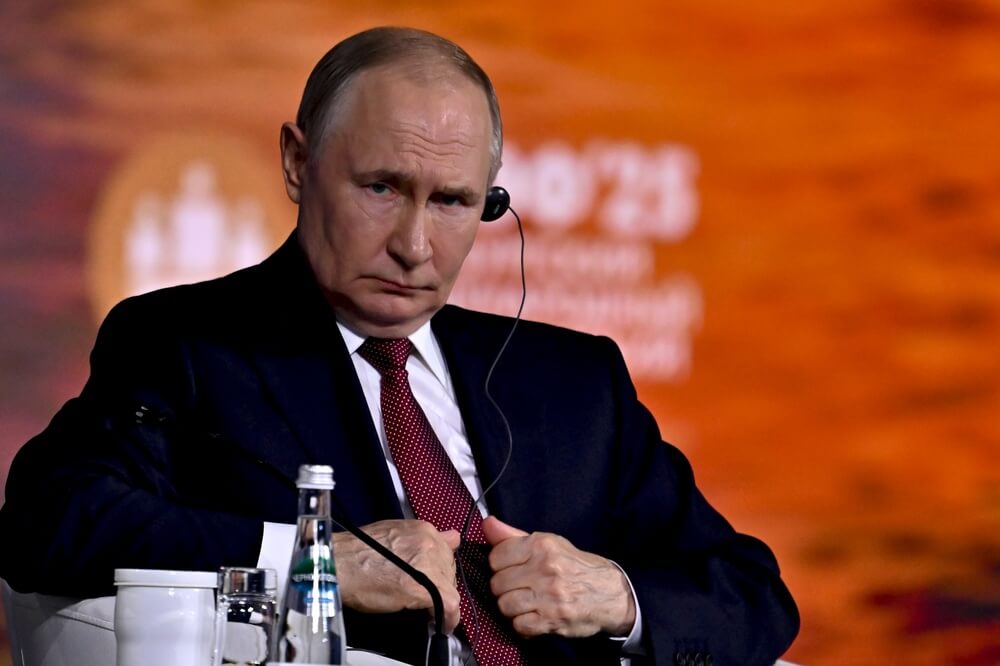 For Moscow, a far bigger problem than Zelenskyy’s visit to Belgrade would be if it led to a lasting political and economic relationship between Serbia and Ukraine
At the same time, Belgrade will try to keep military issues out of public agreements with Kyiv, because this is where the Russian reaction would be sharpest.
If the free trade agreement is concluded by the end of 2026, the relationship will move beyond political rapprochement and gain a firmer institutional basis.
Ukraine will demonstrate that it can expand its presence in Serbia without insisting that Belgrade first break with Moscow, and Vučić will secure a tangible outcome of cooperation with Kyiv while preserving his policy towards Kosovo and without altering his position on sanctions against Russia.
For Moscow, a far bigger problem than Zelenskyy’s visit to Belgrade would be if it led to a lasting political and economic relationship between Serbia and Ukraine. Russia will continue to have strong leverage in Serbia, from energy supplies to its veto in the Security Council, but it no longer has the ability to define the boundaries of Serbian foreign policy.
If Belgrade can develop trade, infrastructure and political relations with Kyiv despite Moscow’s open displeasure, then the very foundation on which Russia’s position in Serbia has long rested is shifting.
If it finalises the trade agreement with Belgrade by the end of the year and continues to maintain its position on Kosovo, Ukraine will become a partner whose cooperation Serbia can justify in terms of its own interests, and Russia will have to accept that its closeness to Belgrade no longer gives it the right to veto Serbia’s relations with Kyiv.
